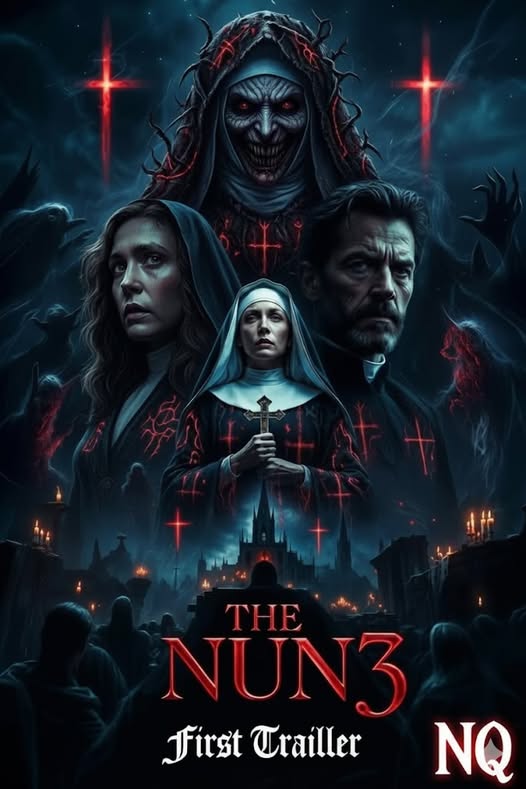
Set against a decaying European abbey and surrounding war-scarred villages, the film deepens the mythology of Valak while shifting the focus toward spiritual corruption rather than pure possession. Evil here is ancient, strategic, and blasphemous—twisting symbols of faith into instruments of fear. The cross no longer comforts. The habit no longer protects.
The film excels in atmosphere. Long corridors swallowed by shadow, candles trembling in silence, whispers echoing through stone walls. The camera lingers just long enough to make you doubt what you saw. When Valak appears, it’s sparing—but devastating. Each appearance feels earned, unsettling, and heavy with meaning.
Performances lean into restraint and inner conflict. Fear is expressed through hesitation, doubt, and quiet breakdowns rather than screams. The central character’s crisis of faith becomes the emotional backbone of the story, turning the battle against Valak into a deeply personal spiritual war.
Visually, THE NUN III is elegant and oppressive. Muted palettes, gothic architecture, and natural lighting heighten realism and unease. The score is minimal—choirs fade in like distant prayers, then dissolve into silence, leaving dread behind.
⭐ Verdict:
THE NUN III (2026) is the most mature and disciplined entry in the trilogy. Atmospheric, blasphemous, and unnervingly quiet—it proves that evil doesn’t need to scream to be heard. 🕯️😈