The Dutton Ranch: Love, War, and the Cost of Legacy
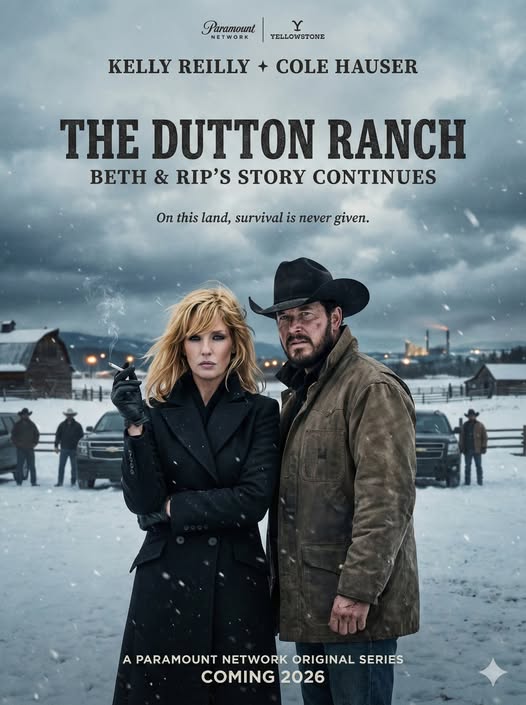
Winter has always been a language of truth in the world of the Duttons, and The Dutton Ranch — Beth & Rip’s Story Continues (2026) speaks it fluently. This chapter does not whisper nostalgia or comfort; it announces survival. Snow blankets Montana not as beauty, but as warning. What remains standing in the cold are not just fences and cattle, but convictions carved deep into bone.

At the heart of this continuation is the unbreakable, often brutal love between Beth Dutton and Rip Wheeler. Their bond has never been gentle, and the series understands that tenderness is not its currency. Love here is forged through scars, loyalty, and shared silence. Beth is still fire dressed as a woman, and Rip remains the man who understands that fire without trying to tame it.
The ranch itself becomes a living battleground, no longer just land but a symbol of bloodline and identity. New enemies circle with calculated patience, and their intentions cut deeper than bullets. This is no longer about ownership on paper—it’s about erasure, about who gets to exist when power shifts hands.

What elevates this chapter is the return of Rip’s buried past, rising like something long frozen beneath the earth. Secrets are not revealed for shock value, but to test the very foundation of his loyalty. The story asks whether devotion can survive when history refuses to stay buried, and whether love can endure truths it was never meant to face.
Kayce and Monica’s storyline weaves quietly but forcefully through the storm. Pulled deeper into the conflict, they represent the emotional cost of legacy—how inheritance is rarely chosen, yet always paid for. Their struggle adds a reflective counterpoint to Beth and Rip’s raw intensity, grounding the narrative in generational consequence.
Visually, the frozen plains and unforgiving skies do more than set the mood—they mirror the emotional terrain. Montana in winter is vast, isolating, and merciless, and the series uses that backdrop with cinematic restraint. Every wide shot feels like a judgment, every silence heavy with what may be lost.

Violence, when it comes, is not glorified. It is necessary, ugly, and deeply personal. Frontier justice here is stripped of romance, leaving only the reality that survival demands sacrifice. The Duttons do not seek war, but they understand that peace is rarely given—it is defended.
Beth’s evolution remains one of the most compelling aspects of the story. Her strength is no longer just rebellion; it is strategy, grief, and clarity sharpened by experience. She does not soften, but she deepens, becoming a figure who embodies both destruction and devotion.
Rip, meanwhile, stands as the emotional anchor of the series. His silence speaks louder than monologues, and his loyalty is not blind—it is chosen, again and again. The show understands that his power lies not in dominance, but in restraint.
What makes The Dutton Ranch resonate is its refusal to offer easy victories. Every step in the snow feels earned, every stand taken costs something. The narrative respects its audience by acknowledging that legacy is built not on triumph, but on what one is willing to lose.
As 2026 approaches, anticipation is rooted not in spectacle alone, but in emotional truth. This is a story about land, yes—but more importantly, it is about belonging, identity, and the brutal beauty of standing your ground. On this land, nothing is given. And the Duttons, carved by winter and war, remain unyielding.
Related movies: