A QUIET PLACE: PART III (2026)
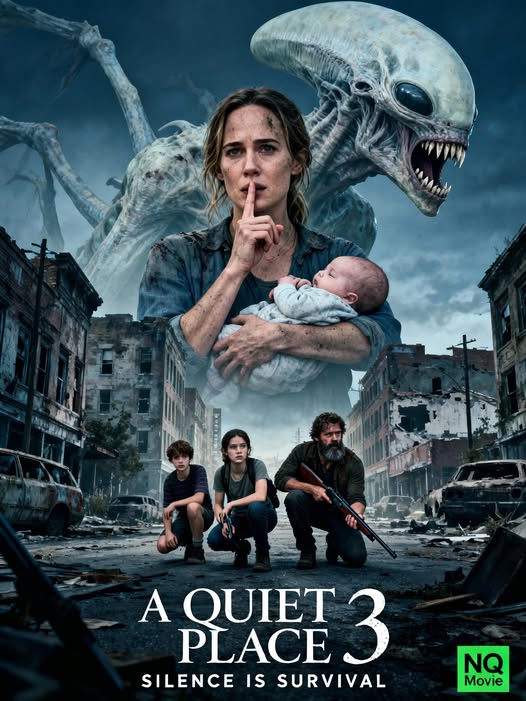
A Quiet Place: Part III is not louder.
It is crueler in its silence.
Instead of escalating the story with bigger monsters or wider destruction, this final chapter turns inward — focusing on what survival actually costs after the world has already ended. The film follows a small, fractured group of survivors who have learned every rule of silence… but are slowly breaking under the weight of living by them.
The opening sequence is devastatingly simple: no spectacle, no massive attack — just a single human mistake, stretched into unbearable tension. It immediately reminds us why this franchise works so well. Sound is still the enemy, but fear now comes from something deeper — hesitation, exhaustion, and the terror of no longer trusting your own instincts.
What truly separates Part III from the previous films is its emotional core. The story is built around legacy and responsibility — not only protecting the next generation, but deciding what kind of world they are being protected for. Performances are restrained and painfully natural. Long stretches of the film pass with almost no dialogue, yet the emotional communication feels stronger than ever through glances, hand signals, and broken breathing.
The creatures remain terrifying, but they are no longer the only threat. Human conflict quietly rises into the foreground, creating moral tension that feels just as dangerous as the sound-sensitive predators themselves.
Visually, the film is beautifully controlled — dim natural light, wide empty spaces, and carefully composed frames that turn every open doorway and every loose object into a potential death sentence. The sound design once again carries the entire experience, using silence not as a gimmick, but as a narrative weapon.
Like the best long-running franchises (much like how you follow legacy series such as Fast & Furious), A Quiet Place: Part III understands that the real challenge is not raising the stakes — it’s deepening them.
Related movies :