
THE TANK 2026
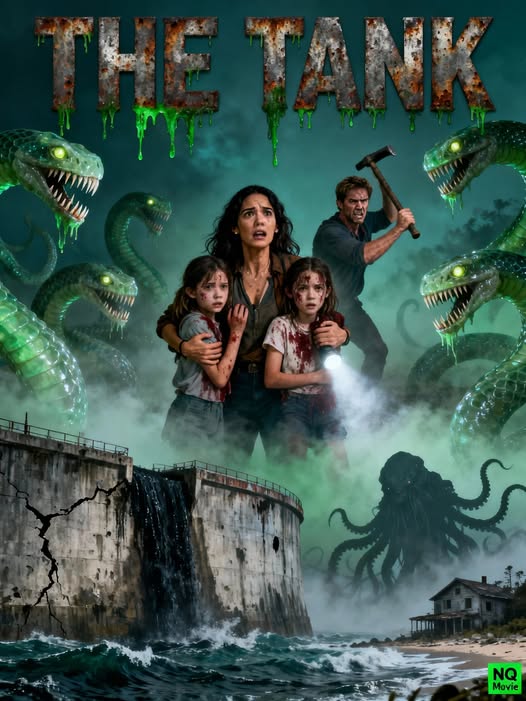
The Tank works best when it understands one simple rule of good creature horror:
don’t rush the monster.
Instead of opening with shock, this film builds unease through isolation, slow discovery, and a very grounded family drama at its core.
The story follows a family who inherits an abandoned coastal property. On the land sits an old, sealed concrete water tank — half-buried, overgrown, and clearly avoided for decades. What initially feels like a typical “mystery structure” trope becomes far more disturbing once the father begins investigating what still lives inside.
The film’s strongest element is atmosphere.
Long static shots, natural sound design, and an almost uncomfortable use of silence give the tank itself a personality. It is not framed like a monster’s lair.
It feels like a wound in the landscape.
Rather than pushing jump scares, the tension comes from small, unsettling details:
unexplained scratches on the concrete,
water levels changing overnight,
and faint movement beneath the surface when no one is nearby.
The creature reveal is deliberately delayed, and when it finally arrives, it avoids spectacle. The design leans more toward biological realism than fantasy horror. It looks like something shaped by isolation and starvation rather than by mythology.
Related movies :