RETURN TO SILENT HILL (2026)
- DuongNgocAnh
- February 3, 2026
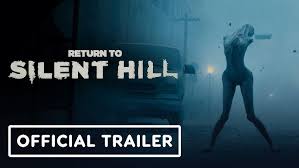
Return to Silent Hill (2026)
Starring: Jeremy Irvine
Rating: ⭐⭐⭐⭐⭐
An Endless Nightmare Reborn: The Return to Silent Hill
In Return to Silent Hill, the nightmare of the misty, fog-bound town that devastated James Sunderland’s life comes back to haunt him, but this time, it’s far worse than before. The chilling sequel builds on the iconic psychological horror of the original, expanding the terrifying lore of Silent Hill while plunging audiences even deeper into a world where reality is malleable and sanity is fleeting. Featuring a standout performance by Jeremy Irvine as James Sunderland, this film returns us to a town consumed by evil, where the line between what’s real and imagined becomes dangerously blurred.
Three years have passed since James lost his wife, Mary, to a terminal illness. The haunting memories of her slow death have been a constant presence in his life. But the quiet sadness of grief is disrupted when a cryptic letter arrives. The letter urges James to return to the very place where he last saw Mary—the town of Silent Hill, their “special place.” However, what James doesn’t know is that Silent Hill has been twisted into something even darker than before, and the horrors that await him are nothing like he’s ever encountered.
The Evolution of Silent Hill
Silent Hill, once a town shrouded in fog and mystery, has transformed. The supernatural forces that once tortured its inhabitants have become even more insidious. The town is no longer simply a place haunted by demons and twisted creatures; it is now a physical manifestation of guilt, trauma, and psychological decay, a place where the past is never truly buried.
Christophe Gans, the director behind this chilling return, has expertly crafted a psychological horror experience that digs deep into James’s psyche, blending his personal torment with the town’s malevolent presence. The result is a terrifying labyrinth, both physical and mental, where James’s perception of reality shifts with every passing moment. It’s a landscape that’s forever shifting, leaving James—and the audience—unsure of what’s real.
Silent Hill’s fog, once a symbol of disorientation, now seems to envelope the entire town, suffocating the very essence of hope. The streets are more sinister, the buildings more decayed, and the creatures that haunt the shadows seem to be more relentless, more twisted. Each corner of the town becomes a reflection of James’s inner turmoil, his guilt over his wife’s death, and the choices that led him to this place.
James Sunderland’s Struggle
The heart of Return to Silent Hill is, of course, James Sunderland himself. Jeremy Irvine brings an incredible depth to the character of James, portraying a man on the edge of insanity, desperate to escape his grief but drawn back to the place that started it all. His performance captures the deep pain of a man unable to escape the consequences of his own actions, the scars of his past both literal and metaphorical.
James is not just facing the horrors of Silent Hill, but also his own fractured psyche. As he ventures deeper into the fog, memories of Mary flood his mind, each one more distorted and agonizing than the last. The loss of his wife has never truly left him, but it’s here, in Silent Hill, that the true nature of his guilt and grief begins to surface. As the horrors around him intensify, so does his struggle with his own mind. He starts questioning if the terror is real or if it’s all part of his mind unraveling.
A New Evil: The Corrosive Force
The true horror of Return to Silent Hill is not just the ghosts and demons lurking in the shadows. It is the emergence of a new, more powerful evil that corrupts everything it touches. Silent Hill has always been a place where the line between the living and the dead is thin, but in this new chapter, the town seems to have taken on a life of its own, evolving into something far more destructive.
This new force is more than just an external entity; it’s a reflection of the inner horrors that haunt James. It distorts memories, blurs the line between the past and present, and warps reality to the point where nothing is what it seems. The town itself has become an extension of James’s mind, twisted and manipulated by his own guilt, his own failings. The deeper James goes, the more he loses his grip on the truth, unsure whether the dangers surrounding him are a product of his mind or something far worse.
One of the most unsettling elements of the film is the sense of being trapped not just in a place, but in time. The past seems to collapse in on itself, with James constantly being pulled between different versions of Silent Hill, each one more horrifying than the last. He encounters figures from his past—some real, some imagined—all distorted by the corruption of the town.
Psychological Horror at Its Finest
Where Return to Silent Hill truly shines is in its exploration of psychological horror. The film doesn’t rely on cheap jump scares or gory violence, but instead focuses on creating a slow-burning tension that burrows under the skin. It’s a film that forces you to confront your own fears, your own regrets, and your own doubts.
The eerie atmosphere, amplified by Gans’s expert direction, lingers long after the credits roll. Every detail of Silent Hill, from the dissonant, haunting soundtrack to the unsettling sound design, works together to build a sense of dread. It’s a film that keeps you on edge, constantly second-guessing what’s real and what’s imagined.
The nightmare never ends, but rather, it loops and folds in on itself, each step taken by James only bringing him closer to a dark truth. Silent Hill isn’t just a place—it’s a manifestation of his own inner torment, a place that warps and twists in response to his guilt and remorse.
The Descent into Madness
As James delves further into the heart of Silent Hill, he’s forced to confront his own darkest secrets. The more he uncovers, the more he realizes that the true horror lies not in the monstrous creatures lurking in the fog, but in the choices he made and the pain he caused. James is not just facing external horrors, but an internal battle that threatens to consume him completely.
Silent Hill has always been a place where people are punished for their sins, but in Return to Silent Hill, the punishment is far more personal. James’s journey becomes less about escaping the horrors of the town and more about confronting the ghosts of his past—the mistakes, the lies, and the crushing guilt that has shaped his life. In the end, Return to Silent Hill is less about survival and more about redemption—or the lack thereof.
The town seems to revel in this internal torment, pushing James further into madness with each passing moment. Every step he takes brings him closer to a revelation that may ultimately destroy him. The horrors of Silent Hill are no longer just external; they are part of James’s own psyche, a mirror of his deepest fears and regrets.
A Masterclass in Horror
Christophe Gans’s Return to Silent Hill is a masterclass in psychological horror. It’s a film that doesn’t just aim to scare—it aims to disturb, to unsettle, and to leave an indelible mark on the audience. The film’s pacing is deliberately slow, allowing the tension to build organically. The cinematography is haunting, capturing the bleakness of Silent Hill in all its terrifying glory. The fog, the decayed buildings, the twisted creatures—they all contribute to a world that feels suffocating, a place where there is no escape.
But what truly elevates Return to Silent Hill is its ability to make the audience feel what James is feeling: the crushing weight of guilt, the relentless pull of past trauma, and the terrifying realization that you can never truly escape your own mind. It’s a horror film that lingers in the mind long after the credits roll.
The Final Descent: What’s Real?
As the film draws to its horrifying conclusion, James faces the ultimate question: Is Silent Hill real, or is it a manifestation of his own madness? The deeper he goes into the fog, the more he becomes uncertain of what’s truly happening. Is the town torturing him, or is he torturing himself? What is the true nature of the evil that has consumed Silent Hill, and how can he escape it—or is he already too far gone?
The final scenes of Return to Silent Hill are a devastating blend of revelation and madness. It’s a conclusion that will leave audiences questioning everything they’ve seen, unsure of whether they’ve witnessed a twisted nightmare or a tragic reality.
Conclusion: A Nightmare Reborn
Return to Silent Hill is not just a horror film—it is a profound exploration of grief, guilt, and the psychological terror that can destroy a person from within. With expert direction by Christophe Gans and a stunning performance from Jeremy Irvine, the film redefines the psychological horror genre, delivering an experience that will haunt you long after the credits have rolled.
Silent Hill is back—and it’s more terrifying than ever. But as James Sunderland learns, the true horror is not in the monsters lurking in the fog, but in the darkness within ourselves.