THIR13EN GHOSTS (2026)
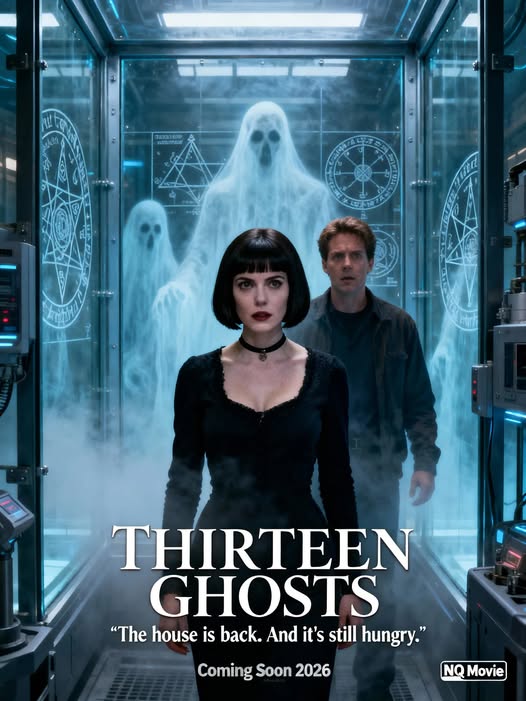
THIR13EN GHOSTS (2026) does not remake the haunted house.
It rebuilds the cage.
This reimagining preserves the franchise’s most iconic idea — a machine disguised as a home — and transforms it into a colder, more clinical nightmare. The glass walls are no longer just architectural spectacle. They are surveillance surfaces. Every corridor watches you back.
The film leans heavily into spatial horror. Rooms shift with mechanical indifference. Floors seal, split, and isolate characters with surgical precision. The house feels less possessed… and more programmed. Terror comes not from sudden apparitions, but from inevitability — the slow understanding that the structure itself is actively deciding who gets to move, and who doesn’t.
The ghosts remain the visual centerpiece, but their redesign favors psychological imprint over grotesque excess. Each spirit is introduced through fragments — distorted reflections, corrupted audio, brief silhouettes trapped between transparent walls. Their legends are revealed through environmental storytelling rather than exposition, allowing the audience to piece together cruelty, obsession, and ritual from what the house refuses to hide.
What truly elevates THIR13EN GHOSTS (2026) is its thematic shift. The original film framed suffering as spectacle. This version reframes it as infrastructure. Pain is collected, categorized, and recycled as energy. The house does not feed on fear. It feeds on history.
👉𝙒𝙖𝙩𝙘𝙝 𝙢𝙤𝙫𝙞𝙚: