MEDUSA (2026)
- DuongNgocAnh
- February 11, 2026
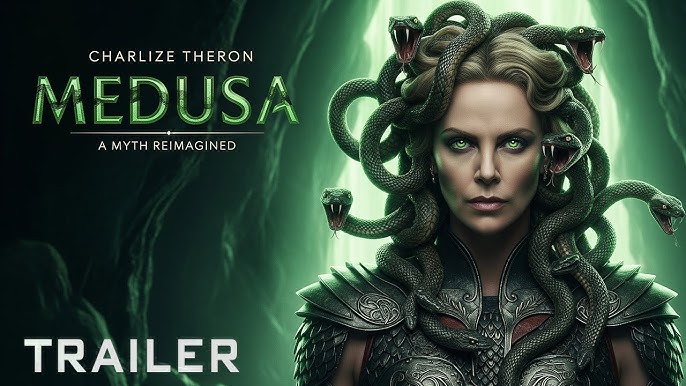
MEDUSA (2026)
– Starring: Angelina Jolie | Keanu Reeves
Medusa (2026) — When the Gods Decide Who Becomes a Monster
In the world of ancient mythology, gods are portrayed as all-powerful, untouchable beings who shape the fates of mortals with a single glance. Medusa (2026) seeks to challenge this traditional understanding, exploring the darker, more tragic side of the gods’ intervention in the lives of the very beings they are supposed to guide and protect. The film reimagines the story of Medusa, not as a villainous figure or a mere monster, but as a tragic soul condemned by the gods for a crime she did not commit.
At its core, Medusa is a story about betrayal, divine injustice, and the consequences of power used without mercy. The film takes us on a haunting journey into the life of Medusa, portrayed with heartbreaking intensity by Angelina Jolie. Here, Medusa is not just a creature with snakes for hair and a deadly gaze; she is a symbol of the gods’ cruelty, their willingness to destroy innocent lives in the name of preserving their power.
The Tragic Transformation of Medusa
Medusa’s story, as revealed in the film, is not one of mere misfortune, but rather one of calculated punishment by the gods. In the original myth, Medusa was once a beautiful woman, admired and adored by many, including the gods themselves. However, it is the gods who eventually bring about her downfall, transforming her into a monster after she is wronged by Poseidon in Athena’s temple. This portrayal of Medusa as a victim, rather than a mere monster, changes the narrative entirely, bringing a depth to the character that transcends the simple villainous label she has long carried.
Angelina Jolie’s Medusa is not the cold, vengeful figure many may expect. Instead, she is a living embodiment of pain and sorrow, a broken soul who is forced to bear the weight of the gods’ wrath for reasons that remain hidden to her, and to the world. Her transformation from a beautiful mortal into a cursed creature is not just physical—it is emotional, psychological, and spiritual. Jolie’s performance captures the essence of Medusa’s isolation and despair as she slowly comes to understand that her curse was not a punishment for any crime she committed but a calculated decision made by gods who saw her as nothing more than a pawn in their divine games.
Keanu Reeves’ Mysterious Role
The trailer also introduces Keanu Reeves in a role that adds yet another layer of mystery and intrigue to the narrative. Reeves plays a character caught between faith and truth, a figure who is torn between exposing the gods’ darkest secrets and protecting them from the world’s reckoning. His character, though initially appearing to be an ally of the gods, begins to question the morality of their actions as he uncovers the devastating truths behind Medusa’s curse.
Reeves brings his signature depth and quiet intensity to the role, playing a man who is not just searching for answers but struggling with the consequences of what he will do with those answers once they are revealed. His character’s internal conflict serves as a mirror to Medusa’s external suffering—both are driven by a need for justice, but neither knows whether revealing the truth will bring them salvation or destruction.
The Gods’ Cruelty: A Divine Betrayal
The film’s trailer hints at a chilling truth: Medusa’s curse was never an accident, as we have long believed in myth. Instead, it was a deliberate act of betrayal orchestrated by the gods themselves. They sought to punish Medusa not because she was guilty of any crime, but because she had unknowingly become a threat to their divine order. The gods feared her growing power, her ability to see through their lies, and they decided to silence her in the most horrific way possible—by transforming her into a monster, a creature to be feared and rejected by all.
This twist redefines Medusa’s place in mythology, painting her not as an isolated villain but as a tragic figure whose life was destroyed by the very beings who were meant to protect and guide her. The gods’ decision to punish her for their own fears reflects the arrogance and cruelty of their unchecked power. By making Medusa into a monster, they forced her into a life of solitude and hatred, a living weapon with no agency of her own. This cruel, divine manipulation is at the heart of the film, showing how the gods’ decisions are not always righteous but are often driven by their own insecurities and desires for control.
A Story of Betrayal, Blood, and Silence
The film does not dwell on the moment of Medusa’s betrayal—the act that condemned her—but rather focuses on its aftermath. The trailer shows only the devastating results: blood, stone, and silence. These haunting images suggest the irreversible damage done to Medusa and the world around her. The betrayal is not just a personal one; it is a cosmic event that will echo through the ages. Medusa’s transformation into a monster is a tragedy not just for her but for the entire world, as it serves as a reminder of the gods’ unaccountable cruelty.
The visual style of the film emphasizes this theme of loss and isolation. The dark, foreboding landscapes, the haunting imagery of Medusa’s stone victims, and the eerie glow of the gods’ ethereal presence all contribute to the sense of a world teetering on the edge of destruction. The film does not shy away from the violence and terror that Medusa’s curse brings, but it also highlights the deeper emotional and psychological toll of living as a cursed being, constantly at war with herself and the world around her.
A Heroine, Not a Villain
What makes Medusa (2026) truly compelling is its reframing of the character from a monstrous villain to a tragic heroine. In this version of her story, Medusa is not a villain to be vanquished but a woman to be understood. The gods may have cursed her, but they are not the true villains of the story—their inability to see the humanity in those they control is what ultimately leads to the tragedy of Medusa’s existence.
Angelina Jolie’s performance adds layers of complexity to Medusa, making her a character who is both terrifying and sympathetic. Jolie’s portrayal brings depth to Medusa’s inner turmoil and her yearning for justice. There is a quiet strength in her performance, as she navigates the world of mortals and immortals, trapped in a body that is both a weapon and a prison. Her Medusa is not a monster to be feared, but a soul to be pitied—her only crime being her existence as a reminder of the gods’ flaws.
The Divine War: Redemption or Destruction?
At the heart of Medusa (2026) is a cosmic struggle between the divine and the mortal, between the gods who control fate and the mortals who fight to expose their secrets. As Keanu Reeves’ character grapples with his role in the larger scheme of things, he is forced to confront the true cost of revealing the gods’ darkest secrets. Is exposing their lies an act of redemption, or does it risk unleashing a greater destruction?
The film’s exploration of this theme is what makes it so compelling. It questions the nature of power, justice, and truth. The gods may have the ability to shape the world, but their actions are not always just. They may have the power to punish, but they cannot escape the consequences of their own sins. The film challenges the idea of divine perfection and suggests that even gods can be corrupted by their own need for control and fear of the unknown.
A Devastating Aftermath
As the film moves toward its conclusion, the full weight of Medusa’s curse and the gods’ betrayal becomes clear. The gods may have believed they were protecting the world by cursing Medusa, but in doing so, they have created a monster that will forever haunt them. The aftermath of their actions is not just the loss of a single soul, but the unraveling of the divine order itself. Medusa, once a tool of the gods, has become their greatest weapon against them.
In the end, Medusa (2026) is a story of redemption and revenge, of divine justice and mortal reckoning. The film asks the question: what happens when the gods are exposed for what they truly are? Can they continue to rule, or will they be brought to their knees by the very beings they sought to control?
Medusa (2026) is not just a retelling of an ancient myth; it is a deep, emotional exploration of power, betrayal, and the consequences of a world where the gods have no limits. It is a story that asks us to question the very nature of the beings we worship, and whether they are truly deserving of their place at the top of the divine hierarchy. Through Medusa’s eyes, we see not just a monster, but a woman who has been broken by those who were supposed to protect her. And in the end, it is her story—the story of a woman condemned for nothing but her existence—that resonates most deeply.