The Last Samurai 2 (2026)
- DuongNgocAnh
- February 11, 2026
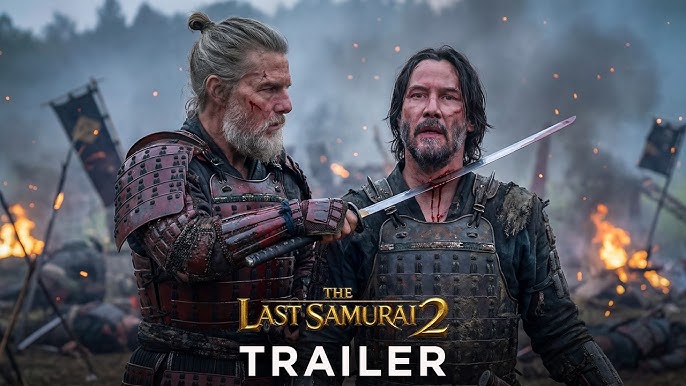
The Last Samurai 2 (2026) – Tom Cruise & Keanu Reeves | Concept Trailer
Honor Never Truly Dies
The legacy of the samurai is not easily erased. It is a legacy etched deeply into the history of Japan, a culture that has seen both monumental progress and tragic decline. The Last Samurai 2 takes us back to this fractured world—a Japan caught between its ancient traditions and the relentless advance of modernization. Nathan Algren, portrayed once again by Tom Cruise, returns to a country he helped transform years ago. But this time, his struggle is not just against a physical enemy; it is a spiritual battle, one that forces him to reconsider everything he thought he understood about honor, loyalty, and sacrifice.
In The Last Samurai 2, we are introduced to a new generation of warriors—those who, like the samurai before them, adhere to the ancient ways of the sword. But these warriors are faced with an even greater challenge: the encroachment of Western influence and the erosion of the values that once defined their way of life. Keanu Reeves joins the film as an enigmatic new character, a master of the sword who represents this next generation, standing as both a bridge and a barrier between the past and the future.
The concept trailer teases a gripping narrative, one that is poised to be just as emotionally complex and visually breathtaking as its predecessor. In a Japan torn by internal strife, the samurai code and the traditions that have defined it for centuries are on the brink of collapse. This time, the samurai’s final battle is not just against outside forces—it is against the forces of time, change, and the moral complexities of a world moving beyond its ancient customs.
A Fractured Japan
The Japan of The Last Samurai 2 is a nation on the cusp of radical change. The echoes of the Meiji Restoration still reverberate throughout the land, a time when Japan was forced to modernize in the face of the West’s relentless march toward globalization. The samurai class, once the guardians of tradition and honor, finds itself increasingly irrelevant in a world that demands new ways of thinking and being. Western influence has seeped into every corner of Japanese society—new weapons, new ideologies, new power structures. Yet, amidst these changes, the spirit of the samurai, like an ember in the ashes, refuses to die.
Nathan Algren, once a broken man seeking redemption among the samurai, has found himself once again caught in the struggle for the soul of Japan. After the events of the first film, Algren’s life has taken a new direction—one that keeps him on the fringes of the changing world, torn between his respect for the samurai’s way of life and the realities of the modern era. He is a man forever changed by his experiences with the samurai, but he finds himself drawn back into the conflict, unsure of his place in a world that no longer values the things he once believed in.
The film explores a Japan where the old ways of the samurai are being discarded in favor of Western ideals. The samurai’s rigid code of honor and duty, their commitment to loyalty and sacrifice, is increasingly seen as a relic of the past—outdated and impractical in a rapidly industrializing world. The Japanese government, eager to align itself with the Western powers, is pushing for reform, further driving a wedge between the traditionalists and the progressives.
Amidst this cultural upheaval, a group of samurai, led by an older generation who have survived the chaos of the previous battles, seeks to preserve their way of life. They are the last defenders of the samurai code, and their fight for survival is not just against the government’s forces but against the changing tides of history itself. As the country struggles to define its future, these warriors find themselves standing at the crossroads between two worlds—one defined by tradition and one shaped by progress.
The New Generation of Warriors
Keanu Reeves enters the picture as an enigmatic new character, a skilled warrior who represents a new generation of samurai. His character, whose name remains a mystery for now, is a complex figure—one who embraces the way of the sword but also recognizes the necessity of change. Unlike the older samurai, who see their way of life as sacrosanct, Reeves’ character understands that survival in the modern world may require a reevaluation of the samurai’s role. He is both a student of the past and a harbinger of the future, caught between two worlds that cannot seem to coexist.
His presence in the film is a catalyst for Algren’s internal conflict. Where Algren is a man defined by the past—by the lessons he learned from the samurai and the sense of honor that he adopted—Reeves’ character is a reflection of the world that Algren is struggling to understand. This generational clash becomes the heart of The Last Samurai 2, as Algren finds himself questioning his role in the new Japan. Can the samurai survive in a world where their traditions no longer seem relevant? And if not, what is left of their legacy?
The film explores the tensions between these two figures, each representing a different vision of Japan’s future. Algren, the old soldier who has learned to honor the samurai’s way, and Reeves’ character, the young warrior who understands the necessity of adapting to survive, form an unlikely partnership. Together, they face not only external enemies but the internal struggle of reconciling the past with the future.
The Return of Nathan Algren
Tom Cruise’s portrayal of Nathan Algren returns in The Last Samurai 2 as the anchor of the story. Algren is a man who has been profoundly shaped by his experiences with the samurai, and the honor he learned from them is something that continues to define him. In this sequel, Algren finds himself once again at odds with the world he inhabits. As the samurai’s final struggle plays out, Algren is forced to come to terms with the fading power of the warrior class and the inevitable changes that are sweeping through Japan.
Algren’s journey is one of personal reckoning. Having once been an outsider, an American soldier who was forced to confront his own demons, he now finds himself caught between two conflicting ideals: his loyalty to the samurai’s way and his recognition that Japan must change in order to survive. His character is torn between the desire to protect the samurai’s legacy and the need to evolve with the times. This inner turmoil forms the backbone of the film, and it is through Algren’s eyes that we see the philosophical heart of the story.
The Final Struggle of the Samurai
As the tension builds in The Last Samurai 2, the conflict takes on greater significance. This is not just a fight for survival—it is a battle for the soul of Japan. The samurai, once the proud defenders of the country’s honor, now find themselves at the mercy of a changing world. The government, eager to modernize, seeks to wipe out the samurai way of life, while a new generation of warriors—led by Algren and Reeves’ character—must decide what it means to be a warrior in a world that no longer values the sword.
The film’s concept trailer hints at a reckoning that could change the very foundation of Japan’s warrior class. The brief glimpses of battle, of duels fought in the shadows of a modernizing Japan, suggest that the samurai’s final struggle is not just about physical combat but about the preservation of honor, tradition, and the ideals that have defined Japan for centuries. The warriors may be fighting with swords, but the real battle is for their way of life.
The Emotional Stakes
As the film builds toward its climax, the emotional stakes rise to a fever pitch. Algren and Reeves’ character are forced to confront not just their external enemies but their own internal conflicts. The cost of carrying the samurai’s legacy is heavy, and the price of honor may be too much to bear. The film asks profound questions about the nature of tradition, the inevitability of change, and the sacrifices that must be made in order to preserve what is most sacred.
The Last Samurai 2 promises to be a powerful exploration of these themes, with deep emotional stakes and a visual style that captures the beauty and brutality of the samurai world. As the final battle approaches, Algren, Reeves’ character, and the samurai warriors who remain will face their destiny. It is a fight not just for survival, but for the soul of Japan itself.
The Legacy of the Samurai
In the end, The Last Samurai 2 is not just about the clash of swords and the battlefield. It is about the clash of cultures, ideologies, and generations. It is about understanding what it means to hold onto your honor in a world that is rapidly changing. As the final struggle of the samurai unfolds, the film will leave audiences with a powerful message: honor may never truly die, but it must evolve in order to survive.
The reckoning that the trailer promises will be more than just a battle—it will be a confrontation with the past, the present, and the future. And when the dust settles, only one question will remain: Can the samurai’s legacy live on in a world that no longer believes in their way? The Last Samurai 2 will answer that question in a way that only a story of this magnitude can.