THE LAST MANHUNT (2026)
- DuongNgocAnh
- February 11, 2026
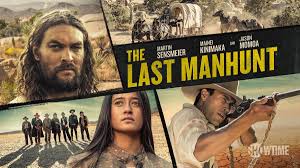
The Last Manhunt (2026)
Starring: Jason Momoa, Zahn McClarnon, Lily Gladstone, Martin Sensmeier
The desert remembers every step.
In the unforgiving wilderness of the American West, where the earth is as vast as the mistakes made upon it, the pursuit of a man becomes more than a mere chase. The Last Manhunt unfolds as an epic tale, filled with primal urgency and layered with the weight of history. It is a story of survival, but it is also a collision of love, law, and the repercussions of actions that echo across generations. This film brings together elements of haunting beauty and raw violence, making each moment a battle not just against the environment, but against one’s own soul.
Jason Momoa stars as the lead, embodying a man on the run — a figure whose desperate actions set off a chain of events that alter the course of everyone involved. His character, a man burdened by guilt and a sense of urgency, races against both the clock and the terrain. He is a figure who has seen too much, who carries his past with him like a weight he can never escape, and yet, he is propelled by the smallest glimmer of hope. His presence in The Last Manhunt is magnetic; his movements are fluid, a combination of raw physical power and the urgency of a man who knows his time is running out. Every step he takes, each decision he makes, is motivated by the knowledge that his survival comes at the cost of something larger than himself.
Opposing him is Zahn McClarnon’s character, a man of great solemn authority, whose understanding of justice is informed by both his spiritual depth and his sense of duty. McClarnon brings a quiet intensity to the film, portraying a character whose actions are dictated by a sense of moral responsibility. He understands that justice without humanity only deepens the scars of history, and the pursuit of the fugitive is not just about bringing him to justice, but about understanding the larger narrative of wrongs committed long before this chase began. McClarnon’s portrayal is a balance of power and wisdom, the type of authority that commands respect not through force but through the quiet conviction of his beliefs.
Lily Gladstone’s role is one of quiet strength and resilience. Her character, though not the center of the chase, is a crucial force in the film, representing the endurance, loyalty, and courage of a woman who must navigate her place in a world shaped by men’s decisions. Gladstone’s character is a reminder that the path to survival isn’t just about escaping the past — it’s about reshaping the future, finding new ways forward even when the options seem limited. Gladstone plays her role with the kind of understated fire that adds a depth to the film, creating a character whose strength is felt in every moment, but never overshadows the others around her.
Then there is Martin Sensmeier, who rides into the film with fierce intensity, embodying the torn nature of a man caught between duty and heritage. Sensmeier’s character is not just a man chasing a fugitive — he is a man torn by the weight of his obligations to both his people and the law, and he knows that every step he takes in pursuit of justice takes him further away from the values he holds dear. His journey is one of internal conflict, and Sensmeier brings this turmoil to life with a captivating blend of external strength and internal vulnerability. As the story unfolds, the audience feels the tension of his choices, and the cost of obedience becomes clearer with every passing moment.
The film is set against the backdrop of the desert, a character in its own right, its vast emptiness reflecting the isolation felt by each of the characters. The harsh terrain, the relentless sun, the desolate beauty of the landscape all serve as a constant reminder that nature itself is both a relentless adversary and a witness to the consequences of human action. The desert doesn’t forget; it holds every step, every choice, in its parched earth. As the characters make their way across this unforgiving landscape, the film’s sense of space and setting heightens the emotional stakes. The desert becomes more than just a backdrop; it is a crucible, a place where actions have consequences that echo through the land long after the dust has settled.
The relentless pursuit takes on a deeper meaning as the film progresses. It becomes clear that the chase is not just about one man’s survival, but about the larger narrative of identity, legacy, and consequence. As each character’s story unfolds, the audience is drawn into the complex web of relationships and histories that have led to this moment. Every choice made by the characters — whether it is a decision to show mercy, to hold fast to a code of honor, or to ignore the lessons of the past — brings them closer to the truths they cannot escape. And as the miles add up, it becomes clear that the journey is not just about finding the fugitive — it is about confronting the past that each of the characters is carrying with them.
In The Last Manhunt, the film moves from epic moments of action to intimate, haunting reflections on what it means to be human. At its core, it is a film about redemption — but not in the traditional sense. Redemption is not a clear-cut path; it is a concept that is complicated by the realities of the past. As the story moves forward, the characters must grapple with the idea that sometimes, redemption isn’t something that can be earned. Sometimes, it is something that must be given — by others, by the land, by the very choices we make along the way.
Epic in scope but intimate in execution, The Last Manhunt is a powerful story about the choices that define us and the histories we can never outrun. It is a meditation on the ways in which the past shapes the present, and how the actions we take in the heat of the moment can alter the course of our lives in ways we can’t predict. The film moves between moments of blistering action and haunting introspection, exploring the tension between survival and justice, between love and duty.
As the film reaches its climax, the pursuit becomes a metaphor for the larger struggle each character is facing. The race to the end is not just a physical one; it is a race against time, against the past, and against their own demons. Every step taken is a reminder that in the desert, there are no easy answers. And in the end, the question that lingers is whether redemption — in any form — can truly survive the chase.
In The Last Manhunt, the desert is not just a setting; it is a reflection of the internal struggles of the characters. The harsh landscape is mirrored in the emotional landscapes they must navigate. The choices they make are irrevocable, the consequences inevitable. And in the final moments of the film, the audience is left with a haunting question: Can anyone truly escape the past? Or are we all destined to be caught in the relentless pursuit of something we can never outrun? The answers are as elusive as the horizon, but the journey — both physical and emotional — is one that will leave a lasting mark.
The Last Manhunt is a film about consequence, identity, and the intricate ways in which history, both personal and collective, shapes the present. It is a reminder that the land remembers every step, and that sometimes, the chase is not just about survival — it is about confronting the truths we can never escape.