Night Has Fallen (2026)
- DuongNgocAnh
- February 11, 2026
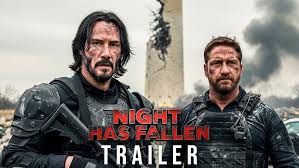
Night Has Fallen (2026)
Starring: Gerard Butler, Gal Gadot, Morgan Freeman
“When the lights go out, the real war begins.”
The Has Fallen saga takes a terrifying and exhilarating leap forward with Night Has Fallen, where Washington D.C. is not just under attack — it’s plunged into chaos, its very heart threatened by an enemy unlike any Mike Banning (Gerard Butler) has ever faced. The night has come, and with it, the capital’s streets become a battlefield where the stakes are higher than ever before. In this explosive climax, the familiar heroes of the franchise are forced to confront new dangers in a city teetering on the edge of destruction. The once-defended corridors of power are now the domain of terror and devastation, and the battle for democracy has entered its darkest hour.
Gerard Butler returns as Mike Banning, the unbreakable, battle-hardened secret service agent who has fought off threats from foreign adversaries, domestic terrorism, and unimaginable personal loss. In Night Has Fallen, he is back on home soil, wounded but resolute, facing an enemy that has infiltrated the very heart of American democracy. But this time, Banning’s greatest challenge is not just physical; it’s psychological. The stakes are no longer confined to the protection of one leader — they have expanded to include the survival of the entire nation. The Capitol is burning, and with it, the nation’s resolve.
As the city falls into total darkness, Banning must dig deeper into his reserves of strength and determination. The lights that once illuminated the nation’s capital are extinguished, and in their absence, a new breed of adversary emerges. The enemy is shadowy, organized, and methodical — unlike the more overt threats Banning has faced in the past. Their goal is not just destruction; it is destabilization. It is not enough for them to conquer the physical landmarks of Washington D.C.; they seek to fracture the very foundations upon which the country stands. As chaos reigns, it becomes clear that this war is about more than just military superiority — it is about erasing the values that hold the nation together.
In the midst of the darkness, Banning finds himself forced into an unlikely alliance with an enigmatic and lethal operative played by Gal Gadot. Her character, a woman whose own motivations and loyalties are murky at best, becomes both an ally and a wildcard in this fight for survival. Gadot’s portrayal adds a sharp edge to the film, providing a dynamic counterpoint to Banning’s seasoned grit. Her character’s skills in combat, strategy, and espionage complement Banning’s raw power and determination, making them a formidable duo as they fight their way through the embattled streets of Washington. However, trust is a scarce commodity in a world where enemies are disguised as allies and every move could be a trap.
The urban combat scenes in Night Has Fallen are among the most intense and visceral in the franchise, delivering a level of destruction that raises the stakes in ways fans have not yet experienced. From high-speed car chases through abandoned streets to intense rooftop shootouts, the action never lets up. But it’s not just about explosions and gunfire — the urban environment itself becomes a labyrinth of danger, where Banning and Gadot’s character must navigate a city that no longer recognizes the rules of engagement. As the capital descends into chaos, the film presents a haunting image of a city on the brink of collapse, with iconic landmarks reduced to rubble and its institutions crippled.
One of the most powerful aspects of Night Has Fallen is its exploration of the emotional toll that comes with defending a nation in crisis. Banning, who has already faced personal demons in previous installments, finds himself pushed to his absolute limits in this chapter. He is no longer just fighting for survival; he is fighting for the soul of his country, a country that has been fractured by internal divisions and external threats. The weight of this responsibility bears down on him as he struggles with his past choices and the decisions that will shape the future of the nation. The film explores themes of sacrifice, redemption, and the cost of heroism in ways that elevate the action genre beyond mere spectacle.
Morgan Freeman returns as Allan Trumbull, the resilient and steadfast president, but in Night Has Fallen, he is faced with a new kind of challenge — one that forces him to rely on the very agents who have always sworn to protect him. Trumbull’s leadership is tested in ways that are both personal and political, as he must navigate the complexities of a crisis that has no easy answers. His relationship with Banning, which has always been one of mutual respect, deepens as they both face the reality that their country is on the verge of falling apart. Freeman’s commanding presence provides a sense of gravitas in a film that is as emotionally charged as it is action-packed.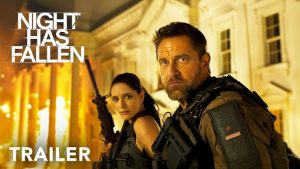
As the night drags on and the battle intensifies, the characters are forced into decisions that have far-reaching consequences. Mercy, once a given in the rules of engagement, becomes a complicated question in a world where every action is met with retaliation. In this war zone, there are no clean solutions, no perfect answers — just choices made in the heat of the moment, with the understanding that each one could be their last. The sense of urgency and uncertainty permeates every moment, adding a layer of psychological tension to the action sequences.
The film’s pacing is relentless, with each scene pushing the narrative forward at breakneck speed. There are no lulls in the action, but even amid the chaos, Night Has Fallen takes moments to explore the emotional landscapes of its characters. The toll of war is felt in the faces of those who fight, as well as those who have been caught in the crossfire. There is a haunting sense that this war, though intense, is part of a larger, unending cycle — a reminder that even when the lights go out, the war never truly ends. It simply changes form.
The destruction of Washington D.C. is not just a backdrop for the action; it is a representation of the fragility of power and the ease with which it can be undone. In the chaos of Night Has Fallen, we see how quickly a nation can be brought to its knees, its leaders scattered, its citizens struggling to maintain a sense of order. This is a film about the collapse of institutions, the disintegration of trust, and the fragility of democracy itself. And yet, in the face of such destruction, there is a glimmer of hope — not in the form of miraculous salvation, but in the courage and resolve of those who fight to rebuild.
Night Has Fallen doesn’t just deliver the most intense action scenes of the franchise; it adds emotional depth, psychological complexity, and a raw, unflinching look at the costs of war. The film’s final act is a thrilling, pulse-pounding conclusion to the saga, but it also leaves the audience with lingering questions about the price of heroism, the toll of sacrifice, and the fragile nature of democracy. In the end, Banning may be the nightmare that his enemies never saw coming, but Night Has Fallen reminds us that the real war is not fought on the battlefield — it is fought in the hearts and minds of those who dare to stand against the darkness.
With a 9/10 rating, Night Has Fallen delivers an unforgettable experience that pushes the boundaries of the action genre, creating a film that is as emotionally powerful as it is visually striking. This is not just a story about survival; it is a story about what happens when the world goes dark, and the true battle for the soul of a nation begins.