House of the Dragon – Season 3
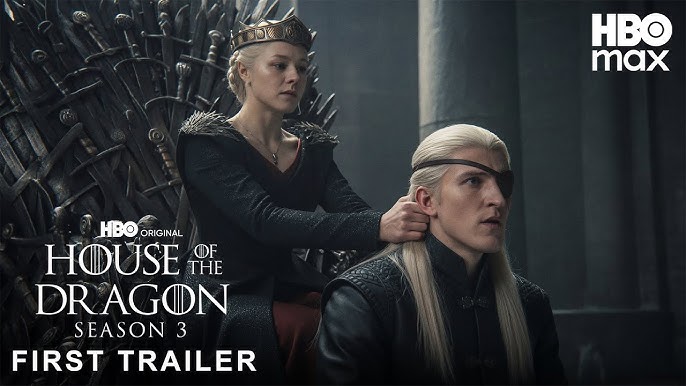
House of the Dragon – Season 3: When Fire Becomes Fate
“Coming sooner than we think.” That was the promise. And if director Loni Peristere’s words carry even half the weight of dragonfire, then House of the Dragon Season 3 is not just returning — it’s arriving like a storm over Blackwater Bay. He calls it “maybe the most epic season of television ever made.” That is not a small claim in a world already defined by massive battles, political betrayals, and creatures that darken the sky. But if the Dance of the Dragons has taught us anything, it’s that escalation is inevitable. And this time, the fire won’t just spread — it will consume.
Season 2 tightened the noose. Alliances fractured. Bloodlines turned against themselves. What began as whispers of succession has evolved into open war, and Season 3 promises to dive fully into the inferno. George R. R. Martin’s Fire & Blood was never a gentle chronicle — it was a historical autopsy of a dynasty devouring itself. Season 3 appears ready to embrace that brutality with scale, spectacle, and authenticity unlike anything the series has attempted before. If earlier seasons were sparks and kindling, this is the wildfire.
The phrase “bigger battles” almost feels inadequate. The Dance of the Dragons is remembered in Westerosi history not merely for political upheaval but for skies filled with flame. Season 3 is expected to bring some of the most devastating dragon-on-dragon conflicts ever depicted on screen. Not skirmishes. Not glimpses. Full-scale aerial warfare where strategy meets instinct and centuries of Targaryen supremacy begin to fracture midair. When dragons fight, kingdoms tremble. And when riders fall, history changes forever.
But spectacle alone does not define greatness. What makes House of the Dragon powerful is its refusal to separate grandeur from consequence. Every battle leaves more than scorched earth — it leaves trauma. Season 3 is rumored to lean harder into the emotional fallout of war. The children of ambition are now soldiers in its shadow. Rhaenyra’s grief is no longer abstract. Alicent’s regrets have hardened into steel. Daemon’s volatility simmers beneath tactical brilliance. The war is no longer theoretical; it is personal, generational, irreversible.
Higher stakes mean fewer illusions. In Season 1, characters maneuvered like chess pieces. In Season 2, they began paying for those moves. Season 3 may remove the board entirely. The civil war is not simply about a throne — it is about legitimacy, prophecy, pride, and survival. The Targaryen claim to divine right is being tested not by outsiders, but by its own blood. When dragons burn cities built by their ancestors, what remains of destiny? That philosophical tension could elevate the season beyond spectacle into tragedy.
“Darker turns” is perhaps the most telling phrase. The Dance of the Dragons is not a story of heroic triumph. It is a spiral. Loyalty corrodes. Compassion becomes liability. Love is weaponized. If Season 3 fully embraces the moral collapse embedded in Martin’s text, audiences should prepare for a narrative that offers fewer victories and more reckonings. In Westeros, power does not reward virtue. It consumes it.
One of the most anticipated elements is the expansion of scale — not just visually, but geographically. The war will not remain confined to court chambers and ancestral halls. Armies will march. Fleets will sail. Smaller houses will be forced to choose sides or face extinction. The realm fractures as ancient loyalties are tested. Season 3 could widen its lens to show how the Targaryen conflict reshapes the entire continent, not just the Red Keep.
Then there are the dragons themselves. They are not mere weapons. They are symbols of divine supremacy, emotional extensions of their riders, and living relics of Valyria. Season 3 may give them greater individuality, deeper presence, and more screen dominance. When two dragons clash, it is not CGI spectacle — it is history devouring itself. Each death in the sky is a step closer to the extinction that defines the later world of Game of Thrones. That looming inevitability gives every aerial battle tragic weight.
Character evolution will likely anchor the chaos. Rhaenyra is no longer a princess fighting for recognition — she is a queen at war. Alicent is no longer a reluctant participant — she is complicit in the machine she helped build. Aemond, volatile and relentless, represents a generation raised on resentment. Jace, Baela, and the younger heirs are being forced into maturity through fire. Season 3 may examine what happens when youth inherits violence instead of stability.
Peristere’s claim about authenticity suggests a commitment to Martin’s tone — brutal, layered, unsentimental. That means no convenient hero arcs. No miraculous redemptions. Just consequence. The Dance is remembered as a catastrophe because it is one. Entire bloodlines vanish. Dragons die. The realm weakens. If Season 3 leans fully into that historical weight, it may feel less like entertainment and more like witnessing the fall of a civilization in real time.
Visually, expectations are sky-high. Advances in production design and visual effects mean that dragon combat can now be depicted with unprecedented fluidity and scale. Imagine prolonged aerial duels weaving through clouds and castle towers. Imagine ground battles where shadows overhead signal imminent annihilation. Imagine entire cities illuminated by dragonfire at dusk. The promise of “the most epic season ever made” implies that HBO is investing heavily — not just in scale, but in immersion.
But epic television is not measured solely in explosions. It is measured in tension. The quiet before battle. The tremor in a character’s voice before betrayal. The moment a dragon rider realizes the sky is no longer theirs alone. Season 3 has the opportunity to balance thunder with silence, to let emotional devastation linger as long as the flames.
There is also the thematic undercurrent of legacy. The Targaryens believe themselves chosen. Season 3 may question whether they are simply repeating cycles of destruction. The prophecy of ice and fire lingers faintly in the background — not yet central, but present enough to remind us that this war weakens the realm before greater threats arrive generations later. The tragedy of the Dance is not just internal collapse, but the erosion of strength when unity is needed most.
If Season 3 truly redefines epic television, it will do so by combining scale with inevitability. Viewers know, even if characters do not, that dragons eventually fade from the world. That knowledge casts a shadow over every triumph. Each roar in the sky carries an echo of extinction. That melancholy tension could give the season a haunting quality beneath its grandeur.
Performance will be crucial. The cast has consistently delivered layered portrayals of ambition and vulnerability. Season 3 will demand even more — grief that feels earned, rage that feels ancient, decisions that feel irreversible. The war must not feel like spectacle for spectacle’s sake. It must feel like consequence unfolding.
And perhaps that is why the anticipation feels different this time. Earlier seasons built toward conflict. Season 3 promises immersion in it. No more waiting. No more maneuvering. Just fire meeting fire. The Dance of the Dragons was always destined to be the centerpiece of this series. Now, it may finally burn at full intensity.
“Winter isn’t coming — dragons are.” The line feels like a declaration of identity. This is not a repetition of Game of Thrones. It is something older, more mythic, more self-destructive. Where Game of Thrones often focused on the many players vying for power, House of the Dragon narrows its lens to a single dynasty imploding. That intimacy may make the devastation more personal.
If Peristere’s promise holds true, Season 3 will not just be bigger. It will be heavier. Every decision will carry weight. Every alliance will feel fragile. Every battle will reshape the realm. And when the smoke clears, Westeros will never look the same again.
Epic television is rare. It requires vision, courage, and the willingness to let characters fall without safety nets. The Dance of the Dragons offers exactly that kind of material. If adapted with the full scale and emotional intensity it deserves, Season 3 could indeed redefine what epic TV means.