Dawn of Accountability: The Operation That Shook Los Angeles
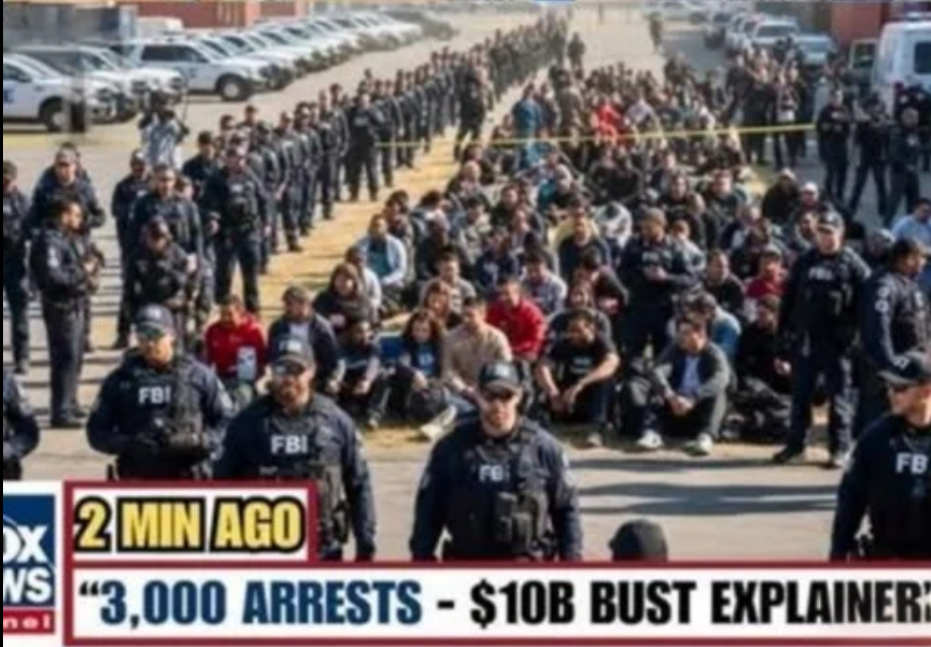
In a sweeping operation that reverberated across Los Angeles, more than 3,000 suspects were taken into custody as authorities moved to dismantle what they described as a staggering $10 billion criminal network. Dawn did not arrive quietly in the city’s neighborhoods; instead, it broke alongside flashing lights, coordinated entries, and the rapid execution of search warrants. Doors opened under federal authority, evidence was cataloged, and an alleged hidden empire began to crumble under the weight of a long-building investigation.
Officials state that the pipeline was allegedly tied to the powerful Sinaloa Cartel, with its reach extending across Southern California. According to investigators, the network blended traditional trafficking methods with modern financial tools. Weapons caches were uncovered in multiple locations, while cryptocurrency accounts and shell companies were allegedly used to disguise the movement of profits. Secret financial ledgers, seized during coordinated raids, are said to map a complex web of transactions linking street-level activity to high-level organizers.
Federal authorities described the system as industrial in scale. Prosecutors claim narcotics, cash, and digital assets flowed through carefully segmented channels designed to minimize risk and maximize efficiency. By dividing responsibilities among numerous intermediaries, the organization allegedly created layers of insulation between leadership figures and day-to-day operations. This structure, officials argue, allowed the network to operate in the shadows for years, shielded by complexity and calculated secrecy.
The investigation required collaboration among multiple law enforcement agencies, forensic accountants, and cybercrime specialists. Analysts traced encrypted communications and blockchain transactions, while field agents coordinated synchronized actions across counties. Authorities emphasized that dismantling such an enterprise demanded patience and precision. Each arrest and seizure, they say, represents not only a tactical victory but also a disruption of systems that fueled violence and instability in affected communities.
Leaders are calling the operation a historic turning point in the fight against organized crime. In press briefings, officials highlighted the courage of investigators and the resilience of neighborhoods long impacted by illicit activity. They framed the crackdown as a moment when fear gave way to accountability — when silence was replaced by decisive enforcement. For many residents, the visible scale of the action offered a sense of relief and renewed confidence in public institutions.
Yet even as one chapter appears to close, larger questions remain. Complex criminal enterprises rarely vanish overnight, and experts caution that vigilance must continue. The nation now watches to see whether this bold strike will mark the beginning of lasting change or simply a dramatic headline in an ongoing struggle. In Los Angeles, however, the message is clear: when hidden systems are brought into the light, even the most formidable empires can fall.