THE WOMAN KING 2 (2026)
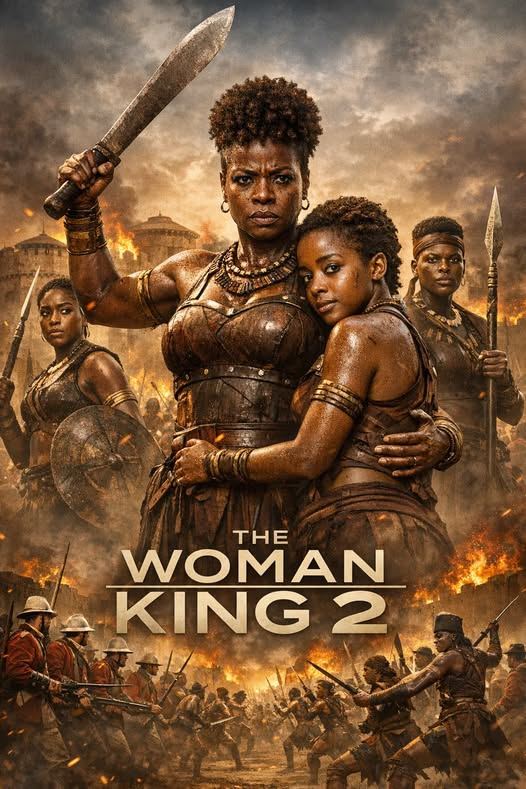
The Woman King 2 (2026) continues the historical epic that began with The Woman King, expanding the powerful story of the Agojie warriors of the Kingdom of Dahomey. The sequel explores the challenges the kingdom faces after its earlier victories, as new enemies rise and the future of the warrior nation becomes uncertain.
The story follows the legendary general Nanisca, portrayed by Viola Davis, who continues to lead the elite all-female army known as the Agojie. After strengthening the kingdom and protecting its people, Nanisca now faces political tension both inside and outside Dahomey. Neighboring kingdoms and foreign powers begin to see Dahomey as a growing threat, setting the stage for new conflicts.
As trade routes expand and outside influences reach the region, the kingdom becomes caught in a dangerous struggle for power. Rival forces attempt to weaken Dahomey by supporting rebellions and attacking its borders. Nanisca must once again prepare the Agojie for war, but the battles ahead will be more complex than ever before.
The sequel also focuses on the next generation of warriors. Younger recruits are being trained to join the Agojie ranks, learning the discipline, courage, and loyalty required to defend their homeland. Through their training and struggles, the film explores how the legacy of the Agojie continues even as the world around them changes.
The action sequences would likely be even larger in scale than the first film. Massive battlefield clashes, tactical ambushes, and intense hand-to-hand combat highlight the skill and bravery of the Agojie fighters. The choreography emphasizes traditional weapons, coordinated formations, and the strategic leadership that made the warriors famous.
Beyond the action, the story continues to explore themes of leadership, sacrifice, and unity. Nanisca must balance her duty as a warrior with her responsibility to guide the future of the kingdom. The film examines how strong leadership can inspire a nation but also the heavy burden carried by those who must protect their people.
Visually, the film would return to the rich cultural setting of Dahomey, with detailed costumes, vibrant environments, and powerful battle scenes. The landscapes, royal courts, and warrior training grounds help bring the historical world to life while emphasizing the strength and pride of the kingdom.