A Story Medicine Could Hardly Explain
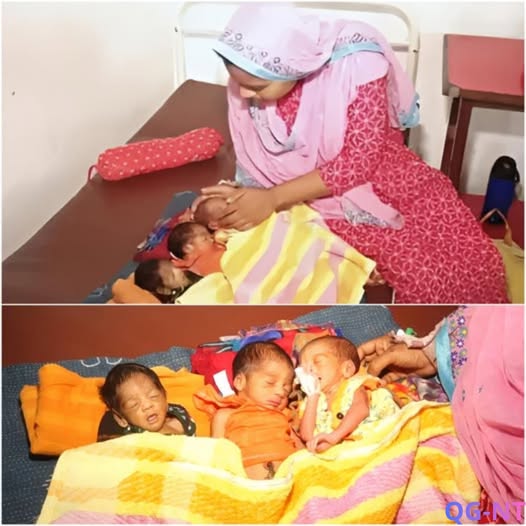
A Story Medicine Could Hardly Explain
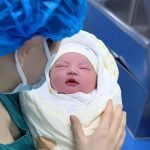
Arifa, a young mother from Bangladesh, believed she had already completed one of the most important moments of her life when she gave birth to her baby boy, holding him close and stepping into motherhood with all the love and hope she carried in her heart.
Everything seemed normal at first, as she began recovering and caring for her newborn, adjusting to the rhythm of life with a baby and the quiet exhaustion that comes with those early days.
But just 26 days later, something unexpected happened.
Arifa began experiencing pain that felt unusual and concerning, a discomfort that could not be easily explained by a recent delivery, prompting her to return to the hospital in search of answers.
What doctors discovered next was something so rare that it left even experienced medical professionals stunned.
Arifa was still pregnant.
Not only that, she was carrying twins in a second uterus, a condition known as uterus didelphys, where a woman is born with two separate uterine cavities.
It was an extraordinary situation—one pregnancy had already come to term, while another had continued developing at the same time, hidden and unnoticed until weeks later.
For Arifa and her family, the news was almost impossible to process, a mixture of shock, confusion, and disbelief as they tried to understand how such a thing could happen.
Doctors quickly shifted their focus to ensuring the safety of both mother and babies, carefully monitoring the pregnancy and preparing for what would come next.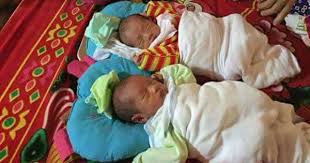
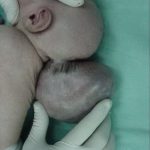
Soon after, Arifa gave birth again.
This time, she welcomed not one, but two more children—a baby boy and a baby girl—bringing the total to three newborns in less than a month.
What had started as a single birth had turned into an extraordinary story of life unfolding in a way few could ever imagine.
The medical rarity of her condition made headlines, but beyond the science and surprise, there was a family learning to embrace a reality that changed overnight.
Caring for one newborn is already a challenge, but caring for three, each born under such unusual circumstances, required strength, patience, and unwavering support.
Despite the challenges ahead, Arifa and her family chose to focus not on the difficulties, but on the blessings they had received.
Gratitude became their anchor, helping them navigate the uncertainty and the demands of raising three infants at once.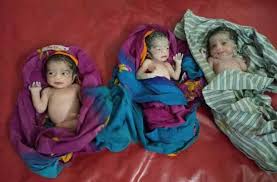
Each child represented a miracle in their own way, a reminder that life does not always follow logic or expectation.
Their story is not only one of medical rarity, but of resilience, of a mother’s strength, and of a family’s ability to adapt to the unimaginable.
It shows that even in the most unexpected situations, love has a way of growing to meet whatever comes.
Sometimes, life writes stories that feel almost impossible, stories that challenge what we think we know and remind us of how extraordinary the human experience can be.
And in Arifa’s case, that story is one of surprise, courage, and three small lives that arrived against all odds, forever changing everything.