BORN WITH AN EXTRAORDINARILY RARE HEART DEFECT THAT LEFT DOCTORS PREPARING FOR THE WORST
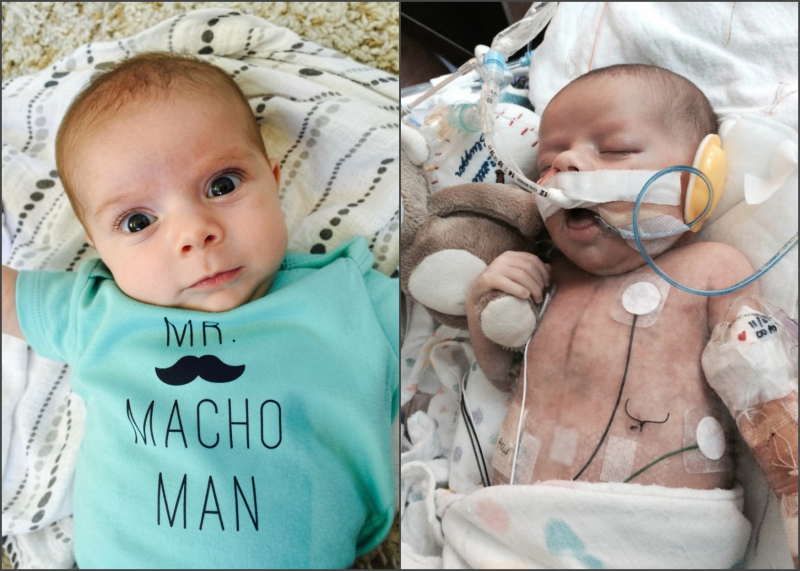
The baby’s condition, tetralogy of Fallot, was made even more complex because he was also missing his pulmonary valve and one of his pulmonary arteries was detached. But one doctor gave the worried parents a reason to hope.
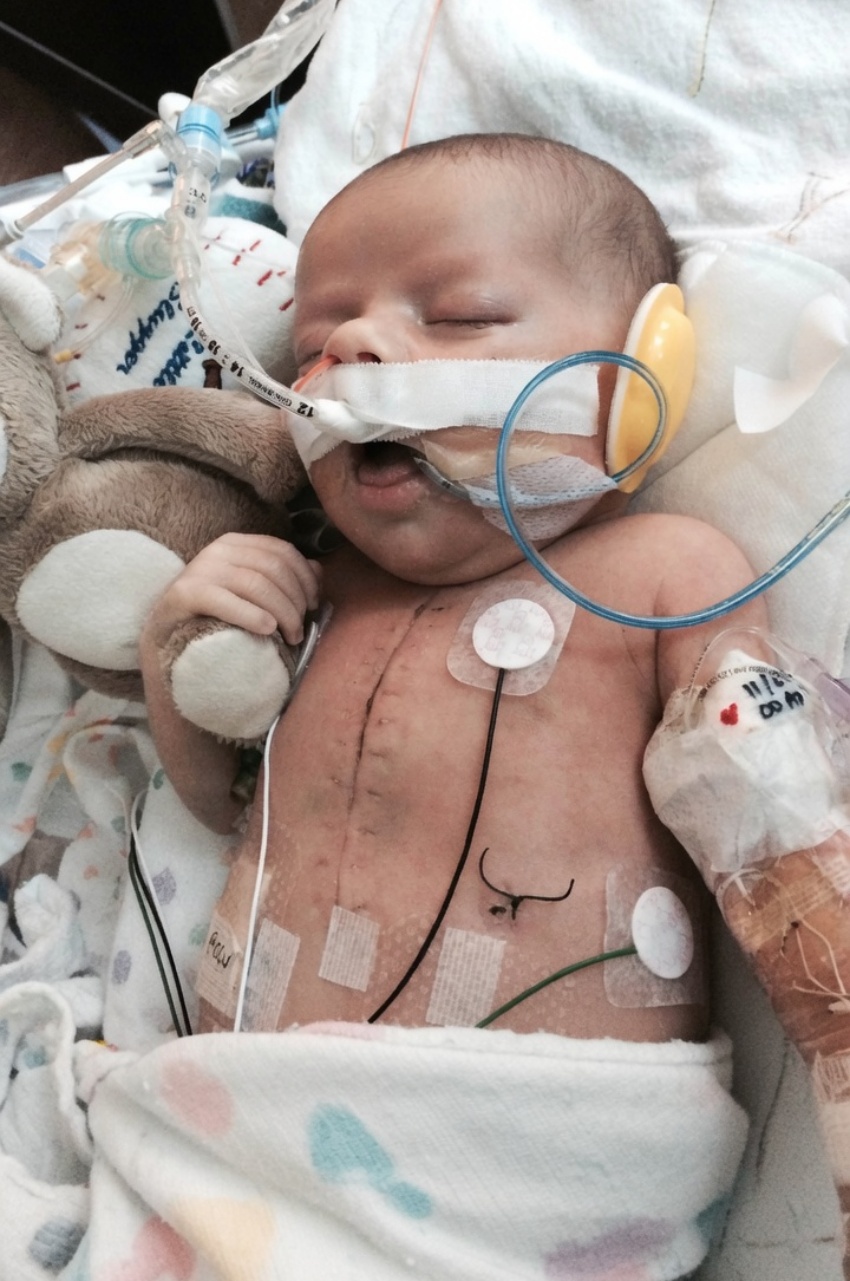
Five-month-old Jackson Lane has a large scar that looks like a giant zipper down the center of his chest.
His father, Andy Lane, a former coach for the Chicago Cubs, calls it a baseball scar. That’s because it looks a lot like the seams of a hardball, and beneath the scar is a heart that many feared might never beat on its own.
Elyse Lane was 20 weeks pregnant in June when she went for a routine fetal exam at her doctor’s office in Phoenix. She and Andy knew they were having a boy and, based on earlier appointments, they weren’t expecting any surprises. But the ultrasound revealed there was a serious problem with the baby’s heart.

The first specialist they saw explained that the baby was missing his pulmonary valve and that his pulmonary artery was unusually enlarged. The artery was nearly 10 times larger than expected, placing significant pressure on his developing airway. Their doctor told them they should consider all available options. Even if the baby reached full term — and the doctor explained that wasn’t certain — he would likely need breathing support after birth.
“When we asked what the outlook was and what his future might look like, we got very few clear answers,” Elyse said. “It was overwhelming.”
Two days later, they took a red-eye flight to Boston for a second opinion. There, a specialist diagnosed their baby with tetralogy of Fallot, a rare heart condition affecting blood and oxygen flow. The baby’s condition was further complicated because he was also missing his pulmonary valve and one of his pulmonary arteries was detached. But the doctor also gave the anxious parents their first real hope. The baby appeared strong and active in the womb, and if he reached full term, there was a surgeon not far from their Arizona home who had the experience to perform the complex repair: Frank Hanley, MD, cardiothoracic surgeon at Lucile Packard Children’s Hospital Stanford and Stanford Children’s Health.
The couple traveled to Palo Alto to discuss the intricate procedure with Hanley. Their baby’s rare condition was extremely complex, but Hanley explained that he wouldn’t know exactly when surgery would be needed until after birth, once the baby’s breathing could be fully evaluated. The most important thing the couple could do was try to keep the pregnancy going as close to full term as possible. They returned to Arizona and waited.
“Once we met Dr. Hanley, I knew everything was going to be OK,” Andy said. “We drew so much confidence from him. He told us: ‘I’ve done this before, and I can do this again.'”
With renewed hope, the Lanes then had to find a way to make it all possible. Andy turned to his baseball connections and contacted the Baseball Assistance Team to see if the league-affiliated organization could help with their growing medical, lodging and travel expenses. Just before the delivery, they learned BAT had approved a significant grant. Friends from the baseball community and their families also rallied around them, raising additional funds for Jackson through social media.
When Elyse was 36 weeks pregnant, she and Andy packed their bags and flew to California, expecting to spend the final weeks of the pregnancy near Lucile Packard Children’s Hospital, where she would deliver and Jackson would undergo surgery. Just two days later, however, doctors noticed the baby’s heart rate changing unexpectedly and decided it was time to induce labor.
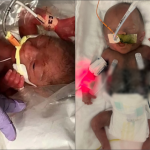
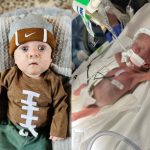
Six-pound, 5-ounce Jackson Lane arrived at 10 p.m. on Oct. 10 — nearly four weeks early — in a room filled with 13 doctors, nurses and specialists. Jackson arrived in extremely critical condition, unable to breathe on his own. His enlarged pulmonary artery had placed severe pressure on his airways, and he was immediately taken to the neonatal intensive care unit, where he was placed on advanced life support.
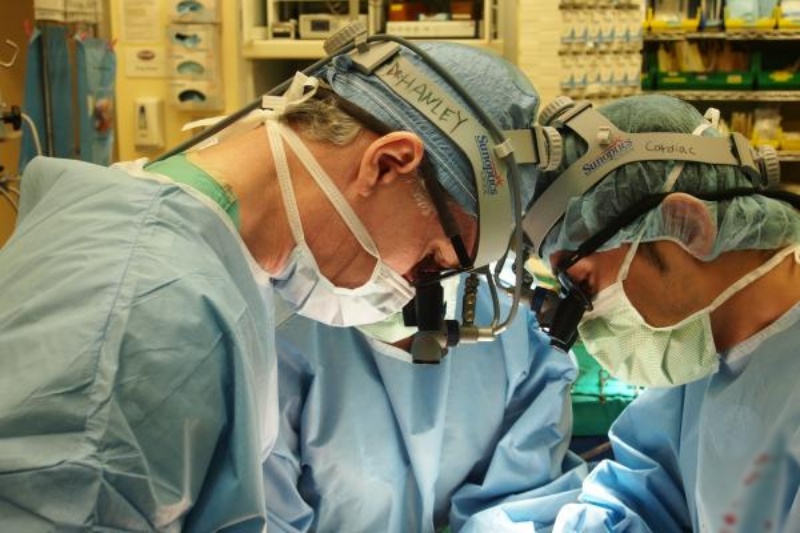
“Jackson’s condition was about as serious as you can imagine,” said Hanley, a professor of cardiothoracic surgery at the School of Medicine. “A case like this only comes around once every four or five years.” Hanley decided surgery couldn’t wait because Jackson was unable to breathe independently.
At just 5 days old, Jackson underwent a 13-hour operation that gave him a chance at life. Hanley and his team performed a remarkable reconstruction of Jackson’s heart. They implanted a pulmonary valve, reduced the size of his enlarged right pulmonary artery, and rebuilt his small, disconnected left pulmonary artery. Hanley also performed the highly specialized LeCompte maneuver, moving Jackson’s pulmonary arteries from behind the heart to the front, creating space for his compressed airways to grow and recover.
“The benefit of moving it from behind to in front is that it relieves the pressure on the breathing tubes,” Hanley said. “It’s like driving a car; there are different routes you can take to reach the same destination. As long as the pulmonary arteries are re-routed properly, there is no downside to placing them in front of the aorta.”

Remarkably, Jackson and his parents were able to leave the hospital shortly after Thanksgiving, when he was just 7 weeks old — nearly four months earlier than anyone had expected. Thanks to the surgery, his airways were fully open and he was breathing normally.
“Nobody at the hospital could believe how quickly he recovered,” Elyse said. “We feel incredibly fortunate that we found Dr. Hanley and that our son kept showing such amazing strength.”
Jackson and his parents were overjoyed to be home in time for his first Christmas.
“We are so grateful. He’s our Christmas miracle,” Andy said.
Other than a few future procedures — including replacing his heart valve as he grows — Jackson is now expected to enjoy a long, active and healthy life.
“He can now do anything he wants in life,” Elyse said. “He’s already overcome his biggest challenge.”
Source: Stanford Medicine