TRAIN TO BUSAN 3 – REDEMPTION (2025)
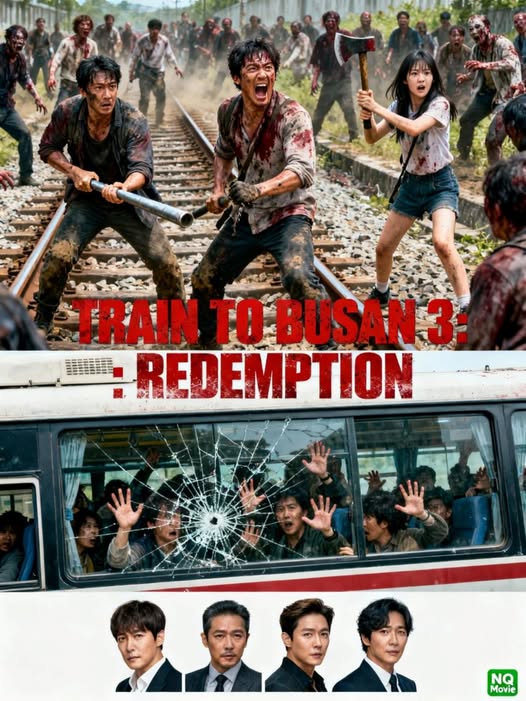
Train to Busan 3: Redemption arrives as a powerful and emotionally charged return to the franchise’s roots, delivering the human depth, claustrophobic tension, and relentless action that made the original film a global phenomenon. After the more expansive, action-heavy approach of Peninsula, this third chapter wisely narrows its focus—bringing back the raw intimacy, moral conflict, and heartbreaking storytelling that fans have been craving.
Set several years after the zombie outbreak has pushed humanity to near extinction, the film introduces a new protagonist: Ji-wan, a former military medic haunted by the people he failed to save during the early days of the infection. Living in a fortified refugee district, he is given a nearly impossible mission—to escort a group of survivors, including a young girl with possible immunity, across the ruins of the peninsula to a rumored evacuation train departing from Busan. It is a direct thematic echo of the original film, and the story uses this framework to explore redemption, trauma, and the desperate hope that survival alone is not enough.
The atmosphere is gripping from the beginning. Abandoned train stations overgrown with vines, dark tunnels filled with silent corpses, and shattered cityscapes create a world that feels both familiar and transformed. The film excels at tension-building, using shadows, sound design, and sudden bursts of chaos to keep audiences constantly on edge. The zombies remain one of cinema’s most terrifying interpretations—fast, ravenous, and unnervingly animalistic. Their swarm sequences are brutal, beautifully choreographed, and accompanied by the emotional stakes that made the franchise famous.
What sets Redemption apart is its return to deeply human storytelling. Ji-wan’s internal struggle mirrors the emotional arc of earlier films: the guilt of survival, the weight of responsibility, and the fear of repeating past mistakes. His bond with the young girl becomes the emotional heart of the film, echoing the father-daughter dynamic that defined the original Train to Busan. Their relationship grows through moments of quiet tenderness, silent grief, and shared determination, making the inevitable threats far more devastating.
The supporting characters are equally compelling. The film introduces morally complex survivors—some kind, some desperate, some dangerously unpredictable. Their conflicting motivations create tension even when zombies are nowhere in sight, reinforcing the franchise’s recurring theme: humans can be just as dangerous as the infected. A standout performance comes from a hardened ex-convict who joins the group, serving as both comic relief and unexpected emotional anchor.
Related movies :