Black Panther 3: Shadows of Wakanda (2026)
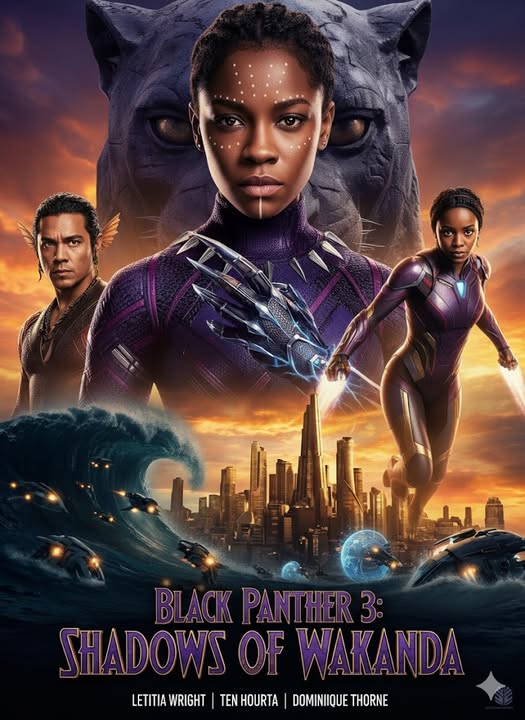
In Black Panther 3: Shadows of Wakanda (2026), Marvel delivers a thrilling and emotionally devastating chapter in the story of Wakanda. The film takes the beloved nation to new, unimaginable depths, pushing its heroes and its ideals to their absolute limits. Directed with visceral intensity, this sequel challenges the legacy of T’Challa by exploring the cost of leadership, sacrifice, and the battle between light and darkness. The floodgates of Wakanda open, quite literally, as Namor, the vengeful king of Talokan, unleashes destruction upon the nation, leaving it plunged into total darkness. In a world where light is a symbol of hope, the sun’s absence for 40 days sets the stage for a battle unlike anything we’ve seen before.

At the heart of this turmoil is Shuri (Letitia Wright), who must take on a burden far heavier than she could ever have imagined. With Wakanda on the brink of total destruction, Shuri embarks on a quest to the ancestral plane, this time not just spiritually, but physically—an experience that redefines her role as the next protector of Wakanda. There, she must face Bast, the Panther god, who demands an unimaginable price: a heart in exchange for light, a sacrifice that shakes the very foundation of what it means to be the Black Panther.
The spiritual stakes are high, but so are the physical ones. The final showdown between the forces of Wakanda and Talokan is breathtaking—an electrifying, heart-pounding 50-minute battle set in total darkness. The only light is the glow of vibranium and Talokanil weapons, each glowing red with the blood they’ve claimed. The choreography is masterful, blending technology with ancient tradition, but it’s the symbolism of the battle that sticks with you—the clash between these two powerful nations, each fighting not just for survival, but for their very existence.

Letitia Wright’s portrayal of Shuri reaches new emotional heights in this film. Her transformation from a witty, tech-savvy princess to the leader of a nation in crisis is a journey of both personal and collective importance. The pain and responsibility she carries in her heart are palpable, especially as she faces the ultimate test of whether she can truly embrace the mantle of Black Panther, even at the cost of her own soul. The stakes of her decision—sacrificing her heart to bring the light back to her people—carry a weight that is felt in every scene. Wright’s performance anchors the film’s emotional core, capturing the profound loss and selflessness of Shuri’s journey.
Tenoch Huerta’s return as Namor, the ruthless and vengeful ruler of Talokan, is another highlight. His performance is layered with both menace and vulnerability, making him a more complex antagonist than ever before. His motivations, while initially steeped in revenge, evolve into a deeper reflection on the future of both Talokan and Wakanda. The battle between these two characters is more than just physical—it’s ideological. Namor’s determination to avenge his people’s suffering by sinking Wakanda is deeply personal, but his ultimate desire for control of the surface world only adds to the film’s political tension.
Dominique Thorne’s Riri Williams, also known as Ironheart, offers a bright, youthful energy that contrasts beautifully with the darker tones of the film. Her role as a brilliant inventor and her unwavering loyalty to Wakanda make her a key ally in the battle against Namor and Talokan. Though she’s thrust into the center of a conflict far larger than herself, Riri’s ingenuity and determination shine through, symbolizing the hope and future that Wakanda fights to preserve.

Angela Bassett, as Queen Ramonda, continues to deliver a powerful performance that embodies the strength and wisdom of a mother and ruler. In this film, she faces her own losses but remains unshakable, a beacon of strength for her people in their darkest hour. Her ability to lead with grace and power, even in the face of unimaginable tragedy, makes her one of the film’s emotional pillars.
The cinematography in Shadows of Wakanda is stunning. The transition from the sun-soaked streets of Wakanda to the pitch-black final battle is as visually arresting as it is symbolic. The use of light and shadow throughout the film is both literal and metaphorical, with each nation’s weaponry reflecting their respective desires and emotions. The vibrant, glowing vibranium clashes with the dark, foreboding weapons of Talokan, creating a stark visual contrast that speaks to the clash of ideologies and the struggle for dominance.
As the film builds to its devastating conclusion, Shuri’s choice to cut out her own heart—offering it to the Panther god so that both nations can see the sun again—is as heart-wrenching as it is heroic. The sacrifice is a brutal reflection of what leadership demands: a willingness to give everything for the good of your people. The weight of that choice is felt throughout the film, and in the final moments, the true cost of power and legacy is revealed. Black Panther 3: Shadows of Wakanda is a cinematic masterpiece, blending action, heart, and the legacy of the Black Panther in a way that will leave audiences both awed and emotionally drained.
Black Panther 3 isn’t just a battle between two nations; it’s a battle for the soul of Wakanda. The price of victory is far greater than anyone could have imagined, and in the end, the question remains: Can anyone truly emerge from the darkness unscathed?
#BlackPanther3 #HeartlessQueen #ShadowsOfWakanda #Marvel #WakandaForever
Related movies: