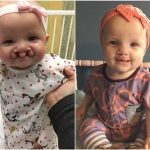
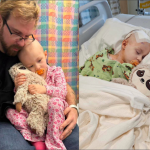
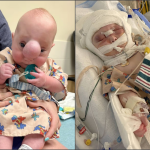
AT 20 WEEKS, CHRISTOPHER’S PARENTS LEARNED THEIR BABY HAD A RARE OMPHALOCELE WITH HIS LIVER OUTSIDE HIS BODY, BEGINNING A RACE TO GIVE THEIR LITTLE BOY A CHANCE
When Christopher’s parents first learned at their 20-week scan that their unborn son had a rare condition, their world changed in an instant.
Doctors told them their baby had an omphalocele, meaning some of his abdominal organs had developed outside his body inside a protective sac. They had never even heard the word before.
“We were terrified. We didn’t know what the future would look like, but we knew one thing — we were not giving up on our son,” his family shared.
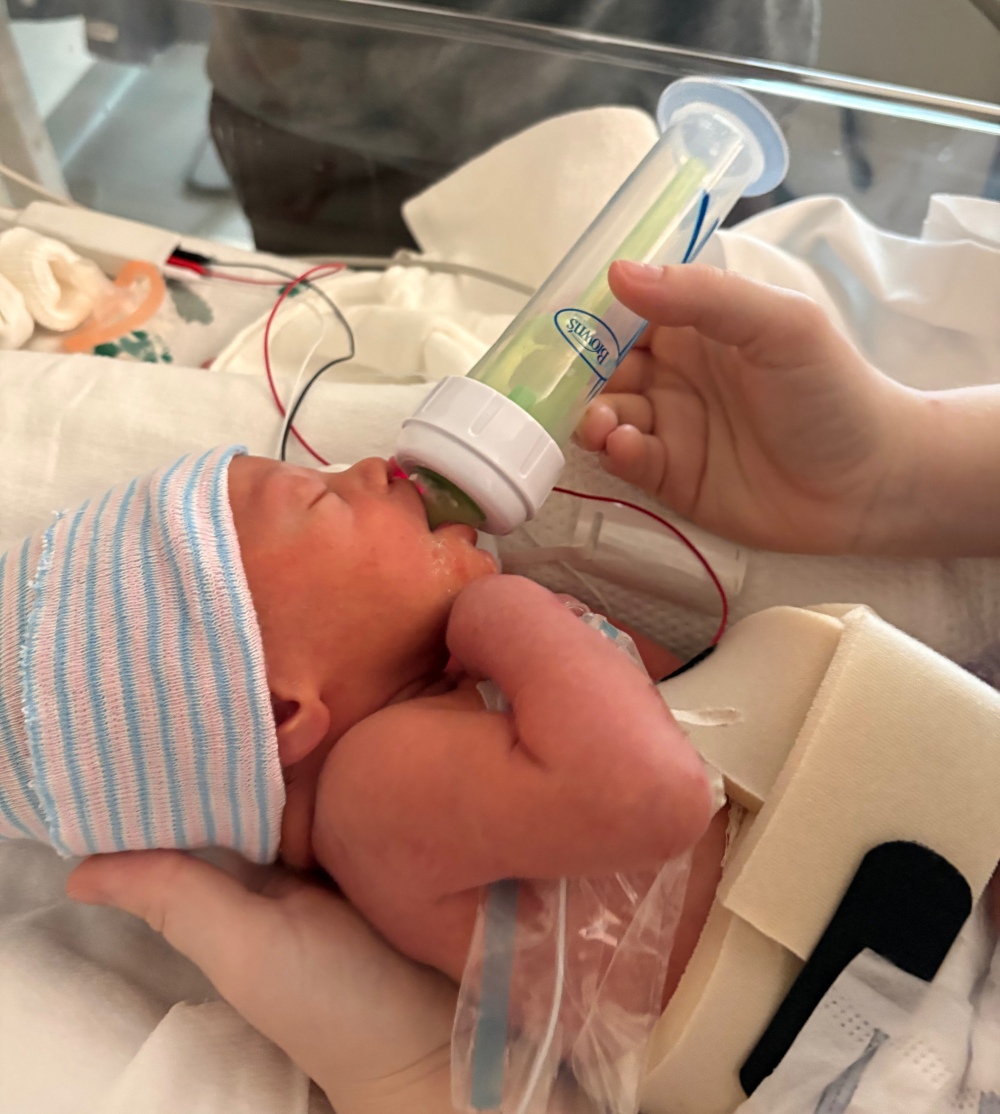
Despite countless appointments, tests and trips to Seattle, Christopher’s parents continued with the pregnancy. Doctors later discovered that his liver was inside the omphalocele, making his condition particularly complex.
Then his mother developed severe swelling, high blood pressure and preeclampsia. Christopher’s Doppler readings also began showing concerning changes, so doctors moved quickly and delivered him by C-section three weeks early on February 23.
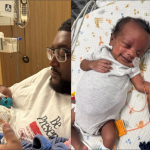
His mother only had a few precious minutes to see her newborn before he was rushed to Seattle Children’s Hospital for specialized care.
“I couldn’t hold him or kiss him. I had just given birth, but all I could think about was getting to my baby,” she recalled.
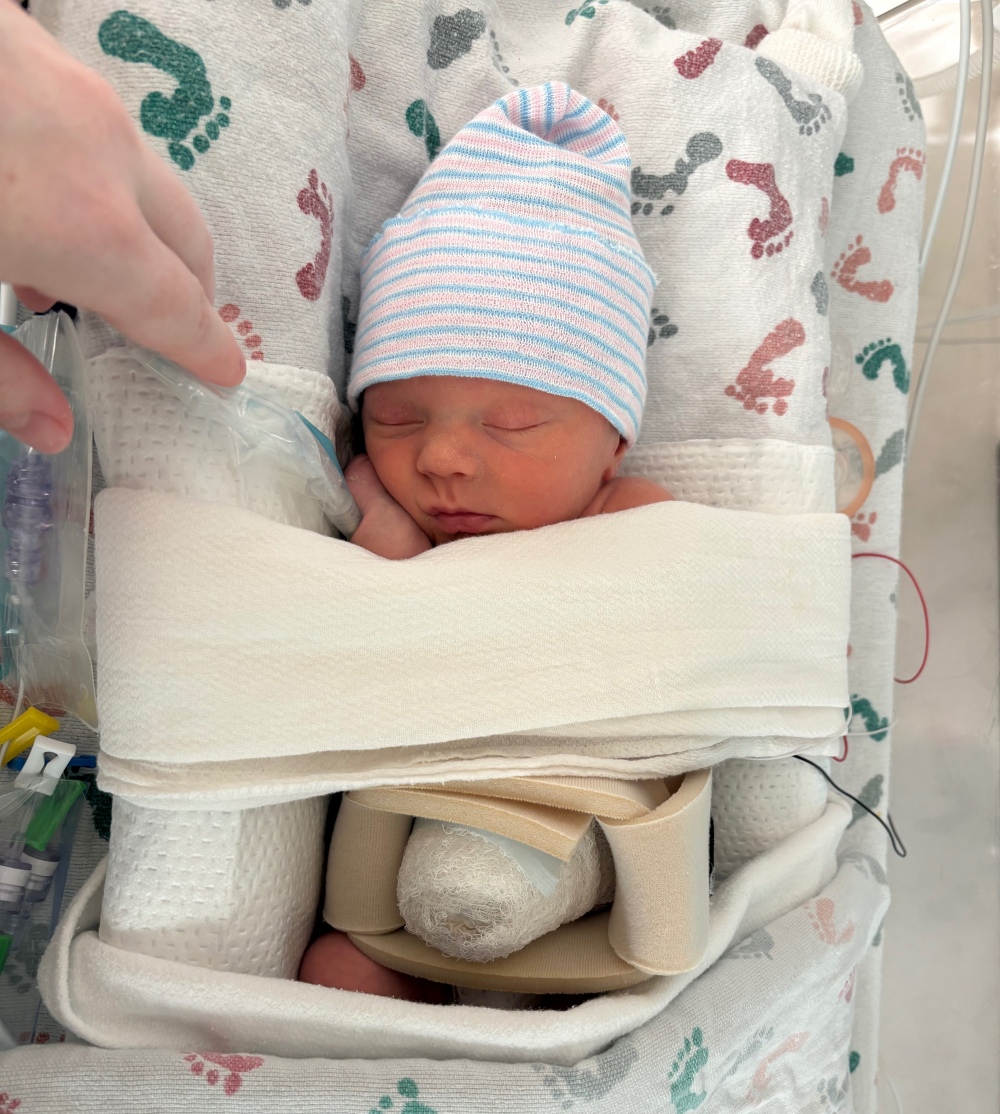
Just 24 hours after her C-section, she left the hospital and made her way to Christopher.
But another challenge was waiting.
Christopher’s platelet levels were dangerously low, meaning surgeons could not safely operate to return his liver to his abdomen. Doctors eventually suspected Neonatal Alloimmune Thrombocytopenia (NAIT), another rare condition affecting his blood platelets. Testing later confirmed that his parents were a match for the condition.
“It broke my heart to think my own blood could be hurting my baby,” his mother said. “He had already fought so hard just to be here.”
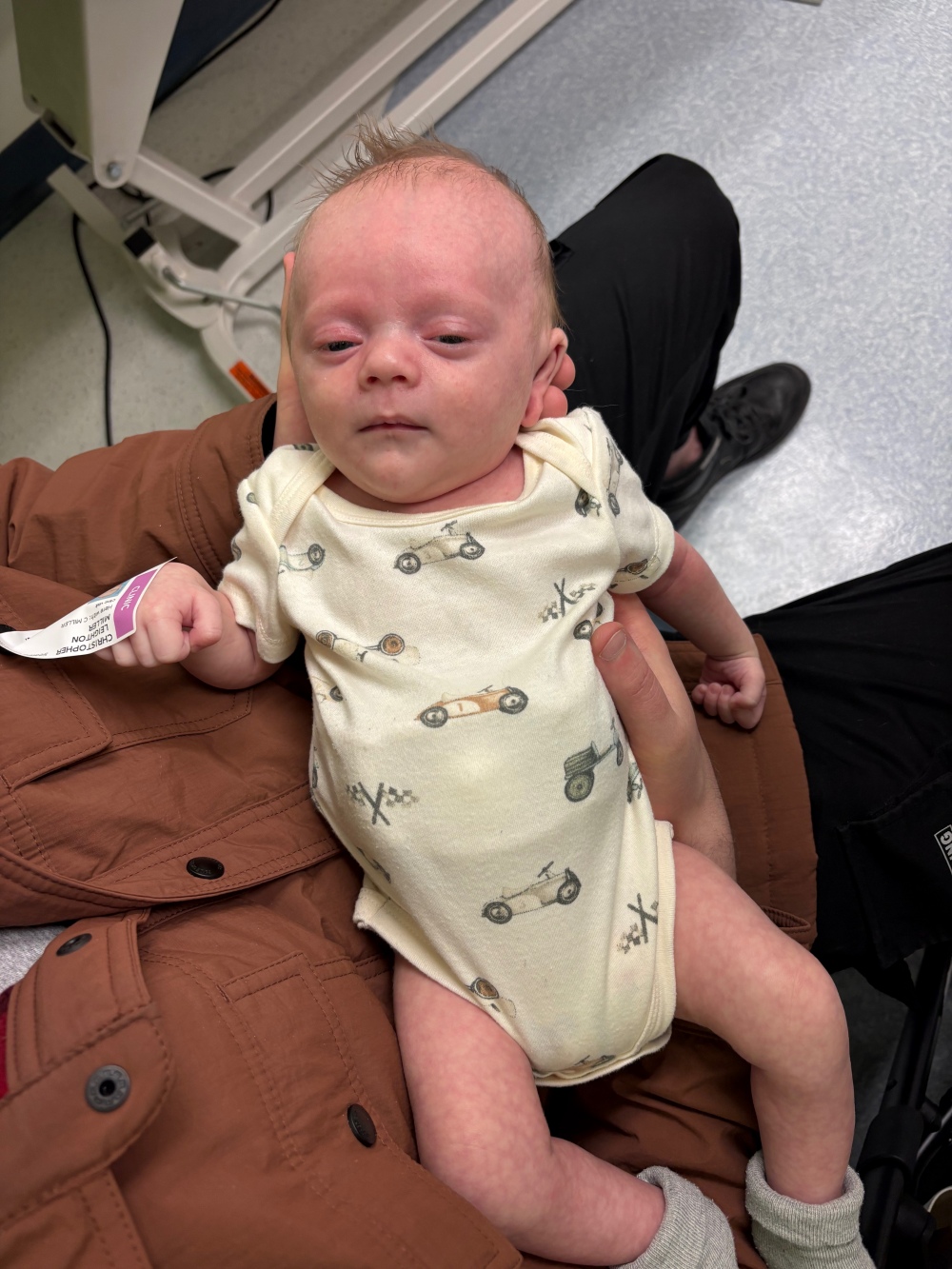
Doctors began treatment with IVIG and targeted platelet transfusions. Slowly, Christopher’s platelet levels improved, giving his medical team hope that surgery could finally be attempted.
But when surgeons opened the protective sac, they discovered that the situation was far more complex than expected. Christopher was still too small and fragile, and doctors determined that attempting the operation carried an extremely low chance of survival.
Instead, they chose a safer approach known as the ‘paint and wait’ method, allowing skin to gradually grow over the exposed liver before a later operation.
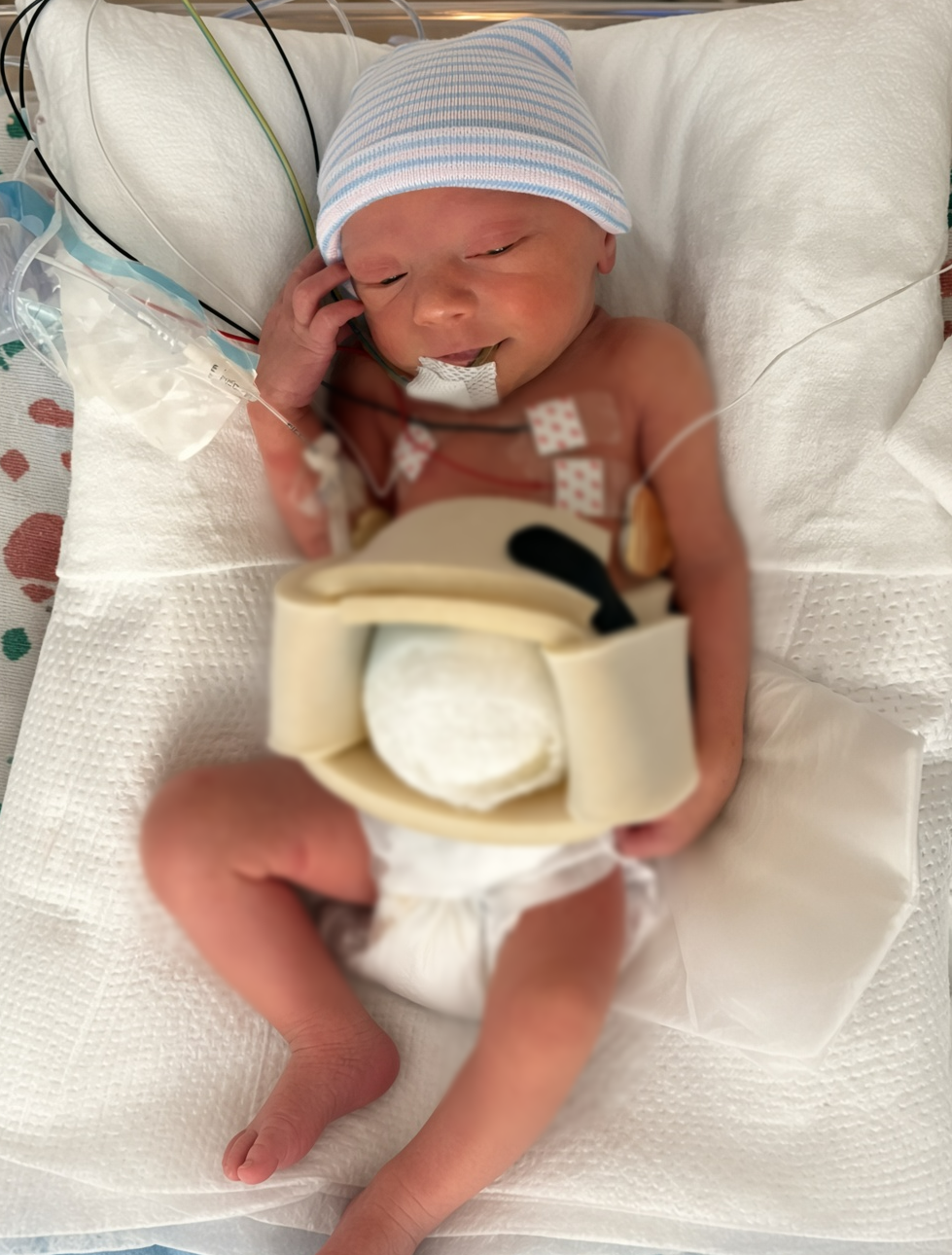
“We were heartbroken that they couldn’t complete the surgery,” his parents said. “But more than anything, we were grateful they chose to protect his life.”
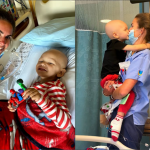
For an entire month, Christopher’s parents remained by his side at Seattle Children’s Hospital, learning how to care for him and refusing to lose hope.
And today, their little boy is doing remarkably well.
His liver is now almost completely covered by skin, with only his umbilical cord remaining to naturally fall away. In the coming months, Christopher will still need surgery to move his liver fully back into his abdominal cavity and repair his abdominal muscles.
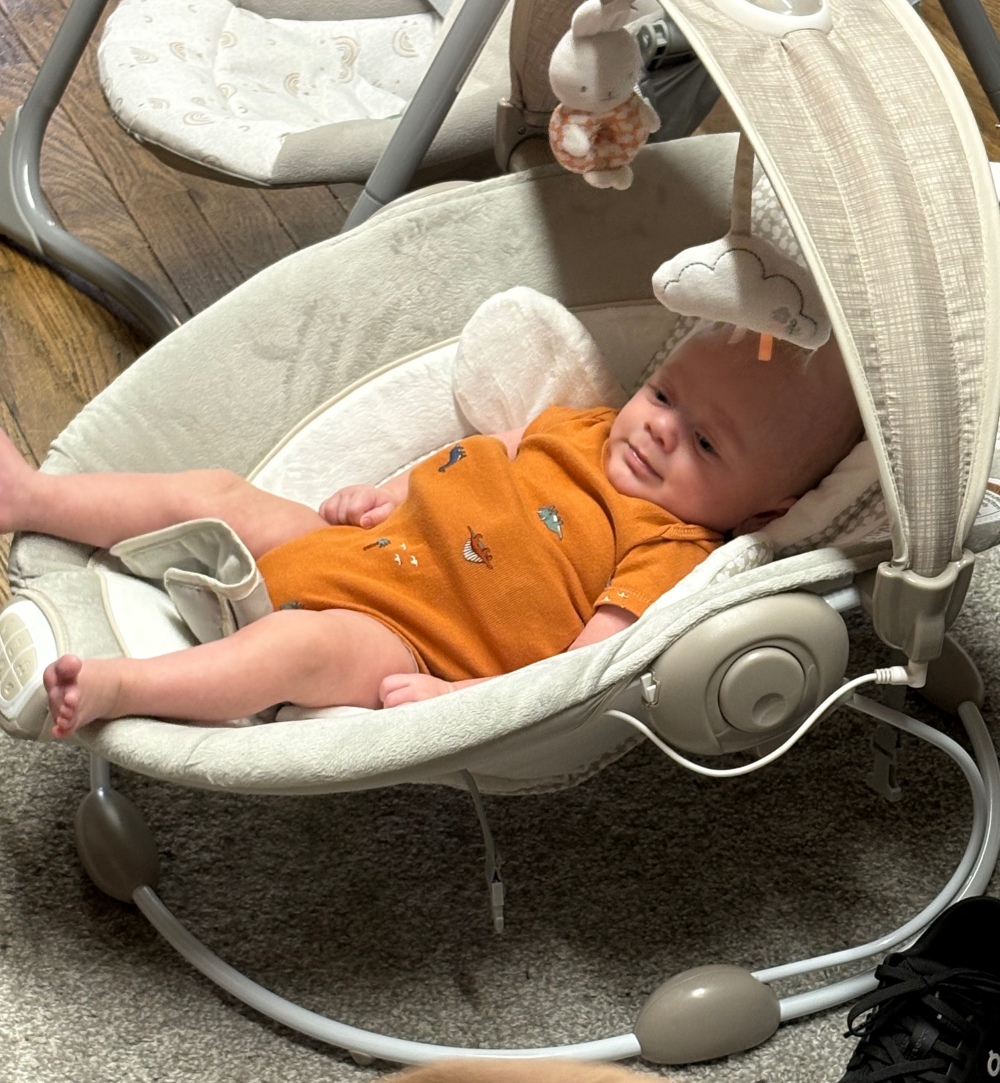
Looking back, his family says they are simply grateful that their son is here.
“We were given so many reasons to be afraid, but Christopher kept showing us a reason to keep going,” they said. “He is not someone we will ever hide or make him feel different because of his condition. He is our survivor.”
The family is now asking for help with medical expenses. Christopher’s care has resulted in bills totaling more than $1 million. Their insurance has covered much of the cost, but they are still facing around $15,000 in remaining expenses and have been unable to qualify for financial assistance.
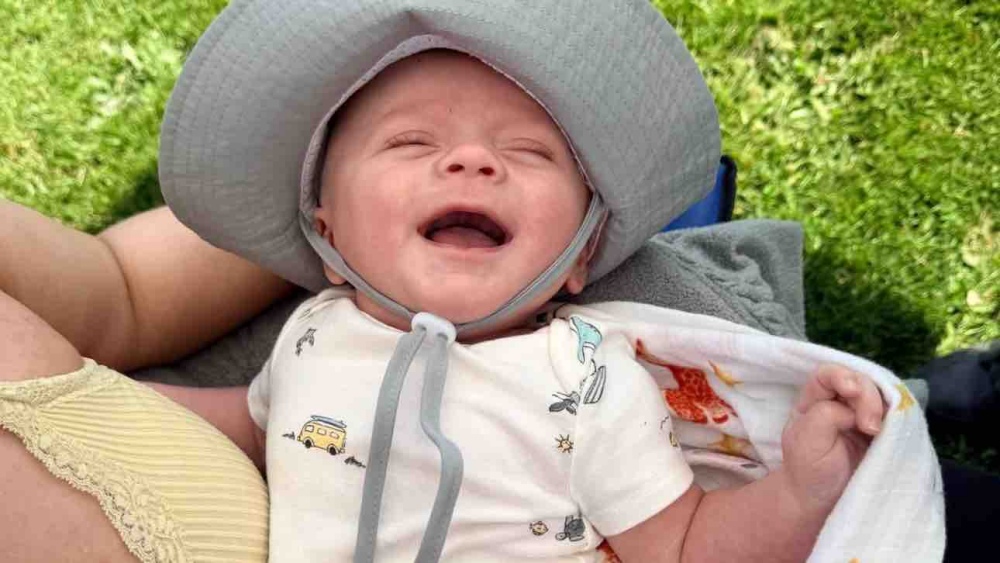
“If you can’t donate, that’s okay,” his family said. “Even taking the time to read Christopher’s story means more to us than you know.”
After everything he has endured before even reaching his first year of life, Baby Christopher has already shown his family something extraordinary: sometimes the smallest fighters can carry the biggest strength.
Source: Gofundme