SAW XI (2026)
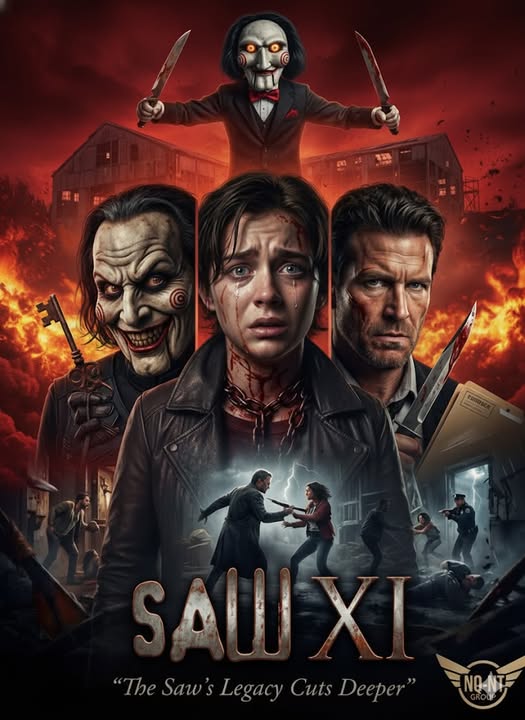
SAW XI drags the franchise back into the shadows with one of its darkest, smartest, and most psychologically punishing entries in years—proving that Jigsaw’s legacy still has teeth.
This chapter shifts away from pure shock value and leans hard into moral manipulation and psychological torment. The traps are fewer, but far more sadistic in concept—designed not just to break bodies, but to shatter convictions. Every choice feels cruel, every second suffocating.
🧠 Story & Themes
At its core, Saw XI is about control, guilt, and the illusion of free will. The film explores how Jigsaw’s philosophy has been twisted by his successors, turning “tests” into ideological warfare. The question isn’t how will they escape?—it’s do they deserve to?
🔪 Traps & Gore
Yes, the brutality is still here—but it’s more precise, more intimate. The traps are mechanical nightmares rooted in irony and personal sin. Gore is used with intent rather than excess, making each moment linger long after it’s over.
🎬 Tone & Direction
Cold, claustrophobic, and relentlessly bleak, the direction embraces minimalism. Dim lighting, tight framing, and a slow, creeping pace amplify dread. The sound design—breathing, chains, ticking clocks—does half the damage on its own.
🧩 Twists & Legacy
True to the franchise, the final act delivers a layered, morally disturbing twist that recontextualizes everything that came before—without betraying continuity. Longtime fans will appreciate the respect paid to Jigsaw’s legacy while pushing the mythos forward.
Related movies :