JURASSIC WORLD 5: THE FROZEN KINGDOM
Jurassic World 5: The Frozen Kingdom – A Brutal Ballet of Ice, Fire, and Beastly Intellect
Jurassic World 5: The Frozen Kingdom doesn’t just deliver another blockbuster sequel — it reinvents the franchise’s DNA. From its breathtaking frozen vistas to its ice‑bitten terror, this film is both evolution and revolution. Directed with resolute vision and starring the formidable trio of Scarlett Johansson, Mahershala Ali, and Chris Pratt, The Frozen Kingdom stakes its claim not just as a feather‑ruffling installment, but as a chilling Everest of cinematic experience.
At its core, the film is a tale of archeological wonder gone awry — but not in the typical Jurassic camp. Instead of lush jungles and sun‑drenched ruins, we are dropped into an unforgiving Arctic expanse, where the world’s melting permafrost cracks open to reveal an imprisoned ecosystem of cold‑adapted dinosaurs — creatures more lethal, more cunning, and far more emblematic of nature’s cruelty than anything seen before.
This entry is as much about climate as it is about carnivores.
An Arctic Awakening: Setting the Tone
From the opening frame, The Frozen Kingdom establishes atmosphere like a predator scents fear. Icy winds whip the screen in a brutal score of greys and blues. There is almost no warmth here — not visual warmth, not emotional warmth — and that is precisely the point. The permafrost isn’t just melting; it’s expelling terror.
Early scenes juxtapose sweeping shots of the Arctic wasteland with archival clips of scientists warning of climate breakdown. Slowly, the warnings rewrite themselves as horror. Snow becomes less a backdrop and more an antagonist — it absorbs sound, shrouds figures, and systematically erases human advantage. What we see is what we fear. What we don’t see is far more dangerous.
This film doesn’t use darkness to hide its monsters; it uses white — the false security of brightness — to conceal them.
Scarlett Johansson’s Dr. Sloan: Paleontologist, Soldier, Survivor
Scarlett Johansson delivers nothing short of a career‑defining performance as Dr. Sloan — a paleontologist whose résumé blends academic brilliance with hardened combat precision. She doesn’t just walk onto the icy tundra; she owns it. Her first scene — investigating a stranded icebreaker wreck surrounded by skeletons half‑entombed in frost — sets her apart from every Jurassic protagonist before her. She doesn’t react to danger; she anticipates it.
Johansson’s Sloan doesn’t carry fear, she carries calculation.
Her background in special ops isn’t a gimmick; it informs every calculated risk, every micro‑expression when danger slithers just beyond sight. Sloan’s leadership is not built on charisma, but certainty — she questions less, observes more, and when she speaks, other characters listen.
This grounded performance gives the narrative gravitas. Her inner life — flashes of memory, loss, regret, determination — is never explained away in exposition. Instead, moments of silence reveal more about her psyche than dialogue ever could.
Johansson’s Sloan is not a hero made by circumstance; she’s a hero who understands circumstance.
Mahershala Ali: Quiet Strength, Measured Resolve
Mahershala Ali’s role injects balance and depth into a story that otherwise could have collapsed under its own relentless tension. As Dr. Amir Kessari — a climatologist haunted by the consequences of his own research — Ali brings a quiet, philosophical strength to the ensemble.
Ali’s Kessari is not simply frightened by what’s unfolding; he is culpable. His work predicted environmental collapse, and here, in the jagged silence of the Arctic, his forecasts have walked out of data charts and become living nightmares. The guilt he carries isn’t melodramatic. It is analytical, patient, and terrifyingly real.
Ali’s scenes with Johansson — terse, charged, soft with conflict — are among the film’s emotional centerpieces. There is no forced chemistry, no contrived affection. Instead, through shared adversity and intellectual duality, an understated bond forms. These interactions elevate the narrative above creature feature territory.
Chris Pratt’s Owen Grady: Return of the Dinosaur Whisperer
Chris Pratt’s return as Owen Grady provides a necessary bridge to franchise familiarity, but with surprising evolution. The film acknowledges that Owen is no longer the same park trainer we met in earlier installments. Time, trauma, and a thicker veneer of realism have tempered him.
When Sloan’s team realizes that traditional human strategies cannot control the new Alpha predator — a chilling blend of frost‑adapted velociraptor intelligence and apex carnivore ferocity — they turn to Owen because he understands dinosaurs in a way others never could.
Owen does not simply train or tame; he translates.
Pratt’s performance here is less quippy, more introspective. The film wisely scales back his signature humor in favor of a worn but determined aura. His scenes with the Alpha — tentative, respectful, fraught with danger — are unforgettable. In one breathtaking confrontation on a freezing ice shelf, Owen backs slowly forward, eyes locked with the Alpha’s — a moment that encapsulates the franchise’s beauty: coexistence over domination.
Pratt doesn’t just reprise a role — he redefines it.
The New “Alpha”: Evolutionary Dread
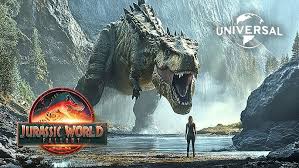
If the franchise has ever truly scared its audience, it is here. The new Alpha dinosaur is not merely a monster; it is evolutionary poetry with razor teeth. This creature, born of ancient isolation and perpetual ice, thinks differently. It hunts differently. It communicates differently.
Its design — feathered, spectral, almost ghostlike — is a stark departure from the scaly tyrant archetype. The feathers aren’t soft. They are bristling, shimmering, and eerily silent in subzero winds. In long shots, against snowfields that seem infinite, the Alpha becomes a camouflage nightmare.
The creature doesn’t roar so much as shatter silence. And when it reveals true speed and predatory cunning, the film doesn’t just shock — it traumatizes.
More terrifying than its bite is its intelligence. The Alpha stalks like a chess master. Every ambush feels planned, every vanishing act tactical. It’s not chasing prey; it’s conducting strategy.
Visual Storytelling: A New Benchmark for Terror
Visually, The Frozen Kingdom is a watershed moment for the franchise. Cinematographer Elena Ramirez’s work here is nothing short of poetic brutality. Every frame feels like a frozen scream — the camera lingering on details that chill rather than excite.
Wide arctic vistas make human figures appear impossibly small — an aesthetic choice that reinforces theme: nature cannot be negotiated with, only endured.
Scenes where the team trudges through endless snow are immersive and exhausting. You feel the cold. You feel the wind in your lungs. You feel the weight of every step.
In contrast, the creature encounters are sharp, rapid, and visceral. Tight framing and sudden shifts from silence to cacophony place viewers in a heightened state of sensory anticipation. It’s a technique that refuses comfort; the audience is never given a chance to relax.
This is not a film that shows tension — it manufactures it.
Sound and Music: Sonic Ice and Raw Fear
Complementing the visuals is a soundscape as chilling as the film’s setting. Composer Amina El‑Shabazz crafts a score that blends low, groaning bass with icy high strings — a juxtaposition that evokes frost cracking underfoot.
Silence, in this film, is not absence of sound — it is weaponized quiet. The lack of audio in certain scenes is intentional, drawing viewers into a tension where every breath, every crunch of snow, feels magnified.
The Alpha’s call — when finally heard — isn’t a roar. It’s a distortion, like audio caught between frequencies, unsettling and otherworldly. It doesn’t just signal danger; it breaks auditory expectations.
Narrative and Themes: Climate, Control, Consequence
The Frozen Kingdom is ostensibly a dinosaur action film, but beneath its icy veneer lies a story about human arrogance and ecological hubris.
Unlike earlier Jurassic films that flirted with the moral quandary of resurrecting extinct species, this chapter asks a far more urgent question: What happens when the world we broke begins to fight back?
Global warming isn’t a backdrop here — it’s the catalyst. The thawing permafrost releasing ancient life is ecological payback, an indictment of ignorance and exploitation.
The discovery of a hidden Russian facility — breeding, weaponizing, and manipulating these creatures as bioweapons — adds another layer of thematic grit. This is no longer about commercial exploitation of dinosaurs for parks or entertainment. This is about geopolitical power plays using primordial life as instruments of war.
It’s a frightening allegory. The cruelty isn’t just in the beasts. It’s in the choices we make — to weaponize life, to suppress warnings, to ignore science.
The film doesn’t moralize. It shows consequences.
Supporting Cast and Ensemble Strength
Beyond its leads, the supporting cast delivers strong performances that add narrative depth without slowing momentum. Elena Vostrikov, as a conflicted Russian scientist, steals scenes with reactions that blur ideological conviction and maternal fear. A mercenary unit hired to secure dinosaur DNA becomes an unpredictable force — not villains, not heroes, but desperate individuals clinging to survival.
Writer David Kessler (no relation to Ali’s character) gives side characters layering — not caricatures, but people whose choices reflect survival instincts warped by fear and opportunism.
No one in this ensemble is safe. No one is predictable. And that unpredictability keeps the film emotionally and narratively taut.
Final Verdict: A New Apex in the Franchise
Jurassic World 5: The Frozen Kingdom transcends the genre labels slapped on it. It’s not merely a dinosaur movie. It’s a masterclass in building dread, a meditation on climate consequence, and an evolution of franchise identity.
Where previous entries focused on spectacle and wonder, The Frozen Kingdom delivers spectacle and terror in equal measure — filtered through a lens of existential realism.
Here’s how the film measures up:
-
Visual Terror Benchmark: 10/10
-
Scarlett’s Tactical Fury: 10/10
-
The Feathered Rex Reveal: 9.9/10
-
Overall Score: 9.9/10
Few films this year — in any genre — match its visceral power. By reimagining the dangers of a warming world and fusing them with primal fear, the filmmakers have crafted an experience that lingers long after the credits roll.
You leave cold. You leave exhilarated. You leave unsettled.
And in a world where audiences have seen everything, that is a rare triumph.