SAW XI (2026)
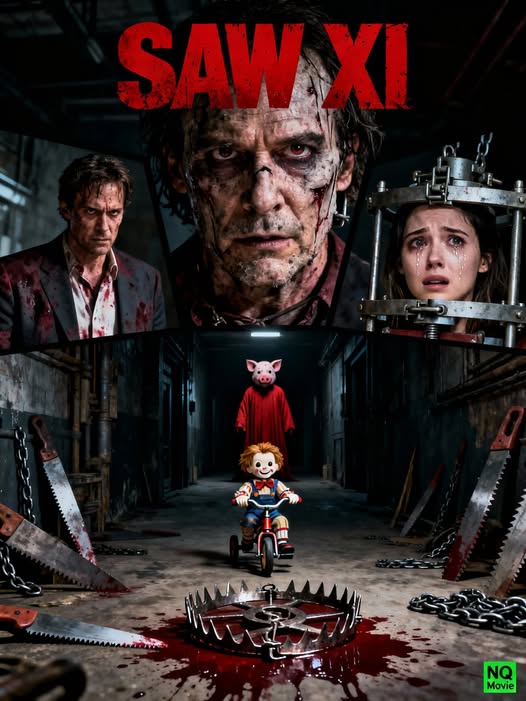
Saw XI finally stops trying to outsmart its own mythology — and that may be its smartest move in years.
Instead of stacking timelines and surprise apprentices on top of already tangled canon, this new chapter narrows its focus to a single, tightly constructed game. The result is a leaner, meaner Saw film that feels far closer in spirit to the original than to the later, lore-heavy sequels.
The story centers on a small group of victims connected by a shared corporate scandal that quietly destroyed dozens of lives without ever making headlines. The traps are no longer built around random cruelty, but around personal responsibility, denial, and public silence. Every test forces its subject to confront not only physical pain, but the social harm they helped normalize.
What works best in Saw XI is clarity.
The film is brutally confident in its structure. Each trap flows logically into the next, and the audience always understands what is being asked — even when the characters cannot bring themselves to accept it. This makes the tension far more psychological than procedural.
Tobin Bell’s presence — limited but sharply used — restores Jigsaw’s philosophical gravity. Rather than preaching, the film lets his ideology echo through recordings and carefully staged environments. The villain is no longer trying to prove he is right. He is testing whether anyone still deserves to argue back.
Visually, the film abandons the overly glossy look of recent entries and returns to grimy, industrial spaces drenched in shadow and decay. The editing is tighter, the camera more patient, allowing dread to build instead of cutting away too quickly.
Related movies :