
ANACONDA (2026)
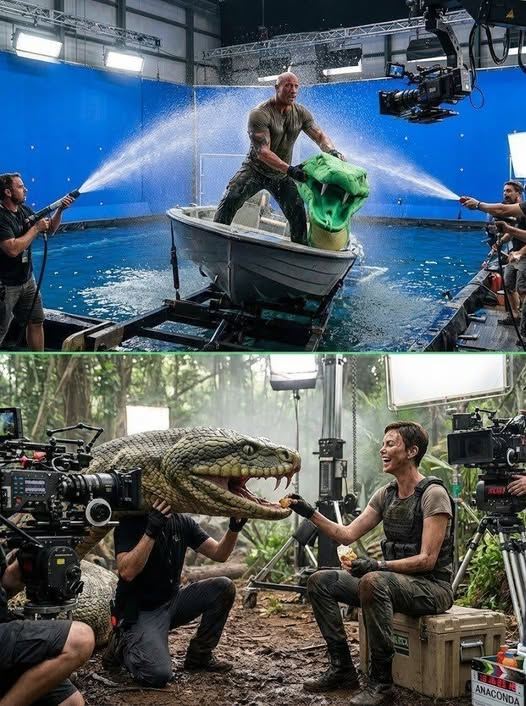
Anaconda (2026) doesn’t try to reinvent the killer-snake formula.
Instead, it smartly repositions the franchise as a survival thriller with modern stakes, where nature is no longer just dangerous — it is angry, shrinking, and unpredictable.
Set deep inside a newly opened research corridor in the Amazon basin, the film follows a mixed team of scientists, private security, and local guides sent to recover a missing biotech expedition. What they find is not a single monster…
…it’s a territory.
The strongest element of Anaconda (2026) is its sense of environment.
The jungle is filmed like a living trap — flooded ruins, half-collapsed research outposts, drone footage swallowed by canopy, and rivers that feel more like moving corridors of death than open space. The camera frequently stays low and tight, creating the constant fear that something massive is sliding just out of frame.
The anaconda itself is treated with far more restraint than in earlier entries.
Instead of exaggerated spectacle, the film leans into scale and silence. Long underwater shots, distorted movement through murky water, and sudden ripples build tension better than cheap jump scares. When the snake finally appears in full view, it feels earned.
Story-wise, this is a cleaner and more grounded narrative than the later sequels in the franchise.
There’s a subtle but effective theme running underneath: human intervention, illegal bio-experiments, and the arrogance of believing the jungle can be controlled.
Related movies :