THE DEVIL WEARS PRADA 2
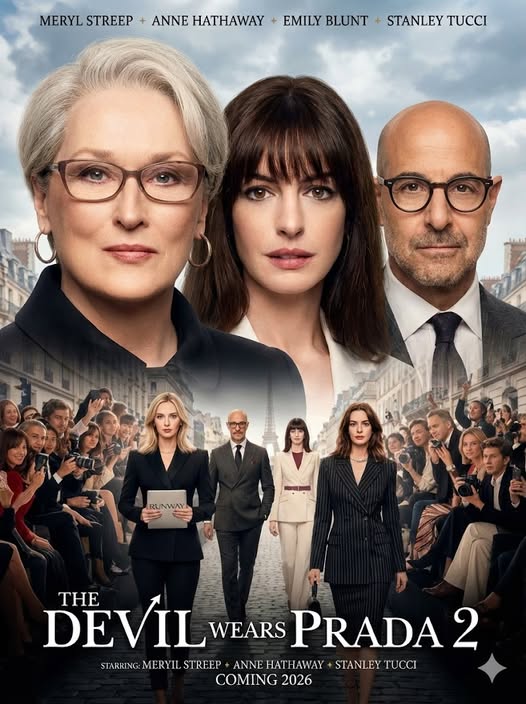
The Devil Wears Prada 2 doesn’t try to repeat the fairy-tale makeover of the original.
Instead, it grows up — just like its audience.
Set nearly two decades after Andy Sachs walked out of Runway, the sequel reframes fashion not as glamour, but as power, survival, and cultural relevance in a collapsing media world.
Andy is no longer a nervous assistant. She’s a respected editor-in-chief of a digital-first publication struggling to stay alive in an industry ruled by algorithms, influencers, and shrinking attention spans. When a major global fashion conglomerate quietly acquires her company, one name suddenly returns to her life:
Miranda Priestly.
Only now… Miranda is no longer untouchable.
The film’s strongest idea is the role reversal.
Andy understands the game. She negotiates. She manipulates narratives. She protects her staff the way she once wished someone had protected her. Watching her slowly realize how much of Miranda lives inside her is the emotional engine of the story.
Meryl Streep’s Miranda (still icy, still surgical with words) is written with surprising restraint. The film dares to show a woman confronting irrelevance — not weakness, but displacement. Fashion is no longer dictated from one desk. It’s fractured, chaotic, and brutally fast.
Where the sequel really shines is in its dialogue.
The confrontations between Andy and Miranda are less explosive — and far more cutting. No screaming. No theatrics. Just controlled, professional cruelty.
Related movies :