PET SEMATARY 3: THE ROOTS OF EVIL (2026)
- DuongNgocAnh
- February 23, 2026
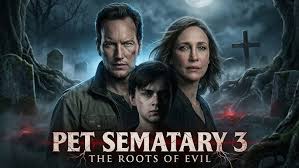
Pet Sematary 3: The Roots of Evil (2026)
The dead have a way of finding you. This chilling tagline sets the tone for Pet Sematary 3: The Roots of Evil (2026), the next chapter in the terrifying world created by Stephen King. The film dives deeper into the darkness that has haunted the small, isolated cemetery for generations. With new characters, new horrors, and a fresh sense of dread, this latest installment promises to breathe new life into the franchise, amplifying its sense of unease while honoring the eerie atmosphere that has captivated fans of the series since the beginning.
Pet Sematary 3: The Roots of Evil opens with an unassuming family moving into a new home. On the surface, their new life seems full of promise, a fresh start away from the hustle and bustle of city living. Elizabeth Debicki stars as Claire, the protective and loving mother of two young children. Claire has recently inherited an old house from a relative she never knew, and her family is eager to leave behind their troubled past and settle into the quiet, idyllic town. However, from the moment they arrive, strange occurrences begin to unfold. At first, it’s just a series of small, unsettling events: odd noises at night, things out of place, and a feeling of being watched. But as they dig deeper into the history of their new home, they begin to uncover a sinister secret that no one should ever know.
The property, as it turns out, sits atop the infamous pet cemetery—an ancient burial ground with a dark and terrifying power. This cemetery, as the locals know, has the ability to bring the dead back to life, but at a terrible cost. Claire begins to experience visions of her late husband, who tragically died in an accident years ago. The line between the living and the dead starts to blur, and she realizes that the property she has inherited holds far more than just the remains of beloved pets. The sinister force buried beneath the earth is more powerful and more malevolent than she could ever imagine.
As Claire’s suspicions grow, she reaches out to an enigmatic paranormal investigator played by Tom Hiddleston, a character named Simon, who has a reputation for dealing with the supernatural. Simon is drawn to the town by rumors of the mysterious happenings surrounding the cemetery and the family that now calls it home. He arrives with his own dark past, which has led him to seek out paranormal activity in the hopes of confronting his own demons. Simon is the classic skeptic turned believer, a man who has seen enough horror to know that some things are better left undisturbed. But as he digs deeper into the history of the cemetery, he realizes that the evil that lurks beneath the earth is not only real but growing stronger with every passing day.
Simon’s expertise is complemented by the fiercely intelligent occultist, Amelia, played by Florence Pugh. Amelia is a scholar of the occult, with a deep knowledge of dark rituals, ancient curses, and supernatural phenomena. Her character is mysterious and unrelenting in her pursuit of answers, often pushing boundaries that others are afraid to cross. Amelia’s research reveals that the cemetery has a long history of feeding off grief and despair, drawing people to it in moments of loss and turning their pain into a weapon. She is determined to uncover the origins of the curse that binds the cemetery, but as she delves deeper, she begins to realize that the evil is not just confined to the ground beneath them—it is a force that can possess and manipulate the living.
The trio of Claire, Simon, and Amelia forms the core of the film’s emotional and narrative drive. As they confront the horrors of the cemetery, they become a family of sorts, bound together by their shared trauma and their desperate desire to survive. Each character is haunted by their own personal demons. Claire is still grappling with the loss of her husband and the idea of raising her children in a world filled with unspeakable horrors. Simon is haunted by his past experiences with death and his failure to save others from the supernatural forces that have ruined his life. Amelia, though deeply knowledgeable, is still a student of the very forces she seeks to control, and her quest for answers comes at the risk of losing her own soul. Their journeys are interwoven with the central mystery of the cemetery’s power, as they race against time to stop it before it consumes everything they love.
The film’s atmosphere is suffused with an unrelenting sense of dread, as the characters begin to realize that there is no escape from the cemetery’s influence. It is not just a place—it is a living, breathing entity that feeds on the darkest parts of the human soul. The family’s descent into horror is marked by chilling visions, nightmarish encounters with the dead, and an ever-growing sense of isolation. As Claire, Simon, and Amelia begin to piece together the history of the cemetery, they discover that it has been the source of a series of tragic events spanning generations, each one linked by the curse that binds the land. The cemetery has been responsible for countless deaths and disappearances, and its power continues to grow, feeding off the grief and sorrow of those who dare to disturb it.
The film’s central theme is the inescapable grip of grief and loss. The cemetery does not simply bring the dead back to life—it brings them back changed, twisted by the pain and trauma they experienced in life. As Claire confronts the return of her husband, she is forced to grapple with the idea that the man she loved is no longer the same. He is a hollow shell of his former self, driven by the dark force of the cemetery and no longer capable of the love they once shared. This haunting exploration of what happens when grief refuses to let go is at the heart of the film’s terror.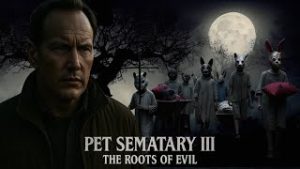
In the final act, the film reaches its terrifying climax as Claire and her allies confront the source of the cemetery’s power. It is a force older than time itself, tied to the land and to the human condition. They must make impossible choices, deciding who and what they are willing to sacrifice to stop the evil from consuming them all. The tension builds to a fever pitch as the line between the living and the dead becomes increasingly difficult to distinguish. Each decision they make could be their last, and the true cost of confronting the darkness becomes horrifyingly clear.
The cinematography of Pet Sematary 3: The Roots of Evil enhances the film’s eerie atmosphere, with the cemetery itself becoming a character in its own right. The dark, twisted trees, the fog that rolls in from the surrounding forest, and the decaying tombstones all serve as a backdrop to the unfolding terror. The camera lingers on the faces of the characters, capturing their fear, their confusion, and their determination as they fight to survive. The sound design adds to the film’s tension, with the wind howling through the trees and the occasional distant whisper that hints at something just beyond the edge of perception. The score, haunting and minimalist, serves as a constant reminder of the inescapable darkness that surrounds them.
As the credits roll, the film leaves its audience with a sense of lingering dread. Pet Sematary 3: The Roots of Evil is not just a supernatural horror film—it is a meditation on the nature of grief, the consequences of disturbing the natural order, and the high price of confronting the past. With its talented cast, including Elizabeth Debicki, Tom Hiddleston, and Florence Pugh, the film brings fresh depth to the franchise, making it not only a thrilling experience but also a poignant exploration of the human condition. It’s a terrifying journey into the heart of darkness, and one that will stay with audiences long after the final scene fades.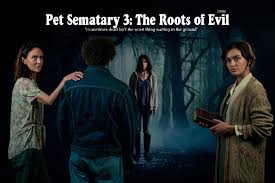
Rating: 9.6/10
A spine-chilling journey into the heart of darkness, with supernatural horror and a cast that brings a fresh depth to this classic tale.