TRAIN TO BUSAN 3: LAST STOP (2026)
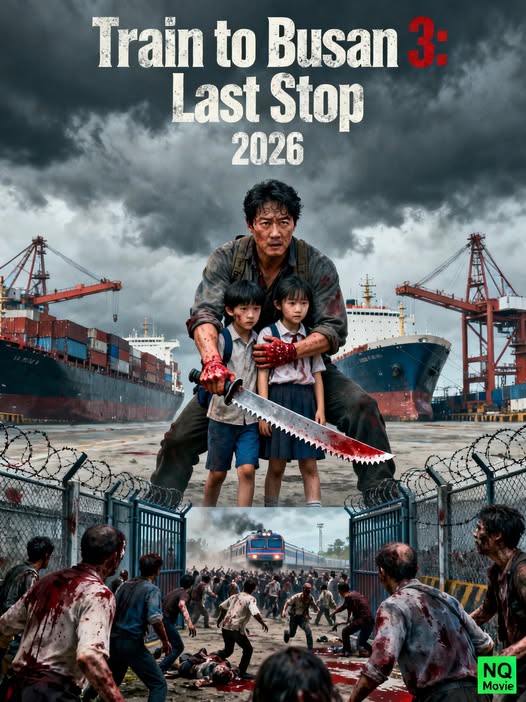
Train to Busan 3 Last Stop 2026 continues the outbreak saga that began with Train to Busan and expanded through Peninsula. This third chapter attempts to restore the emotional intensity of the original while maintaining the broader post apocalyptic scale introduced in the sequel.
The story is set several years after the collapse of South Korea. The peninsula remains heavily quarantined, but rumors circulate about a final evacuation corridor known as the Last Stop, a supposedly secure port where survivors can escape permanently. The narrative follows a small group of survivors who discover that the only way to reach this port is by commandeering a functioning high speed train that cuts through infected zones and abandoned cities.
Unlike Peninsula, which leaned more toward large scale action and vehicular chaos, Last Stop returns to a more contained and suspense driven structure. Much of the film unfolds aboard the train, restoring the claustrophobic tension that made the original so effective. Each carriage becomes a shifting battlefield where space, noise, and timing determine survival.
The emotional core centers on a reluctant guardian figure traveling with a child who is not his own. This dynamic echoes the father daughter relationship from the first film but is written with enough nuance to avoid feeling repetitive. The film explores themes of redemption and responsibility in a world where trust is rare. Supporting characters are given distinct motivations, from a former railway engineer seeking purpose to a medic haunted by past failures.
The infected in this installment feel more dangerous and adaptive. While still driven by sound and speed, there are subtle suggestions of behavioral evolution, creating unpredictability during attack sequences. One standout scene involves a blackout in a tunnel, forcing survivors to move silently between cars while the infected roam in near darkness.
Visually, the film balances bleak urban ruin with the mechanical confinement of the train interior. The cinematography emphasizes narrow corridors and flickering lights, enhancing tension. Outside shots of desolate stations covered in overgrowth create a haunting sense of time passing.
Thematically, Train to Busan 3 Last Stop focuses on finality. It questions whether escape truly means safety or simply postpones collapse. The title reflects both a literal destination and a metaphorical end point for humanity’s mistakes. The emotional climax is restrained rather than explosive, prioritizing sacrifice and closure over spectacle.