ONE-YEAR-OLD GIRL UNDERGOES SURGERY TO REMOVE A 𝖡𝖫𝖮𝖮𝖣-𝖥𝖨𝖫𝖫𝖤𝖣 TUMOR FROM HER FOREHEAD
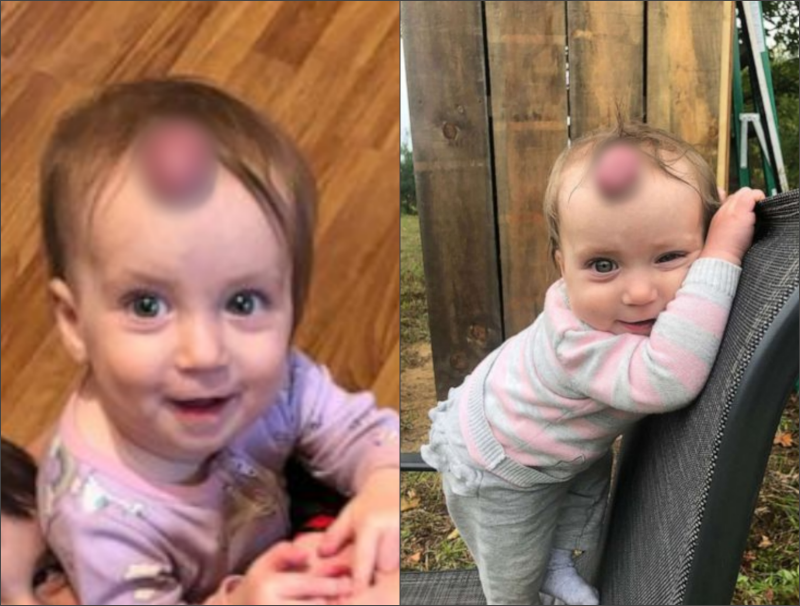
When Chloe McKnight was born 15 months ago, she had what looked like a slight scratch on her forehead, according to her mom, Ashley McKnight.
As Chloe grew, the mark grew too, becoming more prominent and beginning to resemble a red birthmark on her forehead, according to McKnight, from Oro-Medonte, Ontario.
At less than 2 months old, Chloe was diagnosed with a hemangioma, a noncancerous growth made up of extra blood vessels, according to the American Academy of Pediatrics.
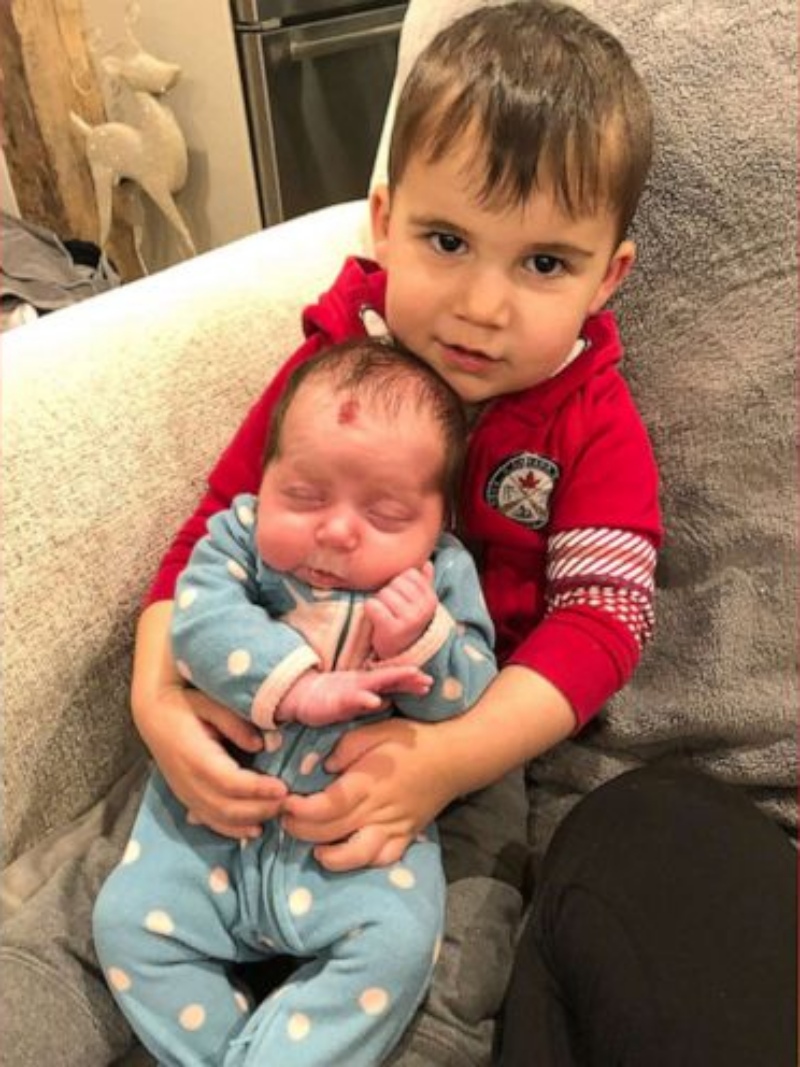
Hemangiomas, sometimes known as baby birthmarks, are the most common benign growths in infants, occurring in around 5% of all births in the United States, according to the AAP.
While most hemangiomas go away on their own, Chloe’s continued to grow, according to McKnight.
“It didn’t look like it was getting smaller at all and it just gradually got larger and larger,” she said. “At first it was just really flat and red, and then it started to grow in height.”
McKnight, also mom to two sons ages 3 and 5, said she extended her maternity leave out of concern for Chloe’s safety.
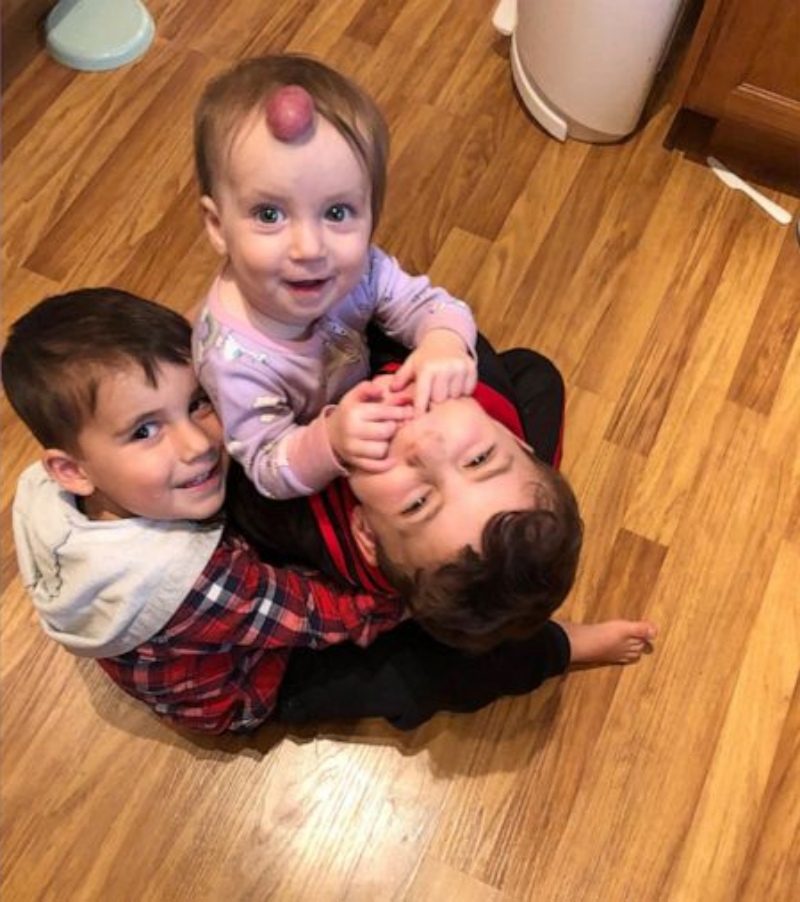
“It’s basically a growth of blood vessels that could bleed if she were to bump it,” said McKnight. “Always that was in the back of our minds, just making sure that she never hit it or anything.”
As the growth became larger, McKnight said she and her husband and Chloe’s brothers treated it as just part of Chloe, touching it and kissing it, but acknowledged that it drew attention in public.
“If you were going out, you would always be reminded of it because people would obviously look up and be curious and wonder what it is,” she said, adding that the coronavirus pandemic helped the family to be in their “own little bubble” at home.
As Chloe got older and the growth continued to increase in size, McKnight said she and her husband searched for a surgeon who could remove it with as little impact as possible on Chloe’s face.
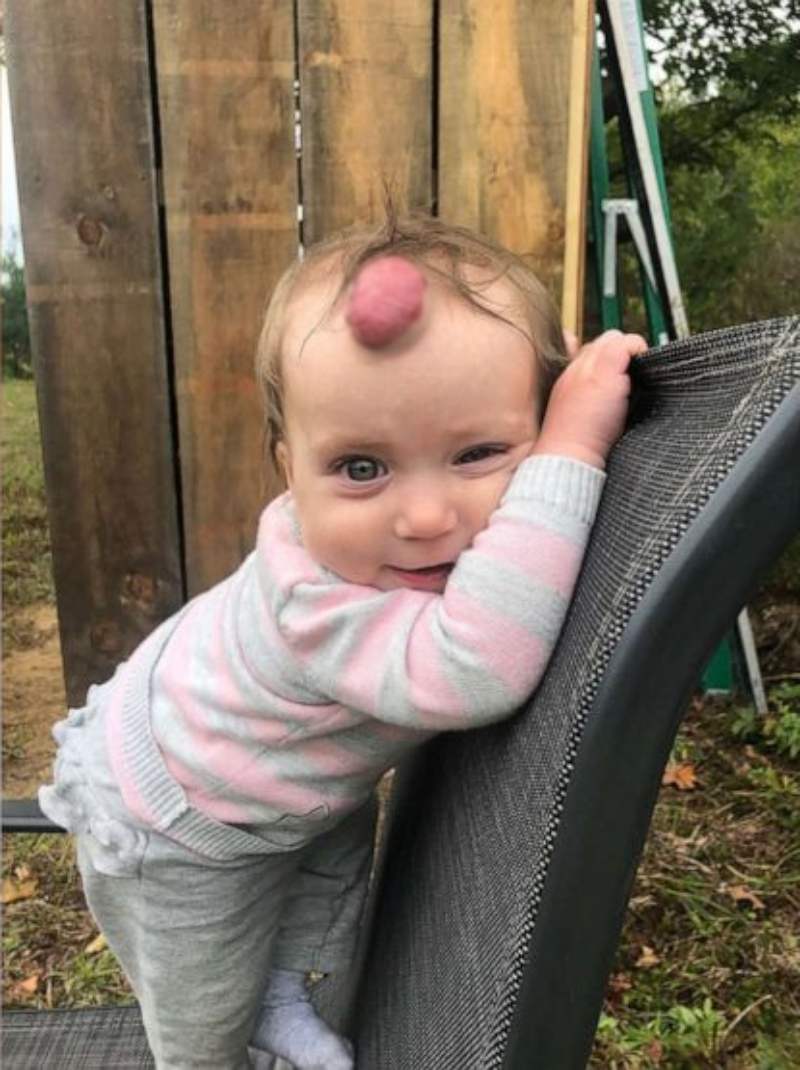
Through a Facebook group for parents of children with hemangiomas, the McKnights met Dr. Gregory Levitin, director of vascular birthmarks and malformations at New York Eye and Ear Infirmary of Mount Sinai in New York City.
Levitin described Chloe’s growth as “unusually large” and one for which “there is no textbook” when it comes to operating.
“When I get these large ones, to have one on the forehead skin is an incredibly challenging area because you don’t have a lot of extra tissue to borrow from,” he said. “It behaves like an invasive growth in the sense that it expands and takes up valuable tissue in the face.”
In January, Chloe and McKnight traveled to New York City for Chloe to undergo surgery.
Levitin removed Chloe’s growth in a three-hour surgery in which he focused on not only controlling the blood vessels within it, but also making sure her face appeared the same after surgery.
“[The growth] extended down and touched the muscle of the forehead, so preserving the muscle and allowing her to have facial expressions was important,” said Levitin. “We wanted the shortest scar possible and so finding ways to carefully adjust the tissue to get the shortest scar possible was equally important.”
Levitin was able to successfully remove Chloe’s hemangioma and the recovery has been surprisingly easy, according to McKnight.
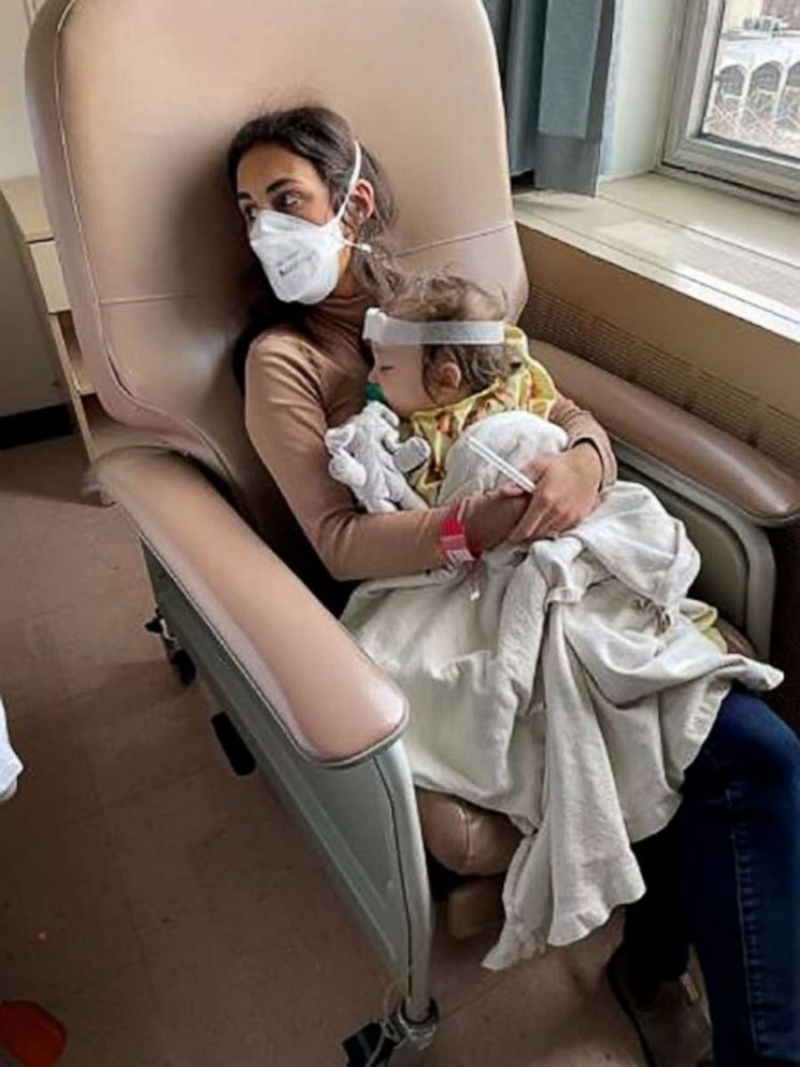
“I feel like she had a harder time with teething pain than with this whole process,” said McKnight. “It made me realize how resilient children are.”
While the swelling on Chloe’s forehead will take more months to go down, the toddler is even more active than before surgery, according to McKnight.
“She’s go, go, go all the time,” she said. “She was just herself and off to the races.”
Levitin said he often sees a transformation like that in patients because hemangiomas can place an unexpected demand on the body’s energy reserves.
“They involve a lot of blood volume and, in doing so, process a lot of the blood and nutrients,” he said. “I hear many stories about parents who feel within 24 hours that there’s been a transformation in their children’s behavior and energy.”
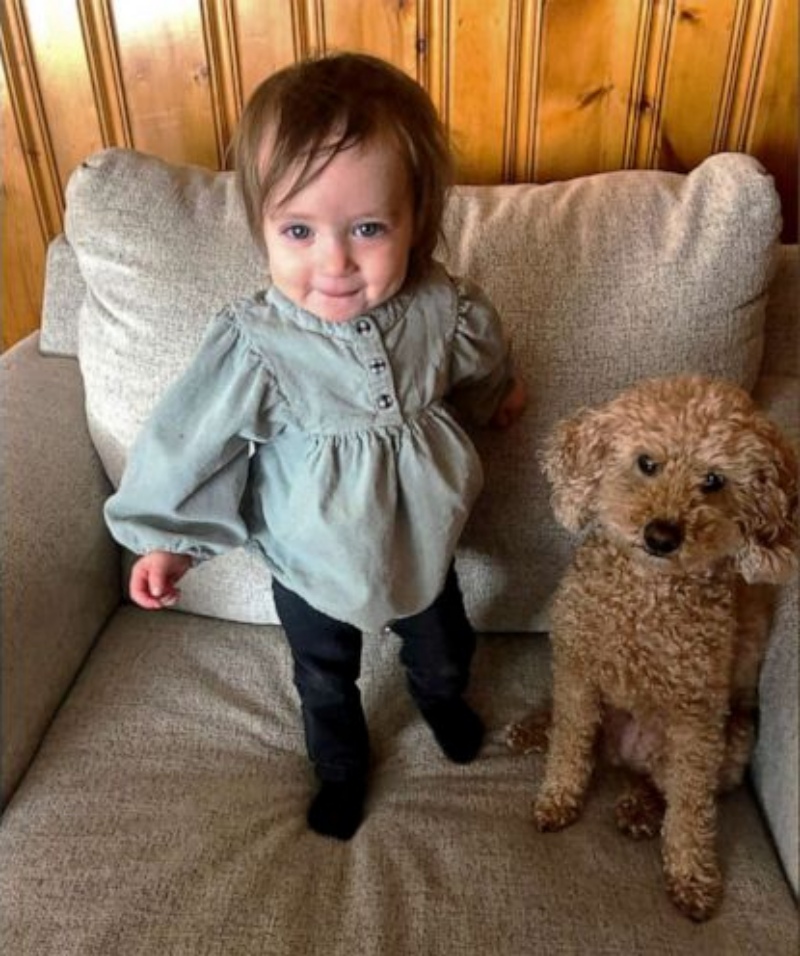
Levitin described it as “incredibly rewarding” to be able to make such an impact on a child.
“It’s an incredibly rewarding part of my job when I can take a child from a mother’s arms and return her back to that mother’s arms afterwards completely transformed and with an appearance which is how she was first born, and now how she’ll live for the rest of her life,” he said.
Source: goodmorningamerica.com