TENERIFE BOSS ÁLVARO CERVERA FIRES BACK AT GERARD PIQUÉ OVER 12-GAME BAN FOLLOWING FOOTBALLER’S DEATH: “THE INCIDENT COULD HAVE BEEN AVOIDED”
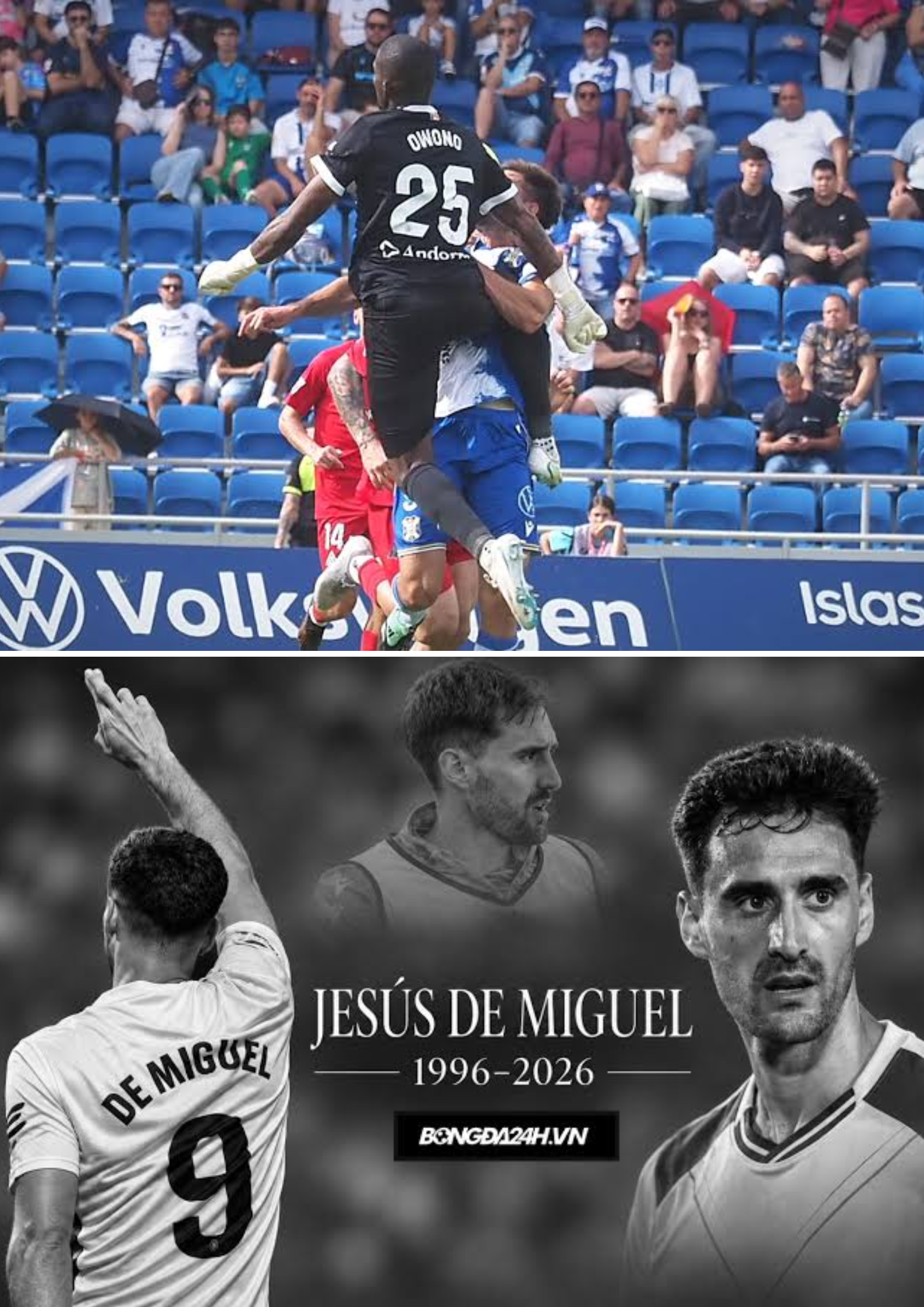
TENERIFE BOSS ÁLVARO CERVERA FIRES BACK AT GERARD PIQUÉ OVER 12-GAME BAN FOLLOWING FOOTBALLER’S DEATH: “THE INCIDENT COULD HAVE BEEN AVOIDED”
SPANISH FOOTBALL — November 2026
A heated debate has erupted in Spanish football after Tenerife manager Álvaro Cervera publicly challenged Gerard Piqué’s defense of FC Andorra goalkeeper Jesús Owono, who received a 12-match suspension following a collision that ultimately claimed the life of Tenerife forward Jesús de Miguel.
The tragedy occurred during a Spanish second-division match between CD Tenerife and FC Andorra on November 2, 2026, at the Heliodoro Rodríguez López Stadium.
De Miguel, 30, suffered a devastating impact during a challenge with Owono late in the match. Despite receiving emergency medical attention on the pitch and being rushed to hospital, the Tenerife striker died on November 3.
The incident sent shockwaves throughout Spanish football, leaving teammates, supporters and both clubs mourning the loss of a player whose life was cut short during an ordinary day of professional competition.
Now, the disciplinary punishment handed to Owono has become the center of an increasingly emotional disagreement between two prominent figures in Spanish football.
 THE 12-MATCH SUSPENSION THAT SPARKED CONTROVERSY
On November 13, the Spanish Football Federation’s Disciplinary Committee announced that Owono would receive a 12-match suspension — the maximum punishment available under the relevant disciplinary provision.
The decision followed the referee’s official report, which described Owono’s challenge as a forceful impact with his leg raised and excessive force while the ball was being contested.
The disciplinary committee determined that the conduct constituted a serious infringement under Article 102 of the RFEF Disciplinary Code.
The ruling also referenced the severity of the challenge, the force involved and the fact that De Miguel had required immediate medical attention before being carried from the field.
Owono, 25, was shown a straight red card during the match.
The punishment immediately generated discussion about whether the goalkeeper was being disciplined for the challenge itself or for the tragic consequences that followed.
 GERARD PIQUÉ DEFENDS HIS GOALKEEPER
Gerard Piqué, former Barcelona and Spain defender and FC Andorra’s majority owner, strongly questioned the severity of the suspension.
In a video statement shared publicly, Piqué argued that disciplinary decisions should be based on the nature of the incident rather than the devastating outcome.
He described the collision as an accident and maintained that Owono should not be held responsible for De Miguel’s death simply because he was involved in the challenge.
Piqué also referred to another incident involving Albacete winger José Corpas and Sabadell midfielder Quadri Liameed.
In that incident, Liameed suffered a head injury after an accidental collision but survived, and Corpas received a three-match suspension.
Piqué questioned why Owono had received the maximum 12-game punishment when both incidents involved dangerous contact during play.
He also expressed concern about the emotional burden the goalkeeper was carrying.
“Imposing the maximum sanction on Jesús puts him in a situation he does not deserve, because he is not to blame for everything that happened,” Piqué argued.
He added that no disciplinary punishment could bring De Miguel back.
Piqué also indicated that Owono would likely need more than 12 matches before he was emotionally ready to return to competitive football.
ÁLVARO CERVERA DISAGREES: “THE INCIDENT COULD HAVE BEEN AVOIDED”
Tenerife manager Álvaro Cervera offered a different perspective when asked about Piqué’s comments during a press conference on November 17.
Although Cervera acknowledged that Piqué was defending his club and its goalkeeper, he made it clear that he disagreed with the suggestion that the incident should simply be regarded as an unavoidable accident.
“I imagine that, as the majority owner of Andorra, he is doing his job and has to defend his players and his club,” Cervera explained.
However, the Tenerife manager challenged Piqué’s interpretation of the challenge.
“He has said that the consequences are being punished rather than the action. I think he should watch the incident again.”
Cervera then delivered his clearest assessment of the collision.
“I haven’t made a public judgment about it, and I am not going to do so, but I think it could have been avoided. I don’t believe it is the kind of incident we see every day, as he seems to suggest.”
His comments reignited the debate, particularly among supporters who believe the challenge itself deserves closer scrutiny.
Cervera did not call for additional punishment beyond the federation’s ruling, but his remarks demonstrated that he did not share Piqué’s characterization of the collision as an ordinary football accident.
WHAT HAPPENED IN THE FINAL MOMENTS OF THE MATCH?
The fatal incident occurred during the closing stages of the November 2 encounter.
With the game approaching its conclusion, De Miguel and Owono contested a loose ball. The goalkeeper came forward with his leg raised, making forceful contact with the Tenerife forward.
The referee immediately dismissed Owono with a straight red card.
Medical personnel rushed onto the pitch as