Against Every Medical Prediction Baby Fallon’s Extraordinary Journey Begins After a Life Changing 20 Week Scan
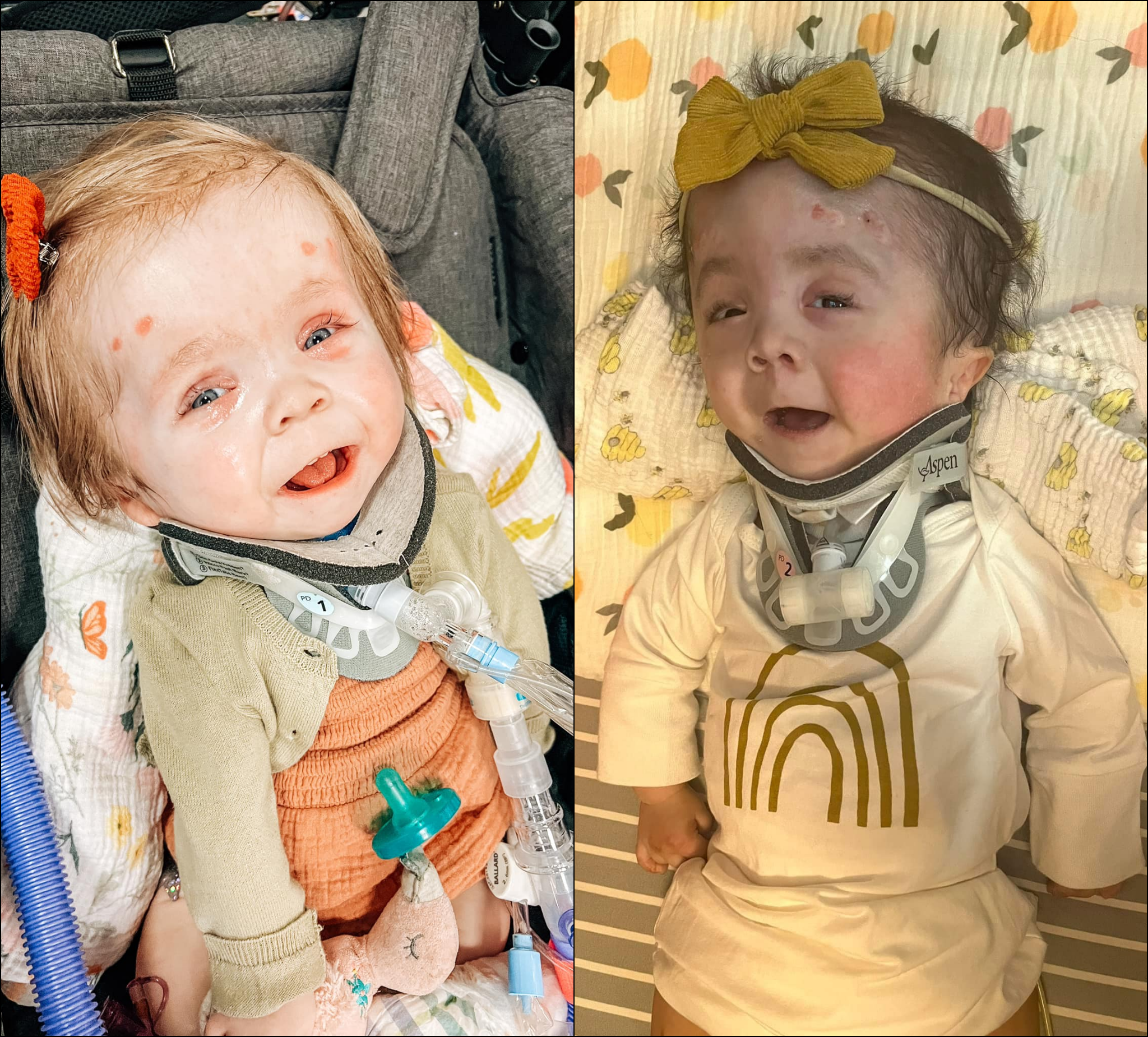
What began as a routine 20-week pregnancy scan quickly became a turning point for Fallon’s family. During the appointment, doctors noticed signs that something was not developing as expected. Further examinations followed, and soon the family received a diagnosis that would change everything: campomelic skeletal dysplasia, a rare genetic condition affecting cartilage and bone development.
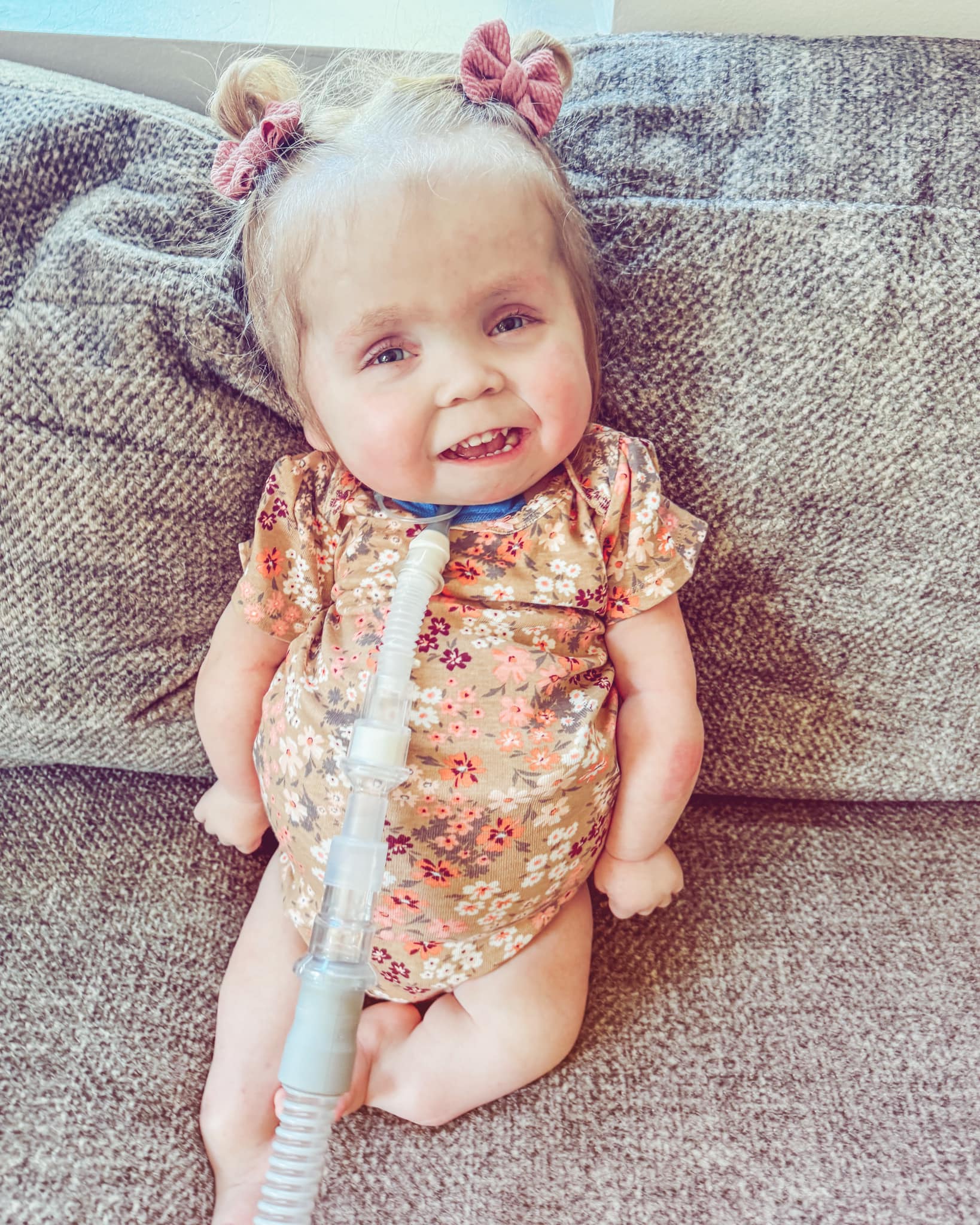
According to specialists, the condition can lead to severe complications involving the airway, spine, and overall mobility. In Fallon’s case, doctors initially explained that her chances of survival were extremely low. Still, her parents chose to focus on the present and prepare for whatever care their daughter might need.
“We were given a lot of information very quickly,” Fallon’s mother recalled. “The words were overwhelming, but all we could think about was meeting her and giving her every possible chance.”
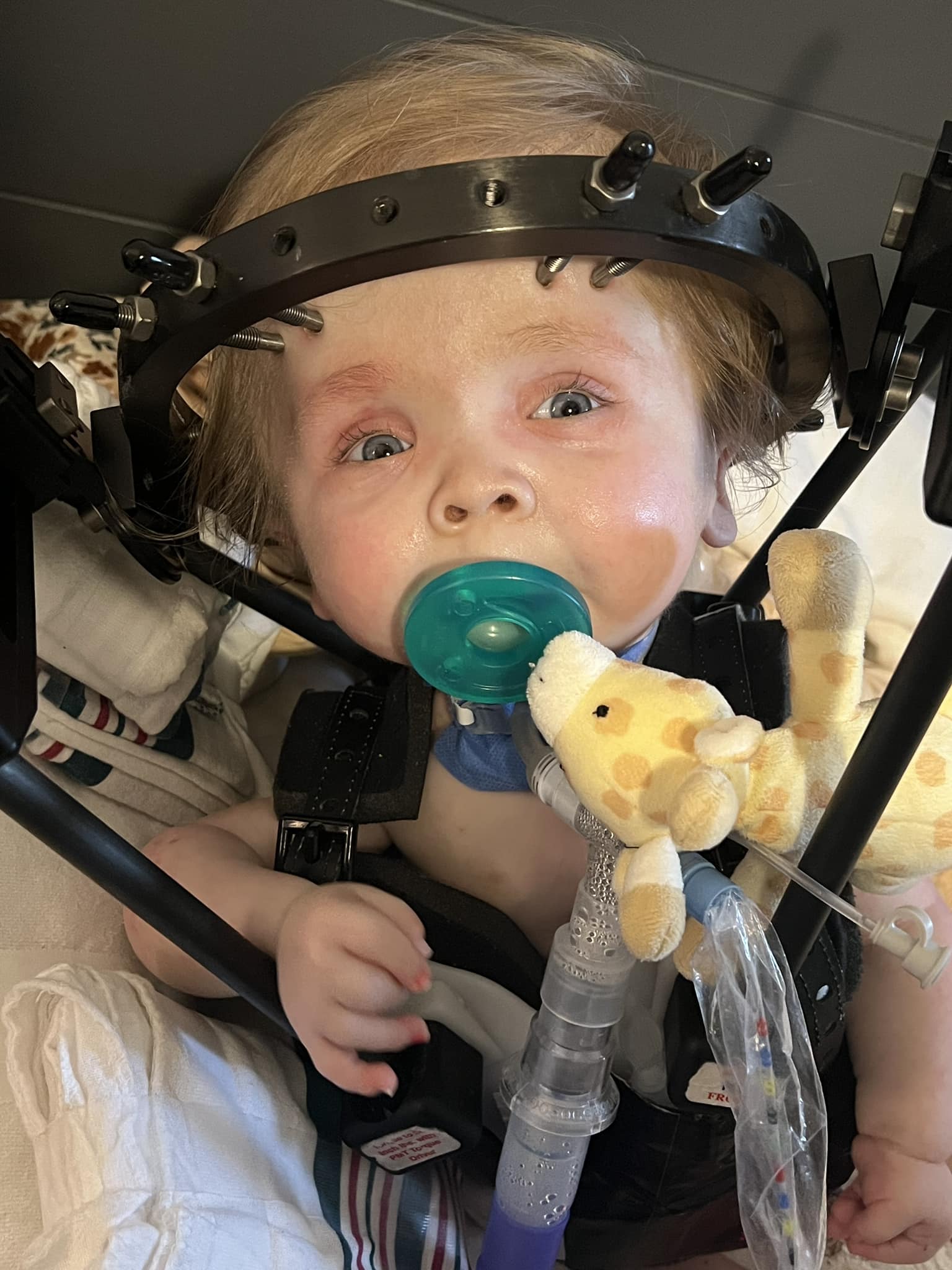
Fallon was born with multiple complex medical challenges. One of the most critical was tracheobronchomalacia, a condition in which the airway is unusually soft and prone to collapse. To support her breathing, Fallon required a tracheostomy and ventilator assistance to keep her airway open.
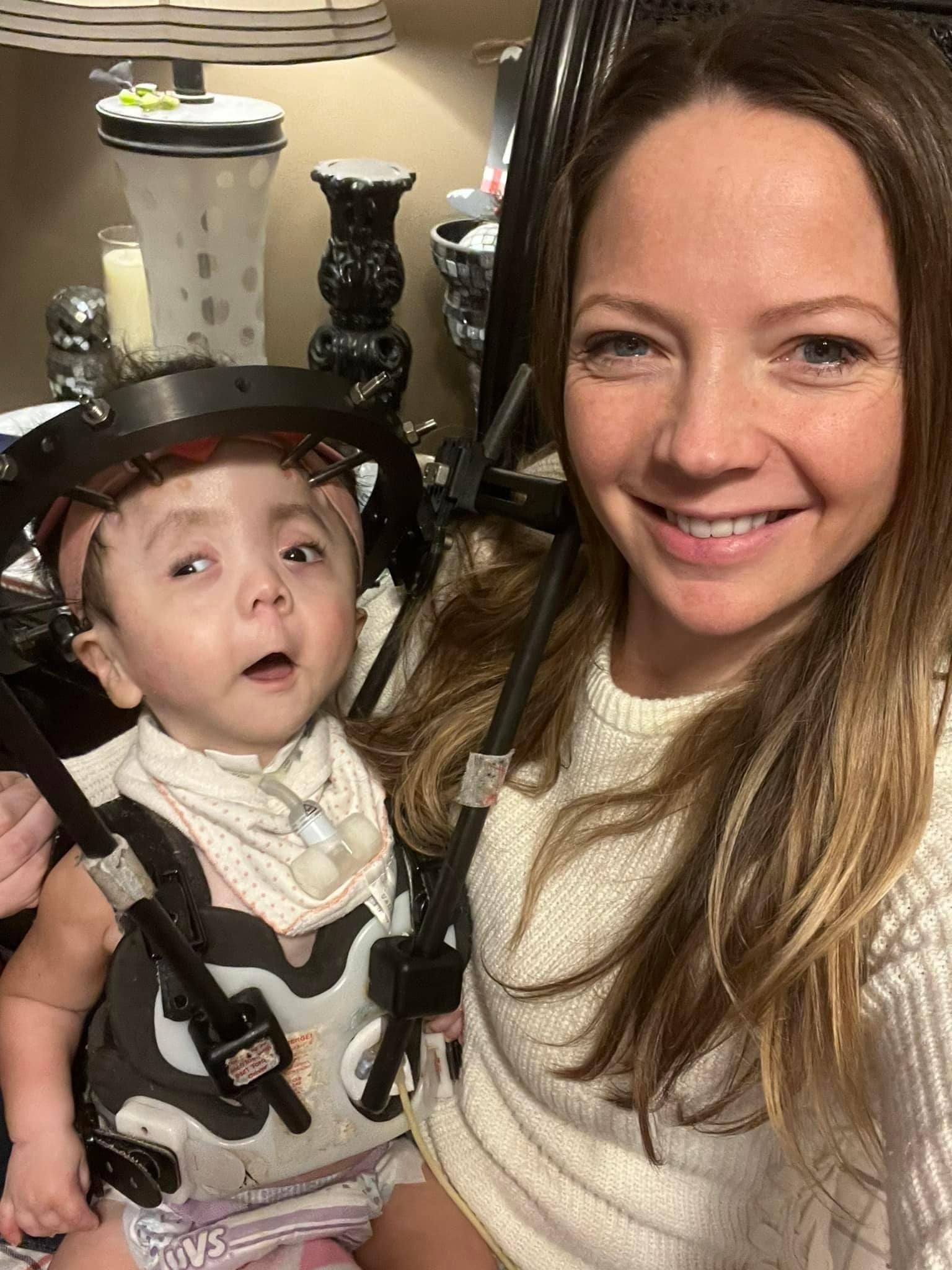
In addition, she was diagnosed with severe cervical kyphosis, a dangerous curvature of the spine in the neck region. Doctors warned that if left untreated, the condition could compress the spinal cord, potentially leading to loss of movement and further breathing complications.
“The spine issue became one of our biggest fears,” her father shared. “We were told that without intervention, it could take away her ability to move. That was something we couldn’t accept without fighting.”
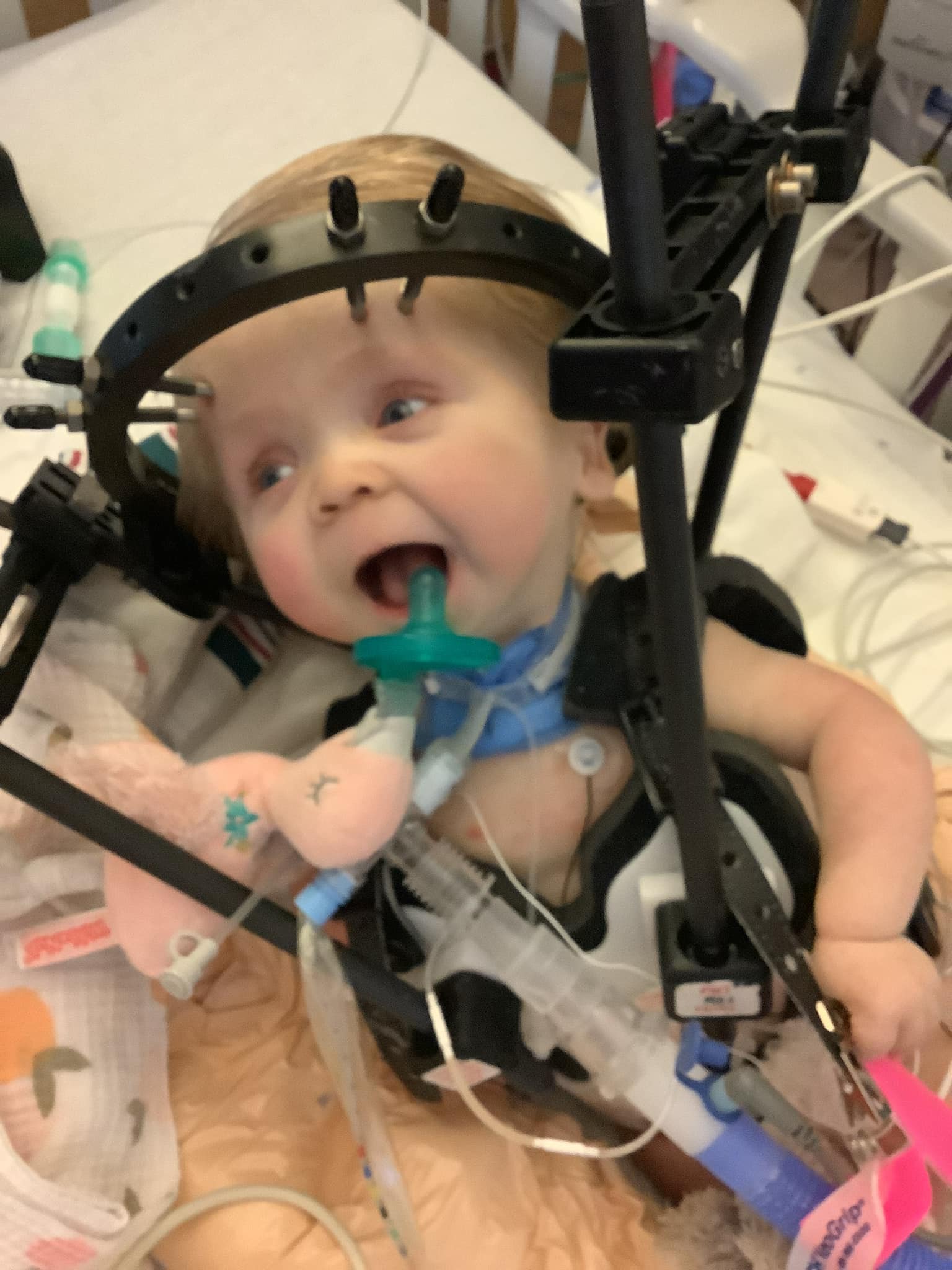
After months of intensive care and careful monitoring, Fallon was transferred across state lines to a specialized medical center capable of performing a highly complex spinal procedure. At just 11 months old, she underwent a major surgery in which surgeons removed the C4 and C5 vertebrae and fused the area using bone graft from her hip.
The operation was described by doctors as critical to protecting her spinal cord and improving her long-term mobility. Fallon is now recovering in a halo brace, which she is expected to wear until early next year as the fusion continues to heal. Following that, she will transition to a cervical collar for several more months.
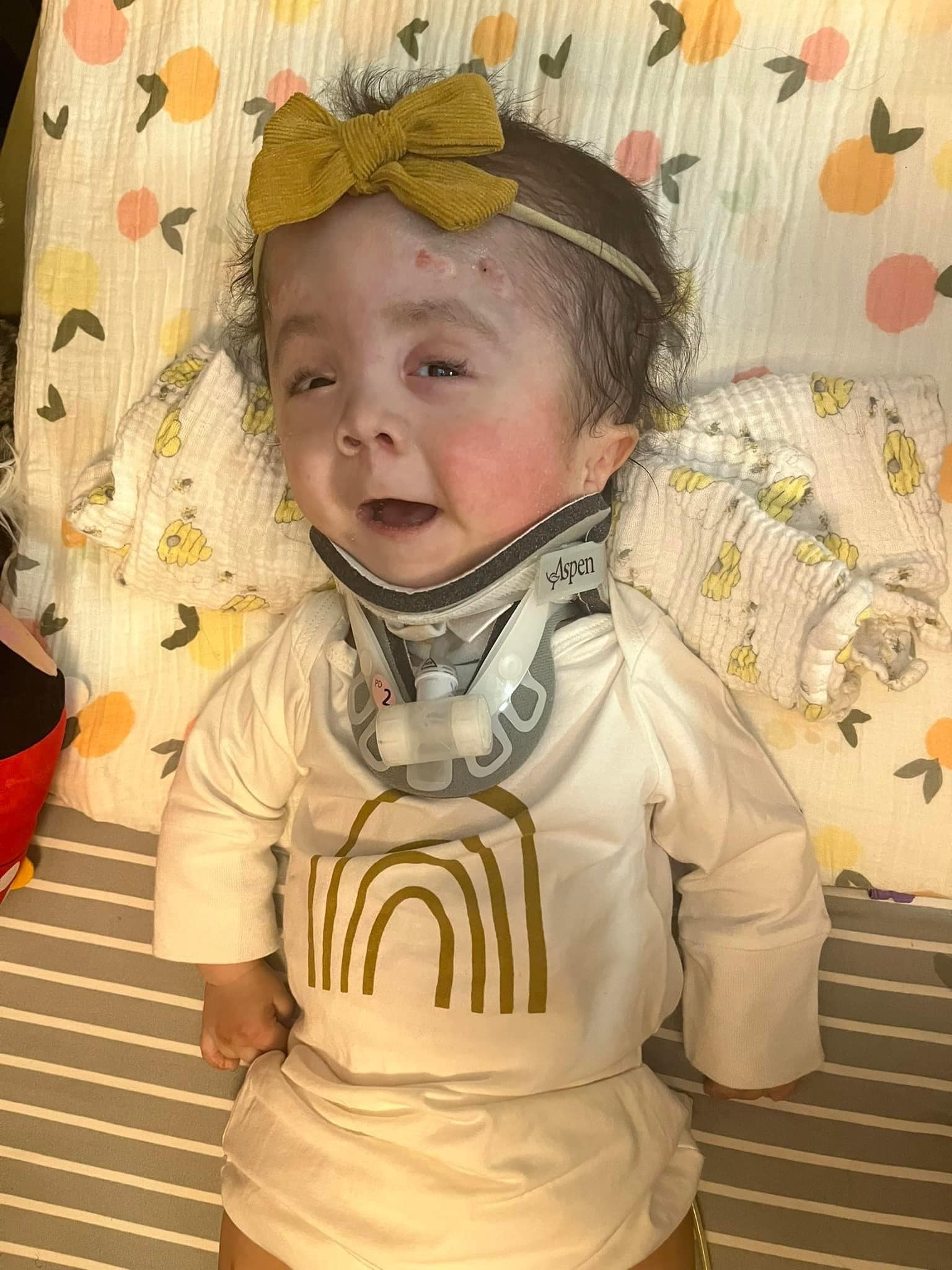
“Seeing her come through surgery was something we’ll never forget,” her mother said. “She’s stronger than anyone realizes. Every small step forward feels like a victory.”
Doctors anticipate that Fallon will likely continue using a tracheostomy until she is older, though there is hope she may no longer require ventilator support within the next year. She was also born with clubbed feet and bowed legs, conditions that may require orthopedic surgery in the coming years.
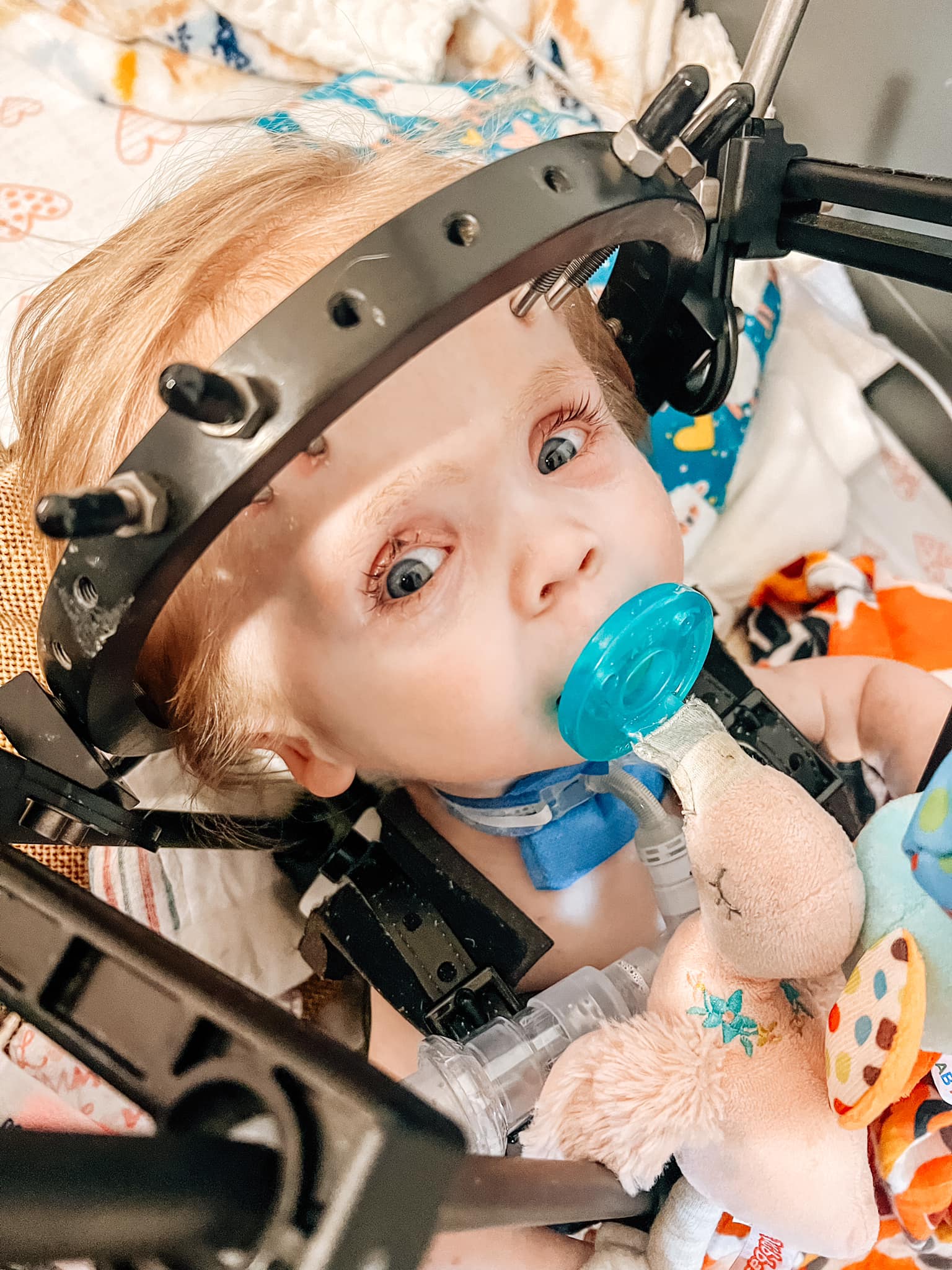
Despite the long road ahead, Fallon’s parents say they are focused on progress rather than predictions.
“We’ve learned not to measure her life by percentages or timelines,” her father said. “She shows us every day that she’s here to keep going.”