Living With 28 Fingers and Toes How Devandra Suthar Turned a Rare Condition Into a Story of Acceptance Resilience and Dignity
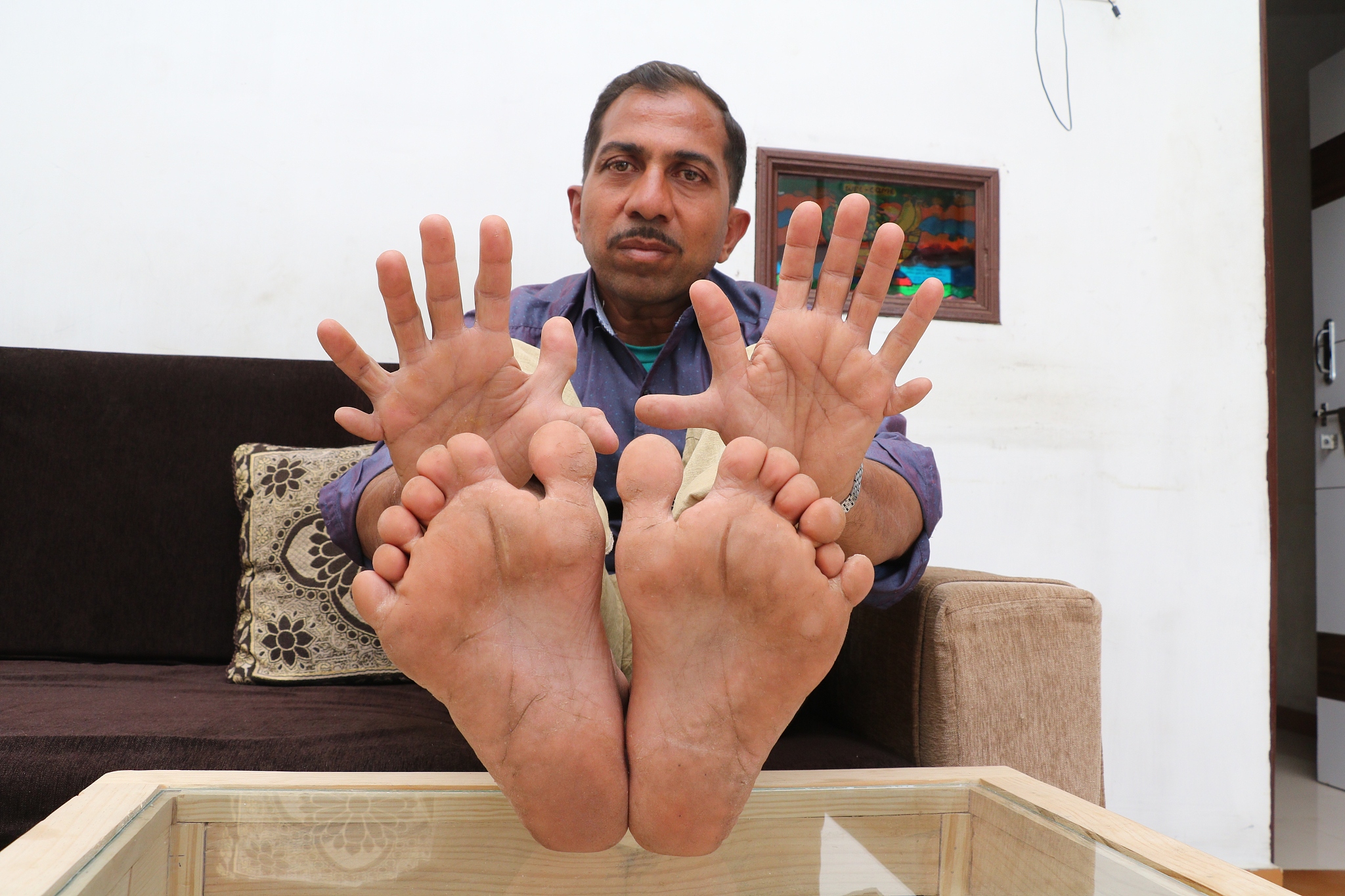
Devandra Suthar, a 46-year-old carpenter from the West Indies, has drawn international attention for an extraordinary physical condition that sets him apart from nearly everyone else in the world. Born with seven fingers on each hand and seven toes on each foot, Suthar has a total of 28 fingers and toes — a rare form of polydactyly that has earned him recognition in the Guinness Book of World Records.
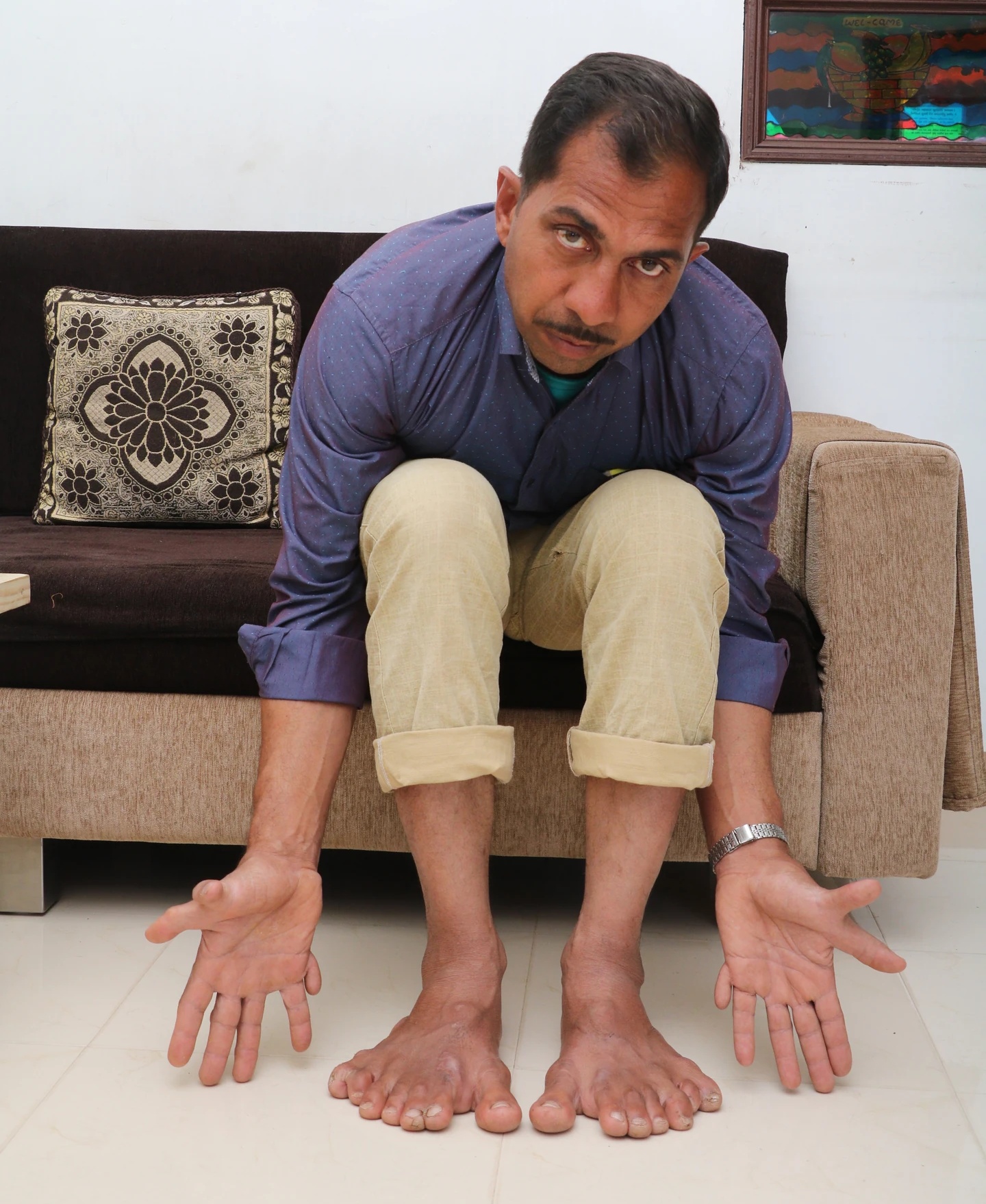
In his local community, Suthar is widely known as the “man with maximum fingers.” Unlike most cases of polydactyly, which usually involve just one extra finger or toe, Suthar’s condition affects all four limbs. Medical experts note that while polydactyly is not uncommon globally, symmetrical extra digits on every limb are extremely rare.
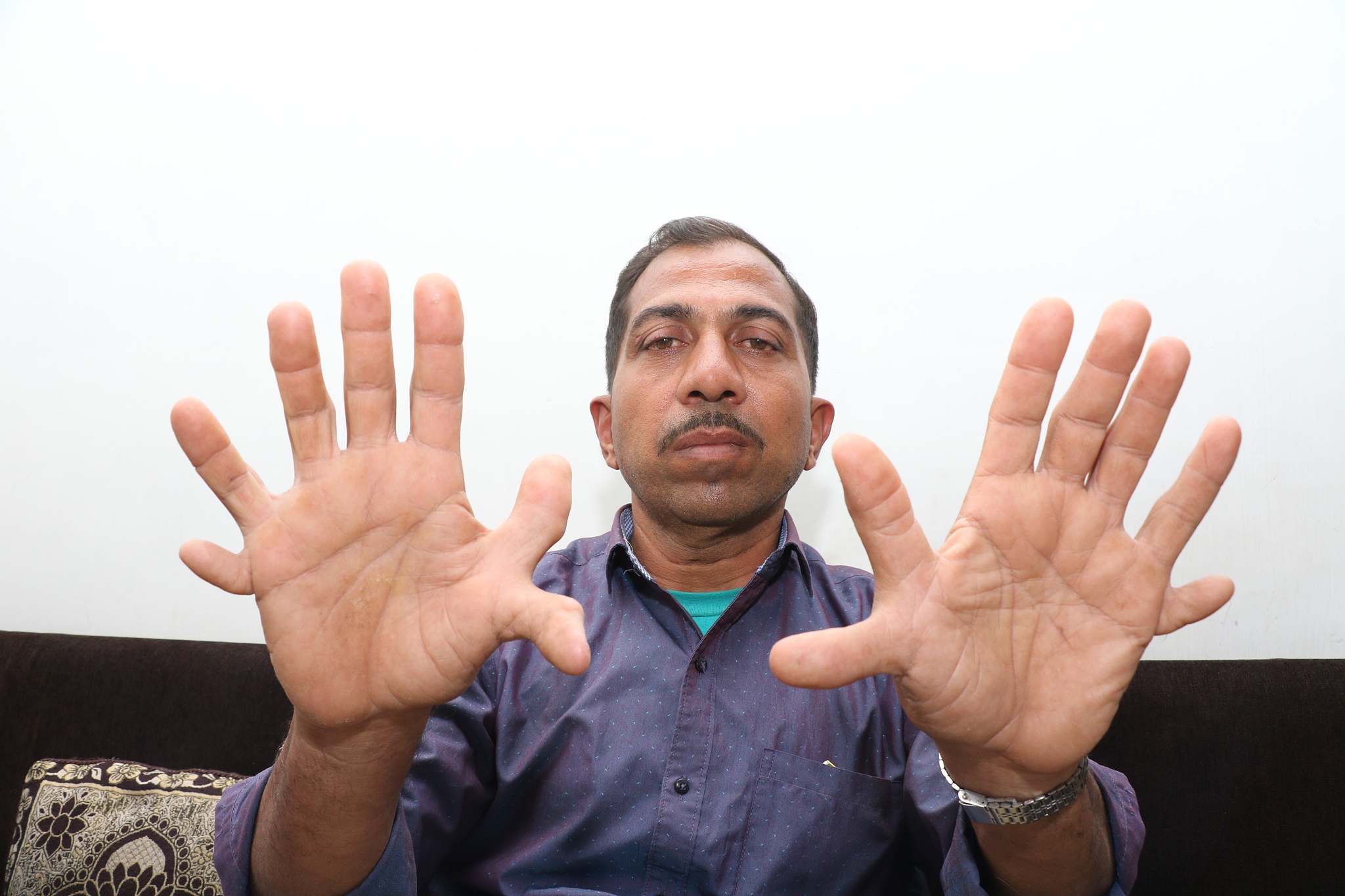
Despite working in a profession where manual precision is essential, Suthar has continued his career as a carpenter for many years. He admits that the nature of his work requires constant caution, as handling tools and heavy materials demands extra awareness. Everyday activities also present challenges beyond the workplace, from finding properly fitting footwear to dealing with constant friction between his toes while walking.
Suthar is the only member of his family born with this condition. Now a father of two, he says his experience has shaped how he views life and how he teaches his children about self-worth and acceptance.
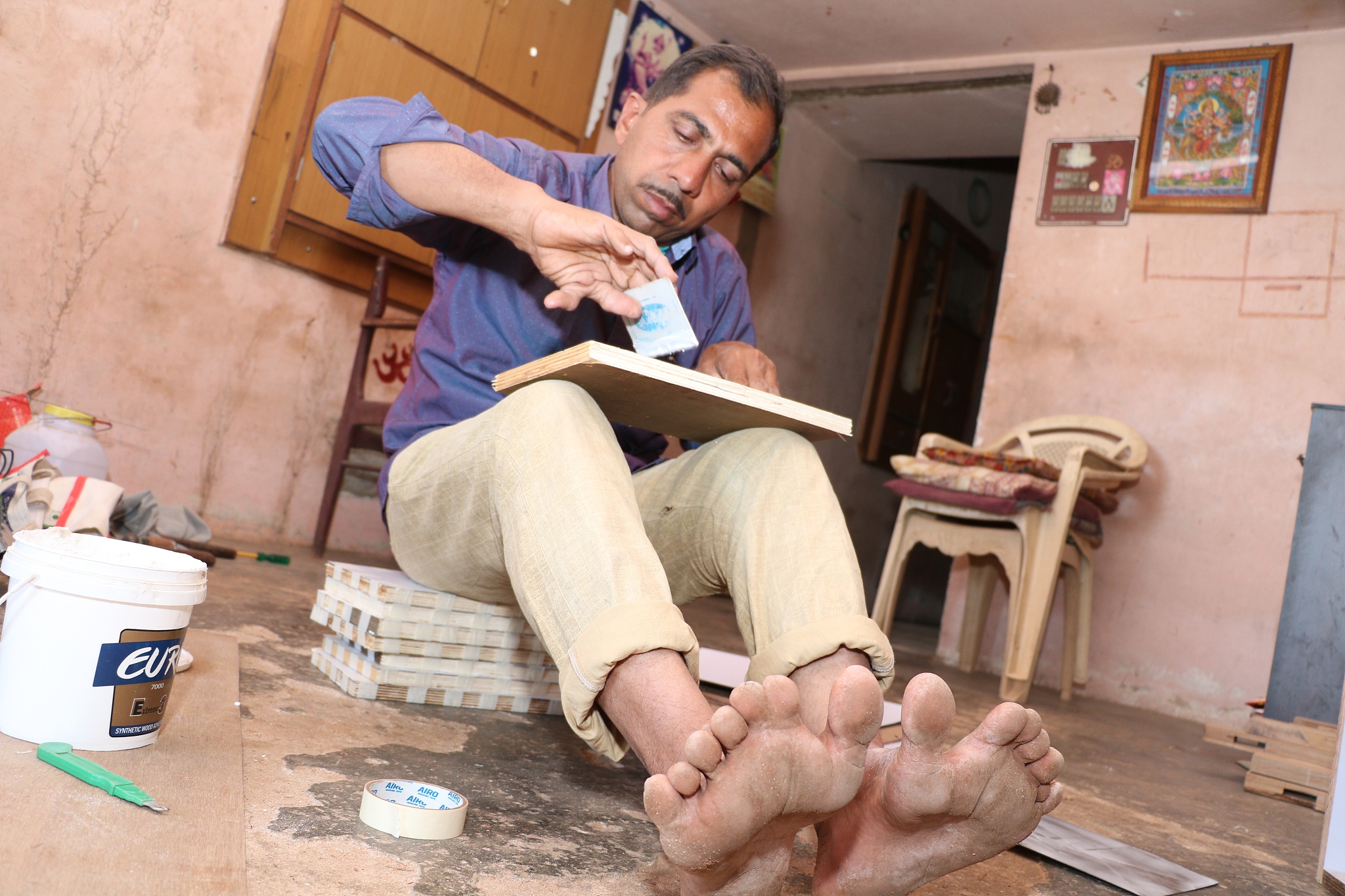
Speaking about his record and public attention, Suthar has emphasized that fame was never his goal. In conversations with local media, he has explained that being listed in a world record book does not automatically make life easier. According to him, the recognition brings curiosity and attention, but it does not remove daily obstacles. What it does offer, he says, is a platform to talk openly about difference and dignity.
Suthar often encourages others living with similar conditions not to feel ashamed or isolated. He believes that society’s perception is sometimes more difficult to manage than the physical condition itself. By continuing to work, raise a family, and live independently, he hopes to show that being different does not mean being incapable.
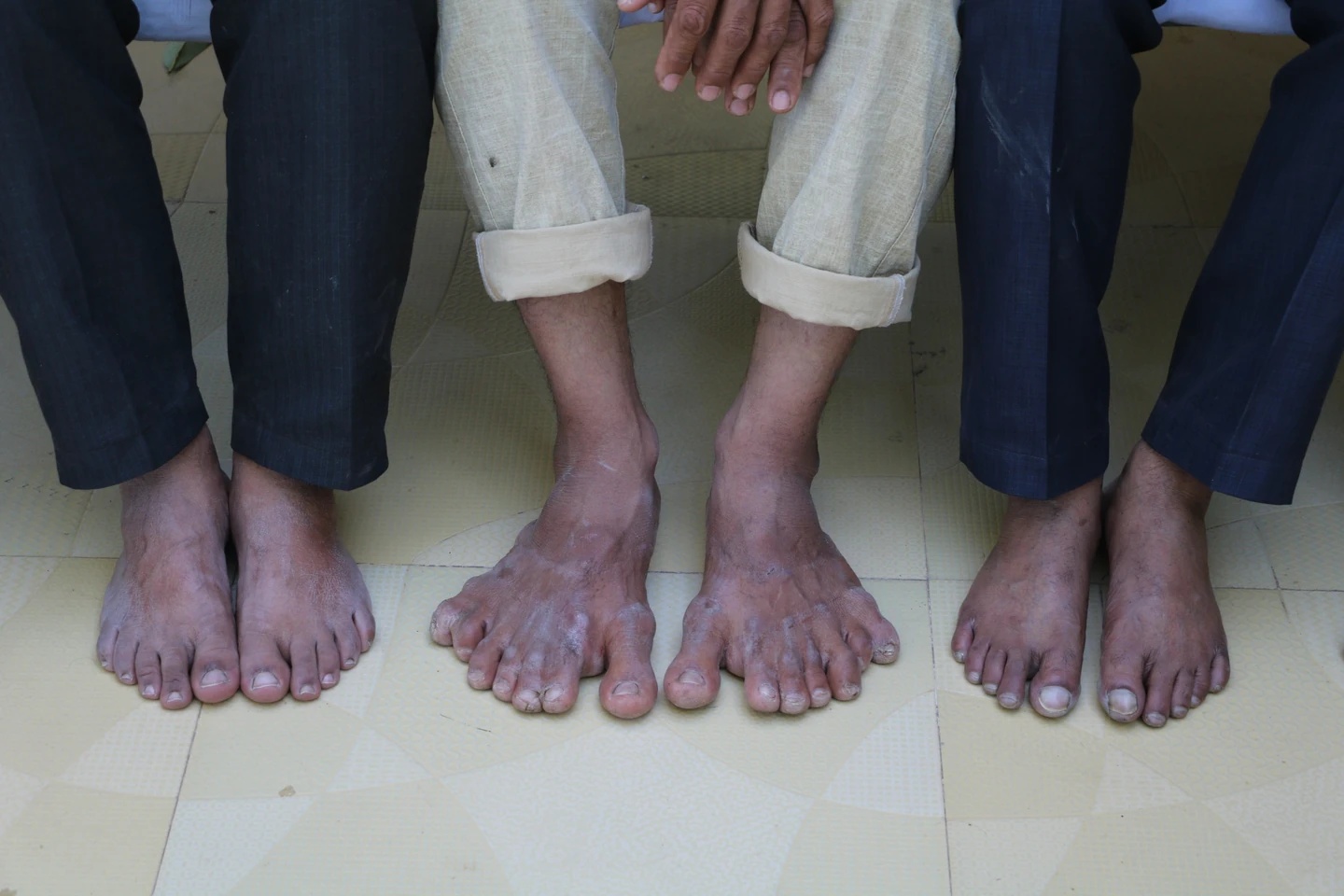
Although he does not receive financial benefits from his record, Suthar says he remains calm and content with his life. He describes acceptance — both self-acceptance and social understanding — as the most important factors in overcoming hardship. His story has since been shared widely as an example of resilience, reminding many that extraordinary circumstances can coexist with an ordinary, meaningful life.