Twenty Years in Silence A Mother’s Hope for Treatment After a Facial Condition Changed Her Life
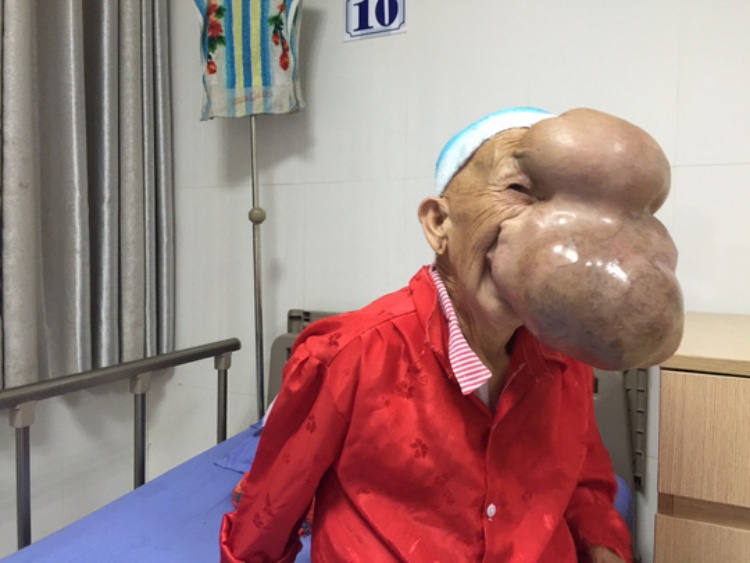
For more than two decades, Mrs. Chai, 62, a resident of c Căng hamlet, has been living with a massive facial tumor that has gradually taken away her sight, breathing, and dignity.
The tumor, swollen and tense, now covers nearly two-thirds of her face. It has already caused the complete loss of vision in her left eye and is pressing against her nose, forcing her to breathe only through her mouth. Eating, walking, and daily activities have become extremely difficult. Each step she takes is slow and cautious, as she fears even a small impact could worsen her condition.
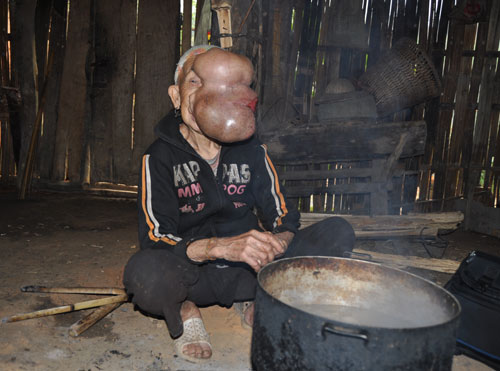
Mrs. Chai’s story began 20 years ago, when she was 40. At that time, a small pimple—no larger than a fingertip—appeared on her face. Coming from a poor ethnic Dao family, she could not afford medical care. Believing it to be a harmless boil, she relied on traditional remedies, applying forest leaves in hopes it would heal. Instead, the growth continued to enlarge, year after year, eventually disfiguring her face.
Today, medical treatment remains out of reach. Mrs. Chai survives on a modest social welfare allowance, barely enough for daily living.
Hospital care, especially at specialized medical centers, is something she describes as “a distant dream.”
“I just wish I could be cured,” Mrs. Chai said quietly. “So when I go outside, people won’t be afraid of me, and children won’t run away or cry when they see me.”
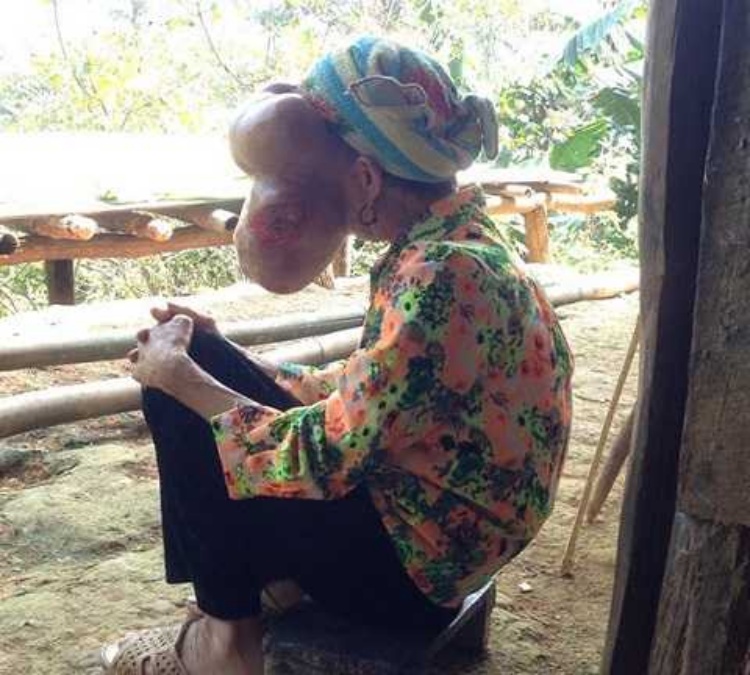
Her words reflect not only physical suffering, but also deep emotional pain. Over the years, she has faced social isolation and stigma. According to Mrs. Chai, some villagers avoid her, and many children react in fear when they see her. These reactions have left her feeling rejected and ashamed, despite her condition being an illness beyond her control.
“I can’t help my family anymore,” she added through tears. “I only pray that this growth won’t take away my remaining eye, so I can still see some light in my later years.”
Those who knew Mrs. Chai before her illness remember a very different woman. Two decades ago, she was known as hardworking, kind, and strong. She married, had five children, and together with her husband worked tirelessly to raise their family despite ongoing poverty.
Her husband, Mr. Giáo, is now 80 years old. Frail and aging, he still goes to the fields each day to earn food for the two of them.
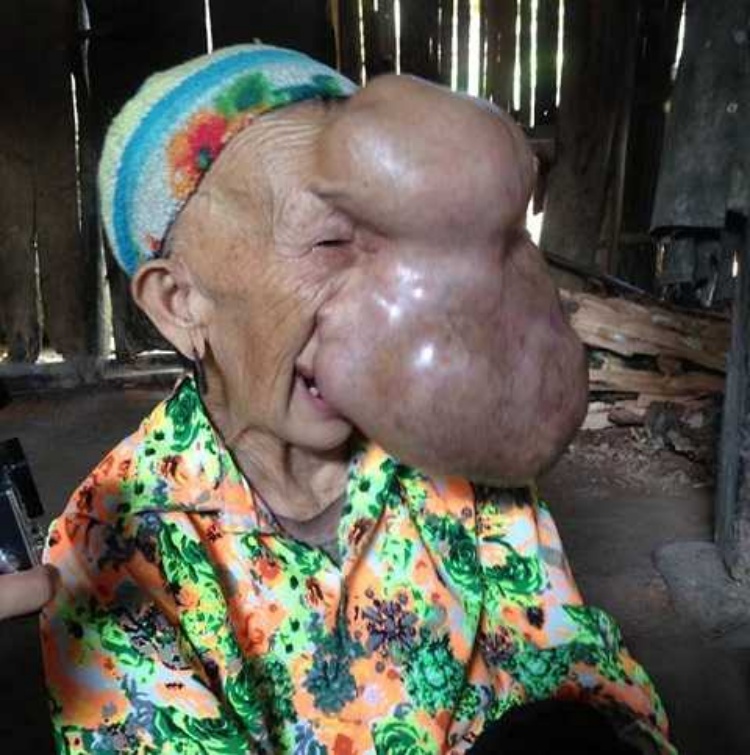
“I love my wife very much,” he said, his voice breaking. “But we struggle just to survive. Taking her to a major hospital is beyond anything we can afford.”
Their five children are all married and living in difficult conditions themselves. Three have migrated to the Central Highlands in search of work, while two daughters remain in Cao Bằng. Limited income and language barriers make it impossible for them to provide meaningful financial support.
Ms. Viên, a local resident who has visited the family, said that the condition was shocking at first.
“When I first came here, I was frightened because I had never seen anyone suffer like this,” she said. “But over time, I understood her situation. Her life is extremely hard. I truly hope that compassionate people can help her receive treatment and regain a normal life.”
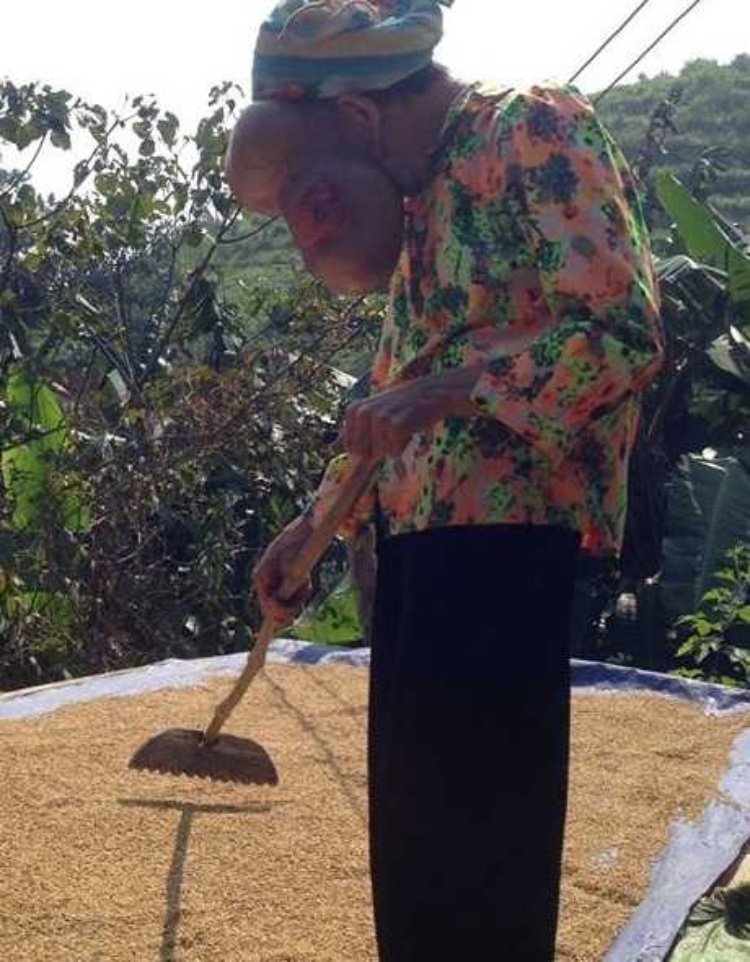
Mrs. Chai’s case highlights the ongoing challenges faced by elderly people and ethnic minority communities in remote areas of Vietnam, where access to healthcare remains limited. Her story is not just about illness, but about poverty, isolation, and the quiet hope that help might still come.
As her condition continues to worsen, Mrs. Chai waits — not only for medical intervention, but for understanding and compassion, so she can live her remaining years with less pain and more dignity.