Two Newborn Lives Begin Side by Side Sharing One Extraordinary Journey of Hope Strength and Unbreakable Bond
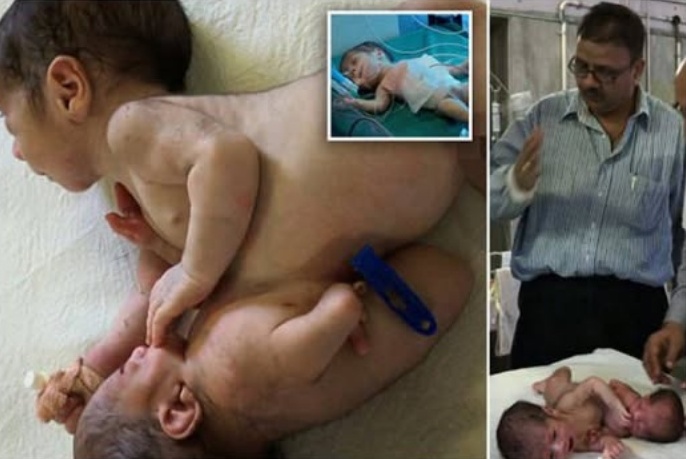
Hemlata Singh, 28, from Rajasthan, India, had never had an ultrasound during her pregnancy and planned to give birth at home. However, when she tried to deliver naturally but the baby wouldn’t come out, she was taken to Ummed Maternity Hospital in Udaipur.
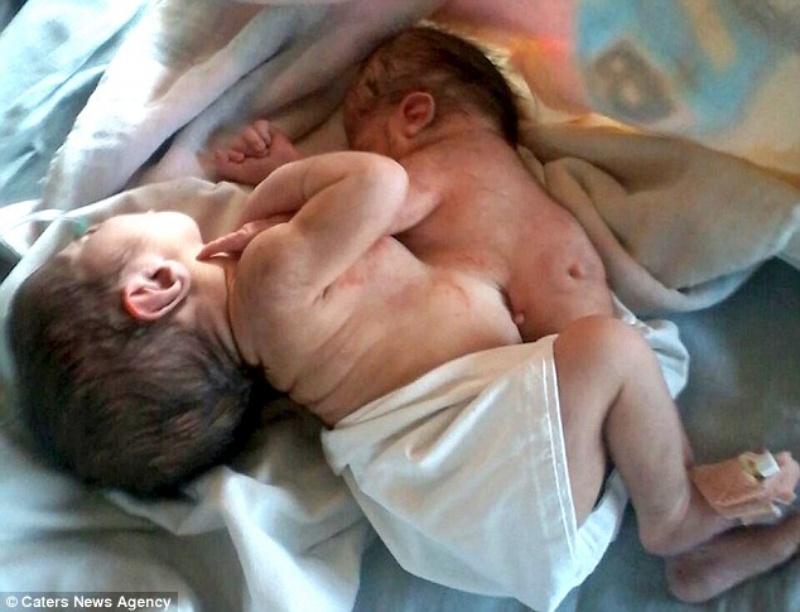
The doctors and nurses assisting with Hemlata’s delivery were shocked to discover that the 2.9 kg baby wasn’t born alone, but with an underdeveloped twin conjoined at the chest.
A newborn boy had his head and arms fused together and dangling from his chest by his parasitic twin. Both twins shared a liver and blood vessels in their chests, but fortunately, their hearts and lungs were separate.
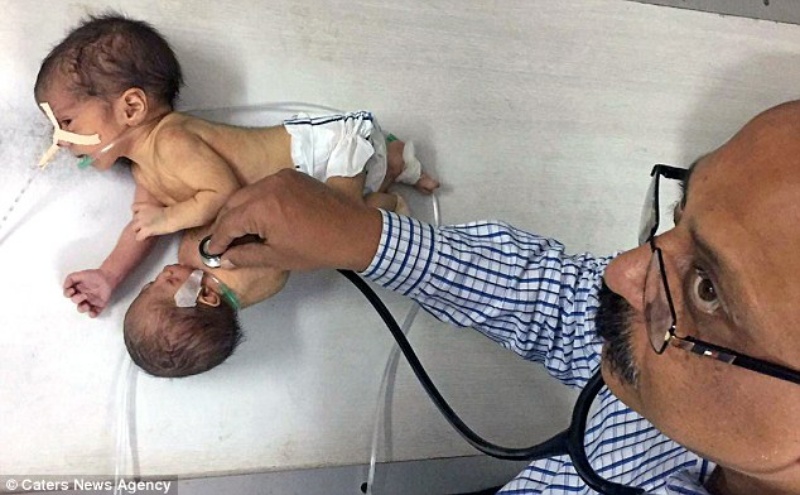
Dr. Anurag Singh, from the Pediatrics Department at Ummed Hospital, said this was a very rare case of parasitic twins, but the two babies could be surgically separated.
One of the twins has fully developed body parts, while the other, the “parasitic” twin, lacks genitals and both legs. The surgery to separate these twins is not particularly difficult, but it still carries risks.
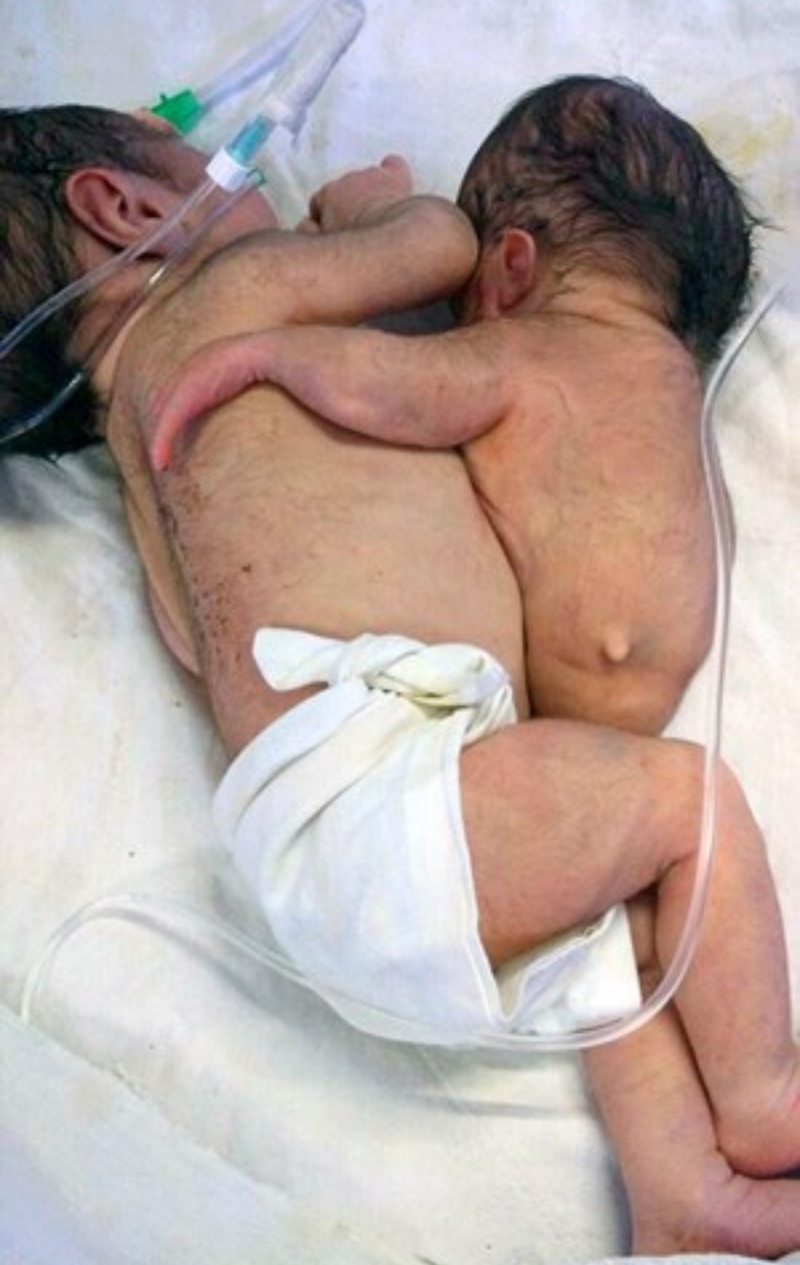
This is a rare case of parasitic twins. Parasitic twins are caused by delayed separation of the embryos during fertilization, resulting in one fetus overshadowing the other. Unlike normal conjoined twins, parasitic twins may not develop fully or may share some organs with the healthier fetus.
Globally, only 1 in 1 million births occur. Doctors are currently seeking assistance from cardiologists to plan the separation surgery once the twins’ health has stabilized.