Shockwaves: Private Autopsy Exposes the Truth in the Renée Good Case
Shockwaves: Private Autopsy Exposes the Truth in the Renée Good Case
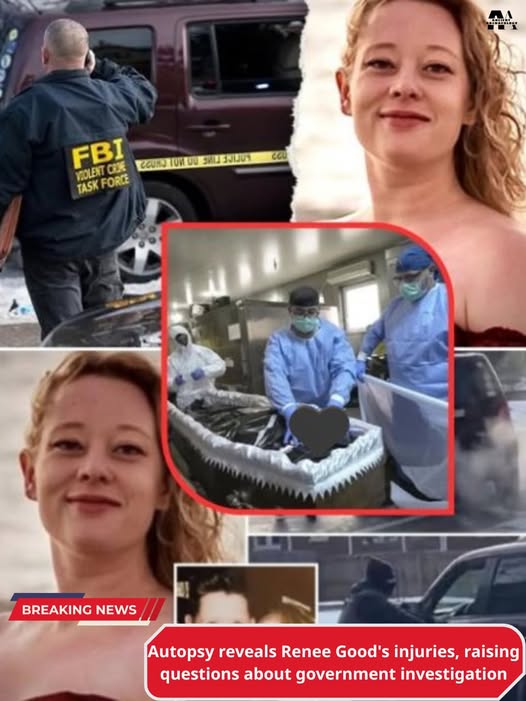
“The legal community is reeling after a private autopsy of Renée Good uncovered ‘deeply disturbing’ injuries that the government’s initial report conveniently ignored—shattering the ‘self-defense’ narrative and exposing a level of violence that video evidence alone couldn’t fully capture.”
The Lethal Trajectory and Disputed Narrative
The legal battle surrounding the death of Renée Nicole Macklin Good has reached a boiling point following the release of a preliminary independent autopsy. Conducted by a “highly respected and credentialed medical pathologist” at the request of the law firm Romanucci & Blandin, the report identifies three clear gunshot paths causing four wounds. Most significantly, it confirms a fatal shot entered the left side of Renée’s head near the temple and exited the right. This specific trajectory supports witness claims that Renée was steering her vehicle away from ICE Agent Jonathan Ross, rather than attempting to ram him, as federal officials previously alleged.
Injuries the Initial Reports Ignored
Beyond the fatal head wound, the independent autopsy highlights injuries that were notably glossed over in the government’s early briefings. Renée was struck in the left forearm, causing soft tissue hemorrhage, and in the right breast. While these two wounds were not immediately life-threatening, their presence—along with a fourth “graze wound”—indicates a high volume of fire directed at the 37-year-old mother while she was in a seated, non-threatening position. Attorneys argue these findings align with bystander footage showing that at least two of the shots were fired from the side of the vehicle, not the front where an officer would be in immediate danger.
A Growing Crisis of Accountability
The “shockwaves” from this report have intensified the rift between state and federal authorities in Minnesota. While the Hennepin County Medical Examiner has officially ruled the death a homicide, the Department of Justice has notably declined to open a criminal civil rights investigation. This discrepancy has led to the resignation of several federal prosecutors and a surge in public demand for transparency. With the “Pretti Files” and “SUV Secrets” surfacing in concurrent investigations, the Renée Good private autopsy stands as a pivotal piece of forensic evidence that could dismantle the legal protections currently shielding federal agents from local prosecution.