California Crumbles: The Supply Chain Crisis of 2026
California Crumbles: The Supply Chain Crisis of 2026
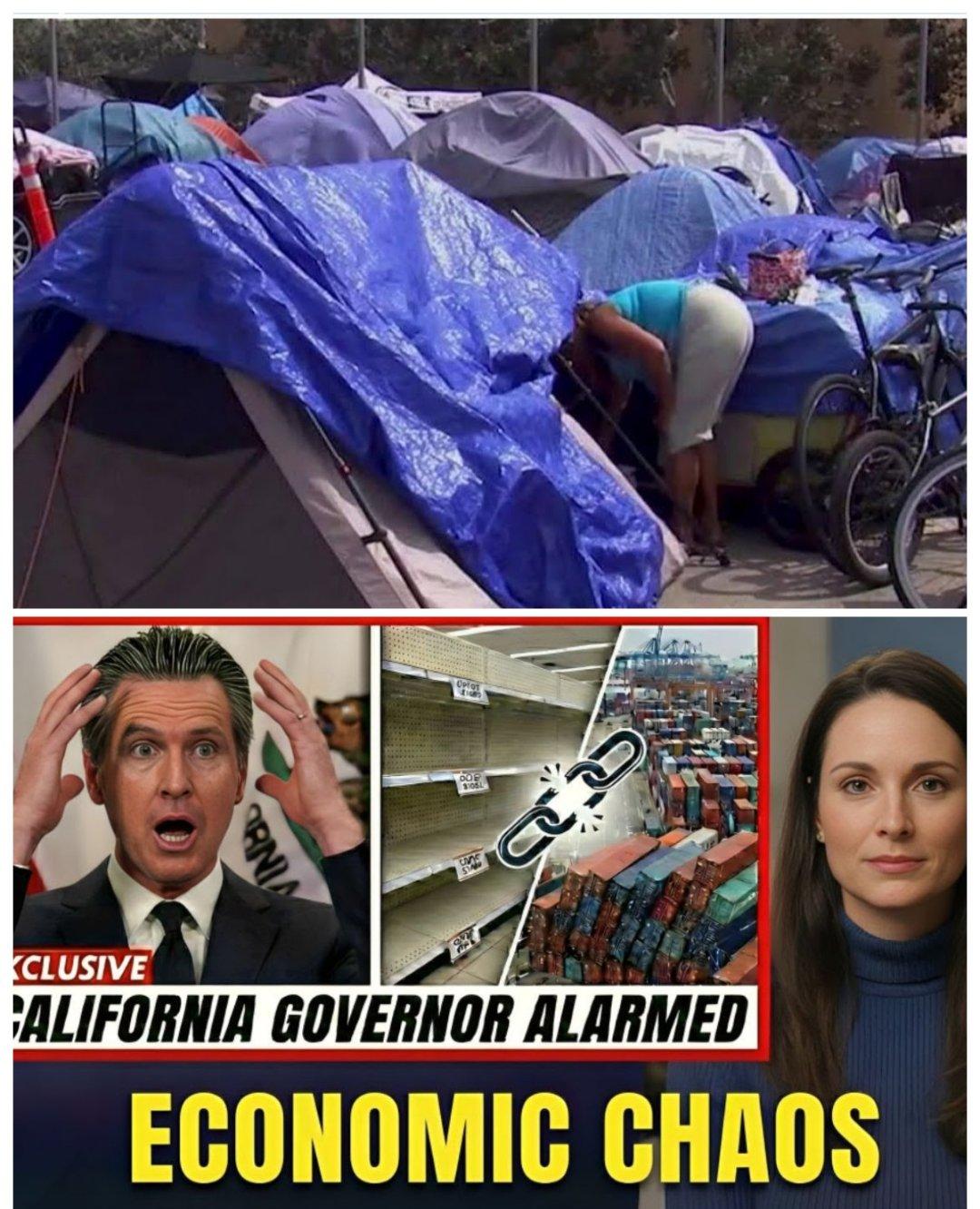
“California is facing an unprecedented wave of economic chaos as the supply chain remains fractured, leaving store shelves empty and ports at a standstill—exposing a ‘sinister architecture’ of reliance that has finally reached its breaking point.”
The Port “Vacuum” and the Ghost of Congestion
The “shattered silence” at the Ports of Los Angeles and Long Beach in early 2026 is actually the result of a massive “cargo vacuum.” Throughout late 2025, importers front-loaded record amounts of inventory to get ahead of aggressive new tariffs. This strategic rush has left California ports facing a double-digit decline in volume this month (roughly 8.5% to 10% lower than 2025). While this means fewer ships are currently waiting at anchor, it has created a “sinister” imbalance: warehouses are overflowing with old stock while fresh, critical goods are delayed by blank sailings—scheduled trips cancelled by carriers to keep freight rates from plummeting.
The Labor Drain: A New “Structural Volatility”
Beyond the docks, California’s inland supply chain is reeling from a severe labor contraction. New federal immigration-related policies and strict English proficiency enforcement have reportedly stripped up to 20-25% of the drayage driver workforce from the Southern California region. This “hidden glitch” in the labor market has made it increasingly difficult to move containers from ports to railheads. Consequently, while the ports appear “clear,” the internal distribution network is fractured, leading to localized “empty shelf syndrome” for specific high-demand goods like medical supplies, specialized semiconductors, and certain food staples.
Economic Aftershocks and the “Total Value” Pivot
The economic toll of this fracture is no longer abstract. California’s inflation is projected to peak at 3.5% this quarter, driven by the “pass-through” costs of 2025’s tariff hikes and rising operational expenses. Experts at the 2026 May Revision Budget Summary note that the state is adding only about 3,000 jobs per month, a staggering drop from the 30,000 average of previous years. In response, California’s logistics giants are pivoting toward a “Total Value” model—leveraging AI and “Digital Twins” to simulate disruptions before they happen. For the average Californian, 2026 is a year of “muddling through” as the state tries to rewire its supply chain from a linear path of efficiency to one of survivalist resilience.