Young Athlete Davide Morana Overcomes Life-Changing Illness After Losing All Four Limbs
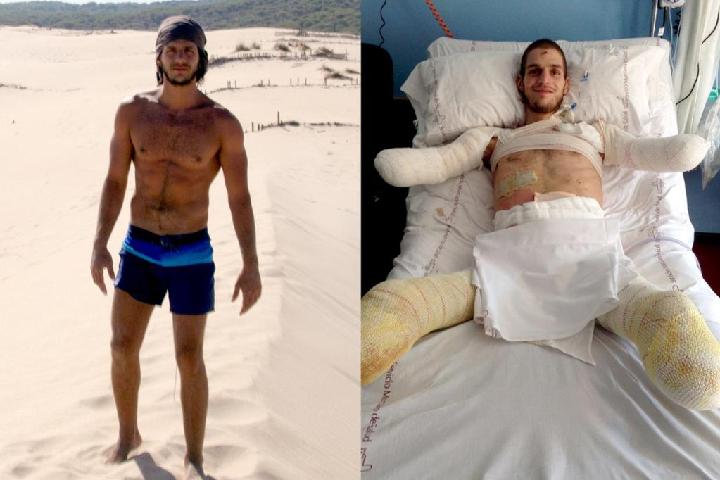
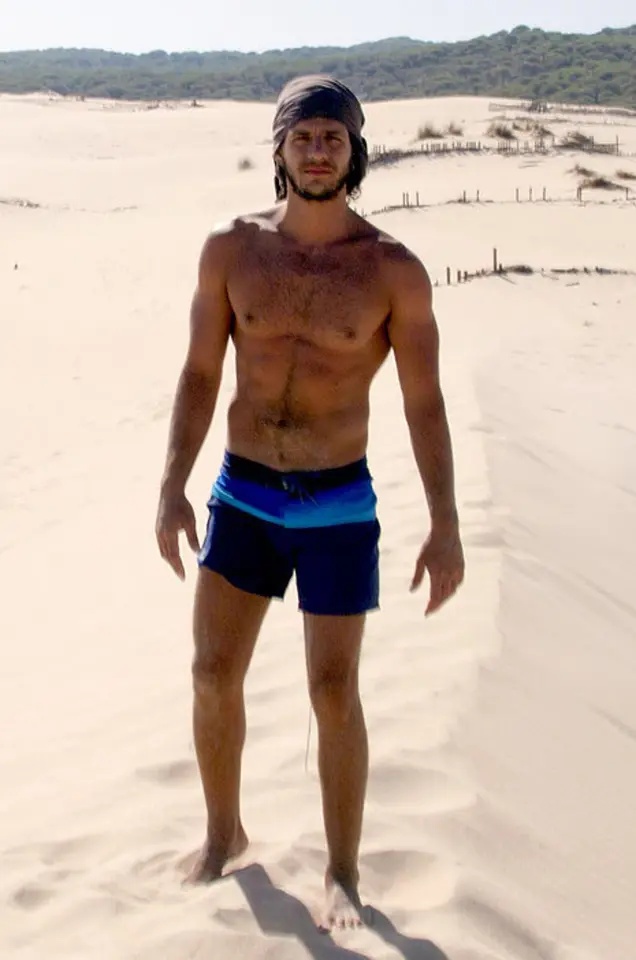
A young Italian, based in Spain since 2015, began to feel that something was not right. The fever was rising strongly, accompanied by unexplained pain in his joints. It was Davide Morana, a 24-year-old sports lover, who practiced triathlon and led an active and healthy life in the south of the Iberian Peninsula. At first, the visit to the hospital seemed enough to calm his fears. “Flu,” they told him, and sent him back home. But the night brought no rest; only fever and dark marks on his skin.
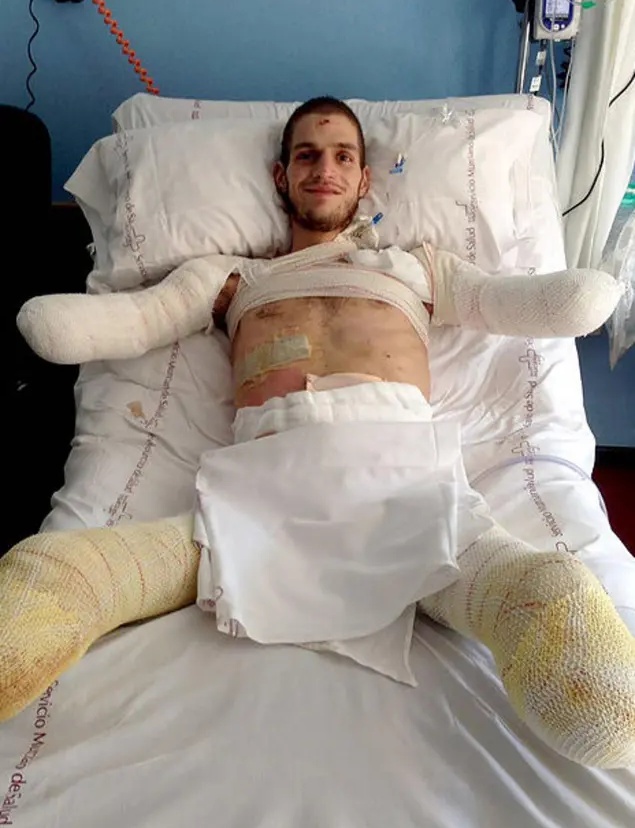
The next morning, Davide returned to the hospital. What had initially been interpreted as a common flu was actually fulminant meningitis that was already circulating aggressively in his bloodstream. Doctors barely had time to react before the infection plunged him into an induced coma, as his organs began to collapse and his skin took on violet hues. For a week, Davide’s life hung in the balance, and when he managed to wake up, he was faced with a devastating reality: his arms and legs would no longer be able to accompany him in his recovery.
His story continues as a tale of resilience, with Davide determined to rebuild his existence and resume his love of sport, this time with the help of prosthetics that would allow him to run and walk again.
For Davide, January 2018 was the month that changed his life forever. A fever that at first seemed to be a simple flu turned into a lethal threat. On her first visit to the hospital, the tests came back normal. Still unable to explain the extreme tiredness and pain, he accepted the initial diagnosis and returned home. But in less than 24 hours, her condition worsened dramatically: brown spots appeared on her face and feet, a common symptom of meningitis. Davide was admitted again and the tests finally confirmed what no one wanted to hear.
Meningococcal meningitis is a serious bacterial infection that, when it progresses rapidly, can be fatal or leave severe sequelae in a matter of days. According to the testimonies of Davide and his relatives, the symptoms progressed rapidly. First, dark spots and pain in the limbs; then, multi-organ failure. Faced with the imminent risk of losing his life, doctors decided to induce him into a coma. A week later, when he came out of this state, Davide was no longer the same: the infection had irreversibly damaged his arms and legs, and doctors recommended the amputation of all four limbs.
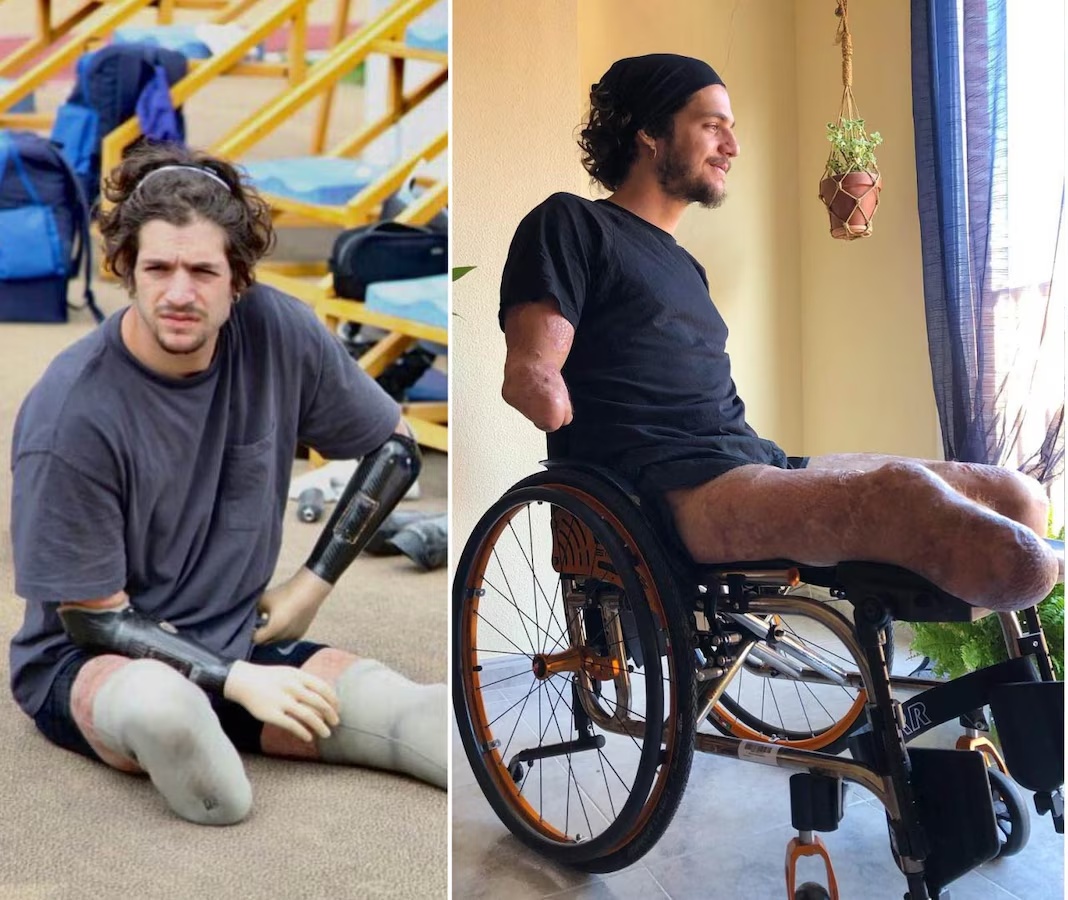
“I woke up and saw my black limbs, paralyzed, but I knew I had to let them go,” Davide recalls in statements collected by RTVE. The decision to amputate was not easy, but Davide, still under the effects of morphine, tried to face the news with fortitude. He knew that his life had changed drastically and that the road ahead would be long and challenging.
After more than 80 days in hospital and almost twelve operations, he was discharged from the hospital and began a new stage. Although the adaptation process was difficult, he never lost his good spirits or the desire to move forward. Cecilia Cano, his partner, was a fundamental pillar in this period. “I always believed in him,” he told Vanity Fair. Cecilia decided not only to accompany him, but also to document each stage of this experience, which she would later publish in her book Arriba la vida.
Despite the seriousness of his condition, Davide surprised the doctors with his mental strength. He refused to take antidepressants and maintained that the trials of his life had prepared him for this challenge. “I left home very young and had to face the reality of life at an early age,” she explains, adding that she has never stopped seeing what happened as one more test that she had to overcome.
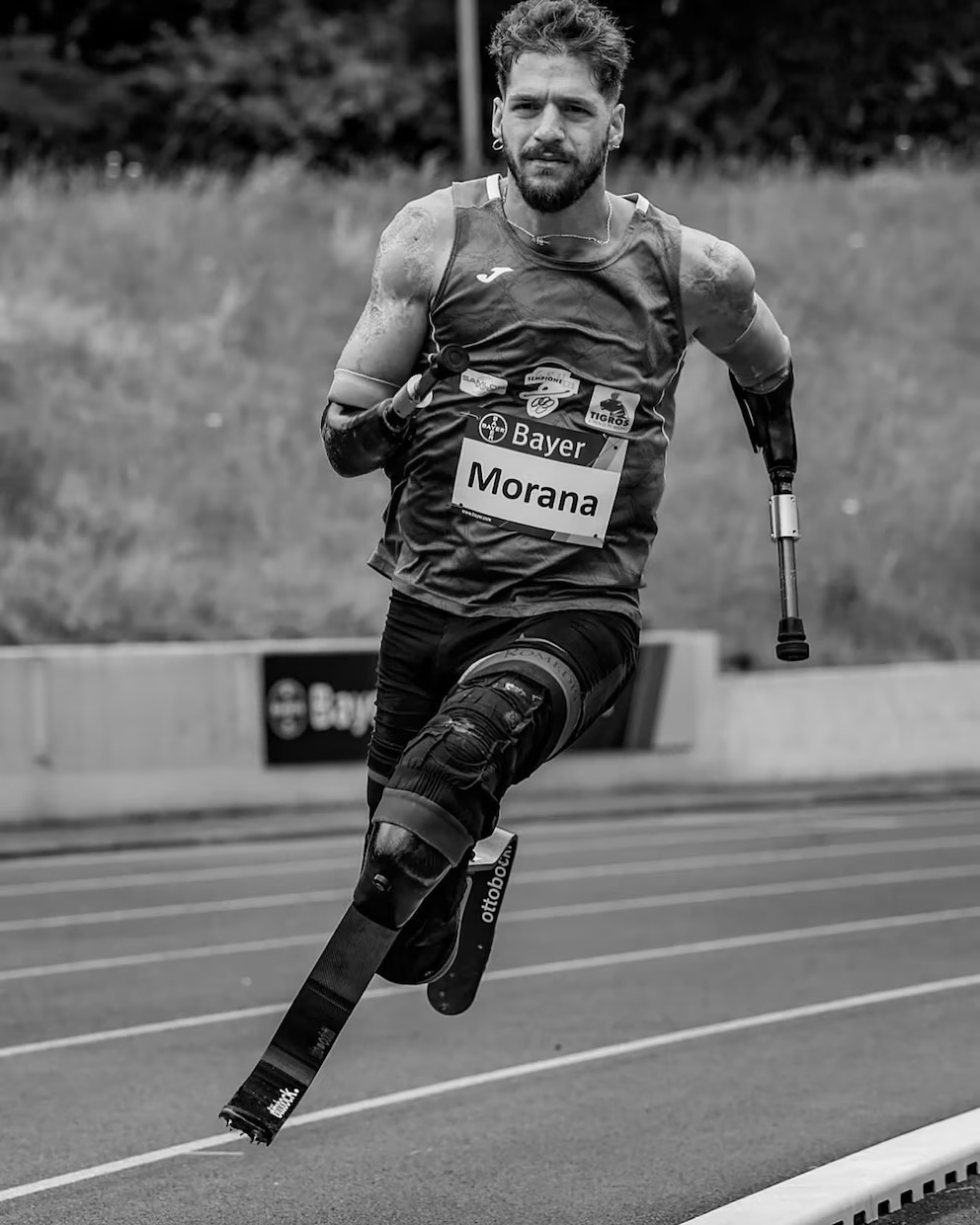
Despite the difficulties, Davide soon resumed his love for the sport. Over time, and thanks to adapted prostheses, he began to train in athletics. His effort and perseverance led him to be part of the Italian national athletics team for people with disabilities and, in 2023, to qualify for the World Athletics Championships in Kobe, Japan. Then she set herself another goal: to participate in the Paralympic Games in Paris. As a member of the Team Visa program, which supports athletes from around the world, Davide has the resources to stay in competition.
“I don’t like to be seen as an example of overcoming,” he told The Sun, “I think we all overcome daily difficulties, and just because mine is visible, it attracts more attention. But in the end, we all have to learn to adapt.”
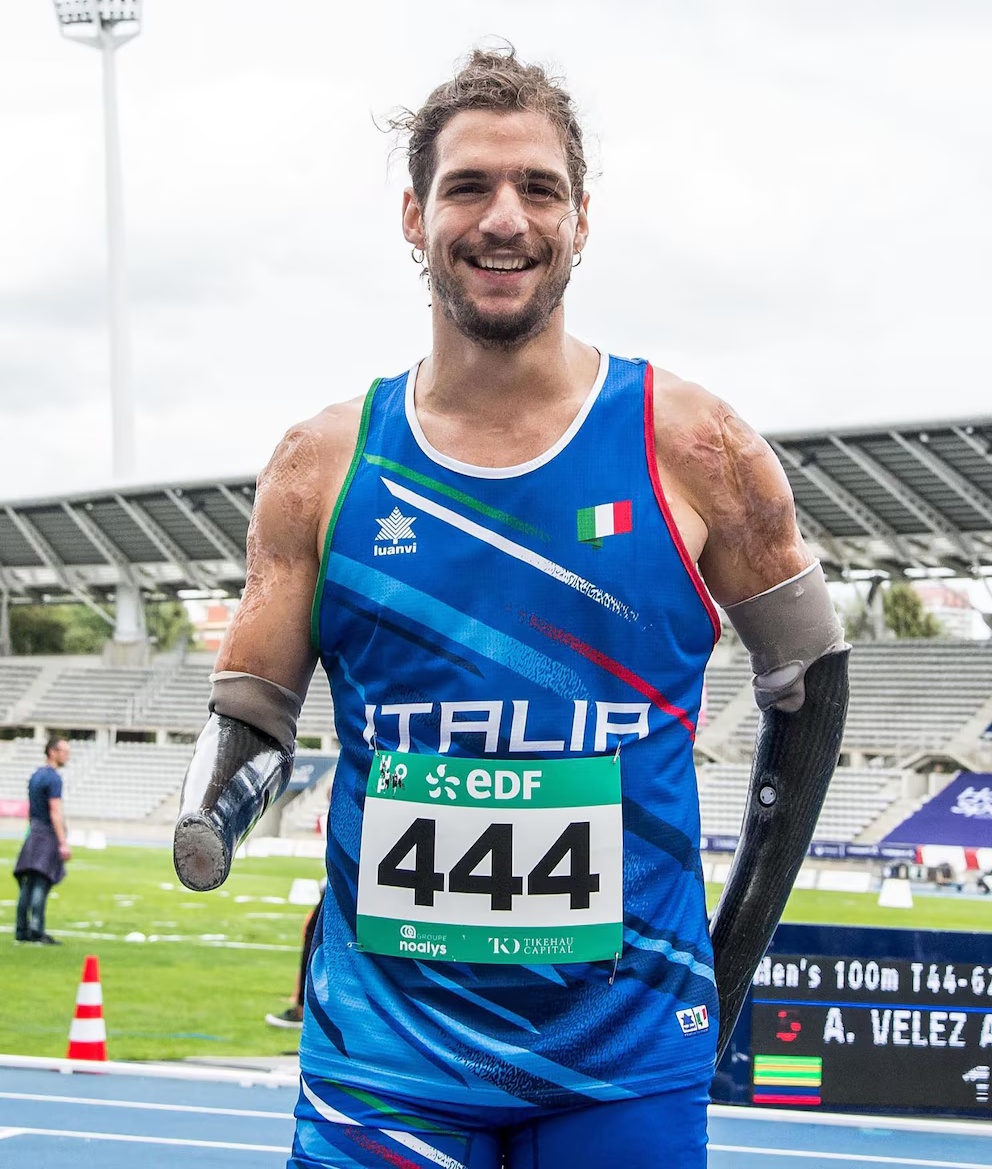
Davide’s life also represents a denunciation. The young athlete has become a critical voice against the difficulties faced by amputees in Spain, where the cost of prostheses is extremely high and state support is insufficient. “A bionic hand costs almost 50,000 euros,” he explained in his crowdfunding campaign, which managed to raise funds to finance his first prostheses. However, annual maintenance is still expensive, and sports prostheses are not included in the Spanish financing catalog.
“If I had the necessary prostheses funded, I could become an independent and useful person for society again, but it seems that no one sees the need.” For Davide, sport is much more than a physical activity; It is a tool for self-improvement that should be available to all amputees.
Davide has found in social networks a space where he shares his day to day and his positive vision, inspiring thousands of people around the world. Her videos show how she has learned to manage herself autonomously with prosthetics, and how each small daily victory becomes a symbol of perseverance. Today, from his small “window to the world”, Davide reminds us that life can change at any time, but that it is possible to face adversity with optimism and determination.