Dog No One Wanted Waits Three Years — Then Pete Wicks Brings “Reactive” Crumble Home for Good
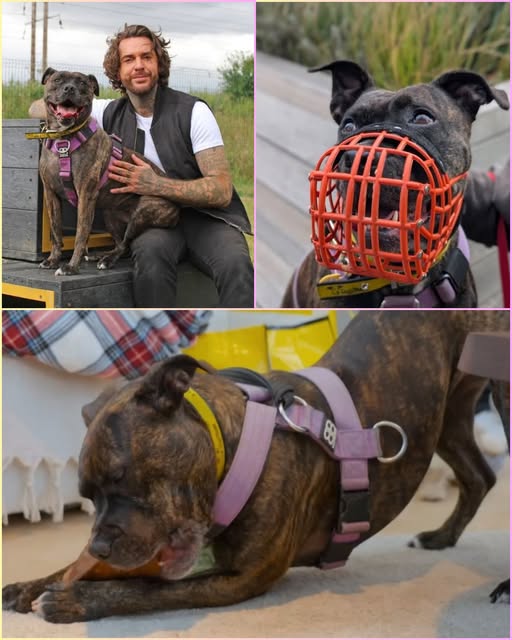
A dog who spent more than three years waiting in rescue has finally found her forever home — and the moment has moved thousands of animal lovers across the country.
Crumble, described by staff as a “reactive” and deeply misunderstood dog, had been living in kennels for years. Muzzled during walks and repeatedly overlooked by potential adopters, she became known as one of the rescue centre’s longest-staying residents.

Everything changed when television personality and animal welfare supporter Pete Wicks visited the centre.
According to those involved in Crumble’s care, Pete was immediately drawn to her — not despite her challenges, but because of them. He later admitted he “fell wildly in love” with her after learning about her background and the difficulties she faced around strangers and new environments.
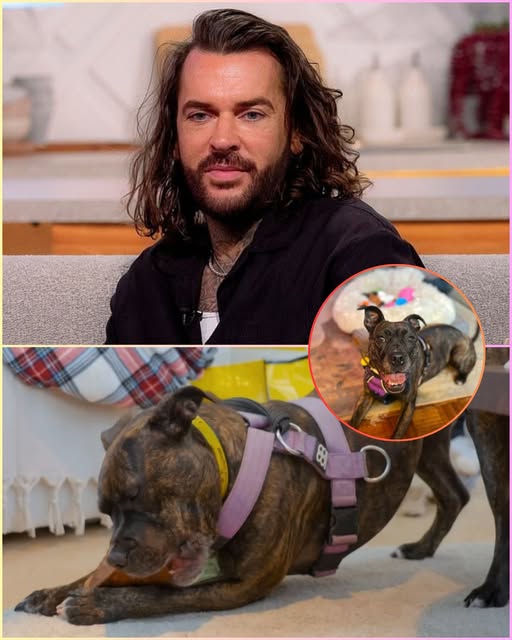
At first, Pete stepped forward as a foster carer.
Rescue staff say this was a crucial moment for Crumble. For a dog who had spent years behind kennel doors, simply living in a calm, predictable home environment was a huge breakthrough.
Over time, Crumble began to show steady progress. Her confidence improved, her anxiety reduced, and she started to form strong bonds with the people around her. Those supporting her rehabilitation say consistency, patience and emotional safety made all the difference.
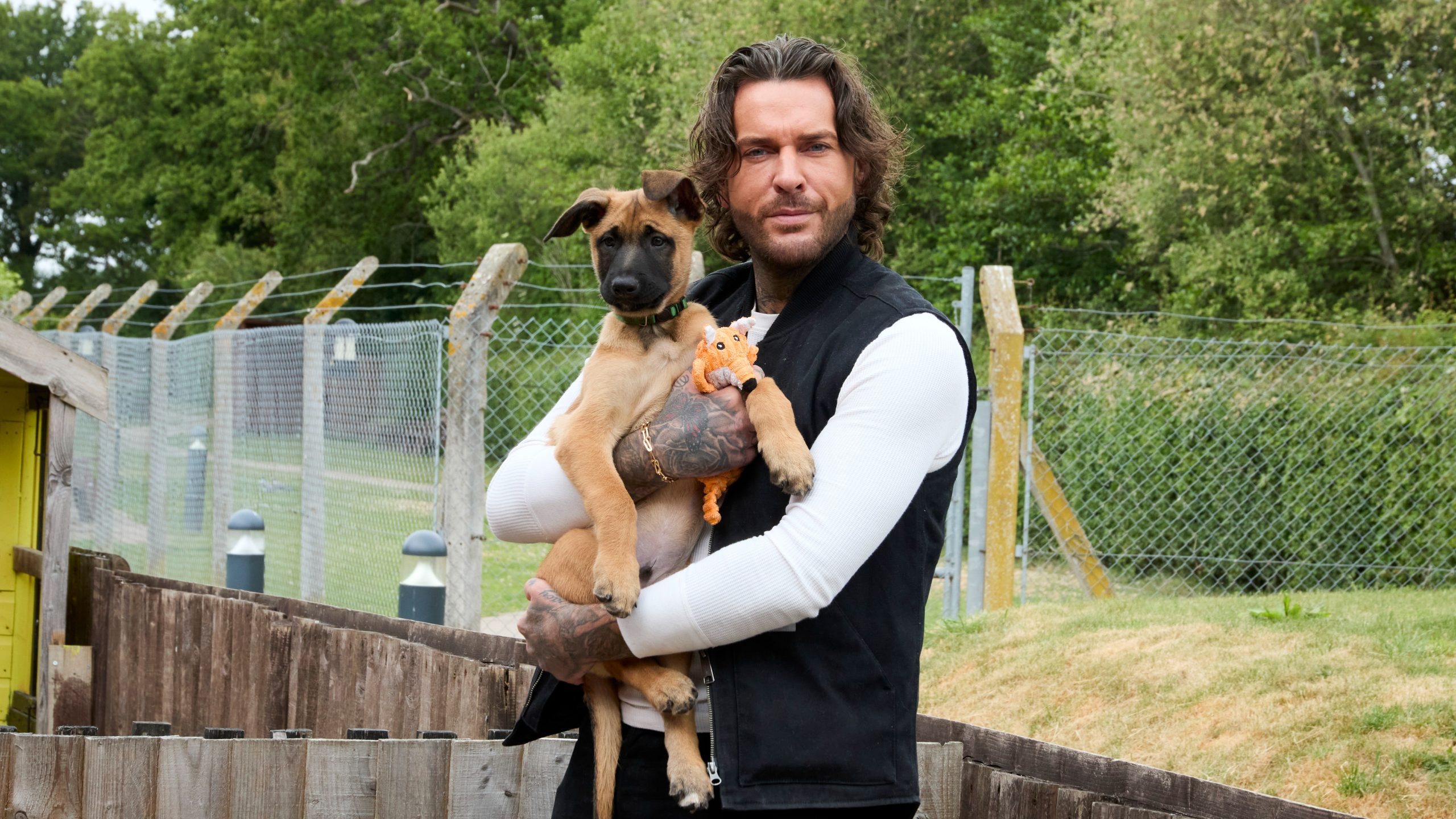
What began as fostering has now become permanent.
Pete has officially adopted Crumble, confirming that she will stay with him for good — a decision that has sparked an emotional response from fans and rescue supporters alike.
Many praised him for choosing a dog who would typically be passed over in favour of easier, younger or more immediately “adoptable” pets.
Rescue workers involved in Crumble’s journey say her story highlights a reality that many dogs labelled as “reactive” face.
These animals are often not aggressive by nature, but fearful, overstimulated or shaped by previous trauma — making it harder for them to cope in stressful shelter environments.