Shroud of Turin: Faith, Science, and the Firestorm of Doubt
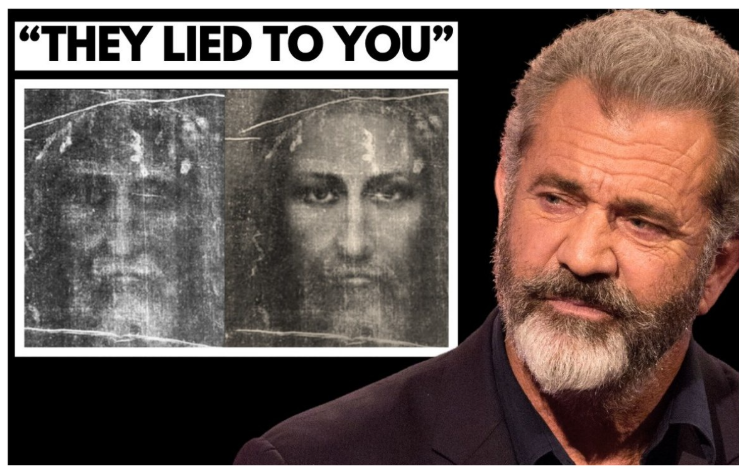
When Mel Gibson reportedly declared, “They’re lying to you about the Shroud of Turin,” the statement did more than generate headlines. It reignited a centuries-old controversy surrounding one of Christianity’s most debated relics. The remark spread quickly across media platforms, drawing renewed attention to an object that has long existed at the crossroads of belief and skepticism. For some, Gibson’s words sounded like a warning. For others, they felt like provocation. Either way, the mystery was alive again.
The Shroud itself is a linen cloth bearing the faint image of a man who appears to have been crucified. For believers, it may be the burial cloth of Jesus Christ; for skeptics, it is likely a medieval creation. In 1988, radiocarbon dating tests conducted by laboratories in Oxford, Zurich, and Tucson suggested the fabric originated between 1260 and 1390. The findings seemed decisive. Yet critics argued that the samples tested may have been taken from repaired sections of the cloth rather than its original weave, potentially skewing the results. Since then, chemists, forensic specialists, textile experts, and historians have continued to debate what the Shroud truly represents.
Gibson’s alleged remarks point toward what he believes are overlooked or mishandled details — disputed lab procedures, chemical traces that resist simple explanation, and historical inconsistencies that complicate the medieval dating. Some interpret his statement as an accusation of institutional deception; others see it as a call to reexamine conclusions drawn decades ago using older technology. Whether his words reflect personal conviction or broader skepticism, they tap into a deeper unease about how definitive scientific claims are formed and communicated.
For many observers, the controversy extends beyond fabric fibers and carbon isotopes. It touches the fragile boundary between trust and doubt. Was the science applied carefully and transparently? Were alternative hypotheses adequately explored? Or, conversely, are critics selectively interpreting data to defend a preexisting belief? The debate reveals how easily discussions shift from evidence to worldview. The Shroud is not merely a physical object; it is a symbol onto which people project questions about authority, faith, and truth.
Experts remain divided. Some researchers stand firmly by the 1988 radiocarbon dating, emphasizing the reliability of established methods. Others advocate for new examinations using advanced, non-invasive imaging and updated analytical techniques. Meanwhile, many believers regard the Shroud less as an artifact requiring scientific validation and more as a spiritual icon meant for contemplation. In this view, its power lies not in laboratory results but in the reflection it inspires.
Why does the Shroud matter so intensely today? Perhaps because we live in an age defined by rapid information, public distrust, and constant reevaluation of “settled” narratives. The Shroud forces a profound question: how do we weigh empirical evidence when it intersects with matters of faith and identity? Whether Gibson’s statement is a challenge, a warning, or simply an expression of belief, one truth endures — the mystery of the Shroud has not faded. And often, what divides us most is not the evidence itself, but what we are prepared to believe when confronted with it.