Beneath the Stones of Vatican City: The Chamber No One Was Meant to See
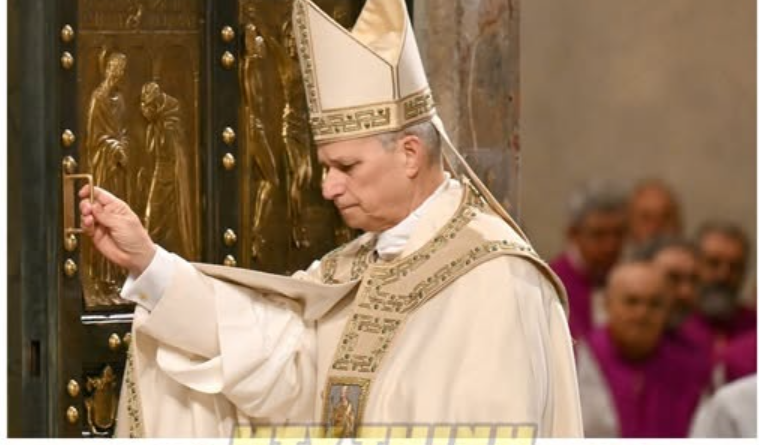
Beneath the sacred stones of Vatican City, where centuries of whispered prayers linger in vaulted corridors, a discovery reportedly unsettled even the most composed Cardinals. Hidden behind layers of ancient masonry and timeworn passageways, workers restoring a remote section of the foundation uncovered a sealed chamber — unmarked on modern architectural plans and absent from accessible archives. The entrance bore no inscription, no crest, no clear indication of purpose. It was as if the room had been intentionally folded into silence by history itself.
Those present described the air around the sealed doorway as unusually heavy, charged not with fear but with reverence. Dust clung to the stones. The corridor was narrow, lit only by dim restoration lamps. Scholars searched available records but found no definitive mention of the chamber’s construction. If documentation ever existed, it had long since faded into obscurity. The sense of standing before something deliberately hidden created a stillness that spread quickly through the Apostolic Palace.
When news reached Pope Leo XIV, he made a decision that surprised nearly everyone: he would enter the chamber alone. No guards. No Cardinals. No historians. The choice was not announced publicly but carried out quietly, as many solemn decisions in the Church often are. Observers recall the slow movement of the heavy door as it opened, the faint echo of ancient hinges breaking decades — perhaps centuries — of silence.
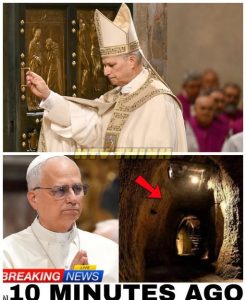
Inside, there was no glittering treasure, no golden reliquary waiting to astonish the world. Instead, those who later spoke in hushed tones described shadows stretching across raw stone walls, the air cool and undisturbed. Whatever lay within was not material wealth but something intangible — an object, inscription, or presence that seemed to stir reflection rather than spectacle. The silence in that chamber was described not as empty, but alive, as though layered with memory.
Outside, those waiting sensed a subtle shift in atmosphere. Minutes felt elongated, each second thick with anticipation. What truth rested in the darkness? Was it theological, historical, symbolic? Speculation spread quietly among insiders, yet no official statement followed. When the Pope finally emerged, witnesses noted a calm expression marked by unusual gravity. His demeanor was not alarmed, nor triumphant — but contemplative, as if he carried something unseen.
He offered only a single sentence: “Some truths are not meant to be displayed… only carried.” With that, the chamber was sealed once more. No public unveiling. No detailed report. Beneath the Vatican, the hidden room remains guarded not by elaborate locks, but by chosen silence. Whether its secret concerns forgotten history or spiritual reflection may never be known. Yet the mystery endures as a reminder that faith is shaped not only by what is revealed, but by what is entrusted to the quiet strength of belief.