Midnight Mayhem: Female C-17 Pilot Pushes Throttles to the Max in Heart-Stopping Emergency
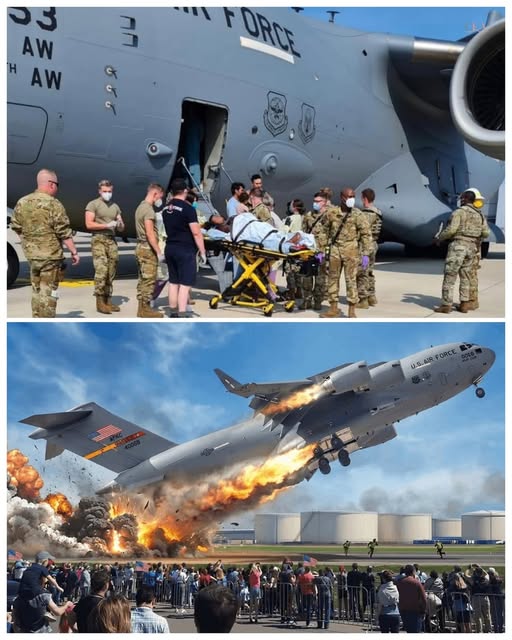
In a dramatic late-night incident that unfolded on a military airfield, a female C-17 pilot demonstrated decisive leadership and nerves of steel as she maneuvered a high-stakes emergency during an emergency takeoff sequence. With sirens wailing and warning lights flashing, the event quickly escalated from routine to history-making in a matter of seconds.
At the center of the episode is a training or operational scenario involving the Boeing C-17 Globemaster III, a robust transport aircraft known for its ability to perform in demanding conditions. In the blackout of night, the aircraft’s crew faced a scenario that demanded split-second judgment, flawless communication, and flawless execution under pressure. Eyewitness accounts and official briefings describe a moment when the runway appeared to recede faster than expected, and the situation called for a maximum-power response to ensure the safety of the crew, aircraft, and potential payload.
The pilot, identified by sources familiar with the operation as a highly experienced officer with a proven record in combat-loaded transport missions, demonstrated the kind of leadership that has become a hallmark for aviators who routinely operate in austere environments. According to observers, her actions, including a deliberate throttle application and a precision takeoff, transformed a routine ascent into a tense, high-stakes sequence that required precise timing and unwavering discipline.
The sequence began with the aircraft on the runway under less-than-ideal conditions—nighttime visibility, rapidly changing wind patterns, and the inherent complexities of a large strategic airlift platform. As alarms pinged and warning lights illuminated the cockpit, the crew quickly assessed the situation, identifying the critical need to achieve sufficient lift and accelerate to a safe climb rate. In such moments, proper management of engine power, rotor and airframe performance, and aircraft systems becomes a matter of survival and mission success.
With engines responding to the pilot’s commands, the C-17’s characteristic roar filled the air, a reminder of the machine’s power and resilience. Circumstances demanded that every action be executed with confidence and precision, from throttle control to flap settings and pitch attitude. Those involved described a calm yet purposeful workflow, where continuity of crew coordination and adherence to standard operating procedures were essential to averting a potential mishap.
While the public narrative of the incident centers on the dramatic visuals—the blazing warning lights, the thunderous takeoff, and the sense of imminent danger—the broader implications center on aviation safety, training, and the ongoing emphasis on empowering women in aviation. Military and civilian observers alike credit such moments to comprehensive training programs, rigorous simulators, and real-world experience that prepare pilots to respond effectively under duress. The aircraft’s successful ascent, in this view, is less about spectacle and more about the culmination of preparedness and teamwork.
Experts contacted for analysis note that while the specifics of the incident remain under investigation, several consistent themes emerge in emergency aviation operations: rapid decision-making, effective crew resource management, and the critical importance of engine performance and mechanical reliability. In modern airlift operations, where large transports are tasked with rapid deployments, the margin for error is slim, and the ability to execute a well-timed, controlled takeoff is vital.
The pilot’s actions have sparked conversations across the aviation community about representation and the visibility of women in high-stakes aviation roles. Advocates point to such incidents as evidence that talent and leadership are not bound by gender, and that diversity within cockpit crews can enhance decision-making and mission outcomes. Supporters emphasize that stories of resilience and skill serve as powerful role models for aspiring aviators and students considering careers in aerospace and related fields.
Preliminary reports indicate no injuries and no damage beyond the aircraft itself, with investigators focusing on the sequence that led to the emergency takeoff and the timing of subsequent checks and procedures. As is customary in military aviation, a formal after-action review is underway to identify lessons learned, assess risk controls, and reinforce best practices for future operations.
As the night air clears and the echoes of the engines fade, the aviation community will be studying this incident for days to come. The overarching narrative remains one of professionalism under pressure, the triumph of preparedness, and the quiet but powerful progress of women who continue to shape the skies. In the end, what began as a midnight emergency concluded with confidence, competence, and a reaffirmation of the core principles that keep airlift operations safe and successful.