SHOCKING TRUTH EXPOSED: Pre-Dawn FBI & ICE Takedown Uncovers “$2.8 BILLION” Medicaid Fraud in Ohio
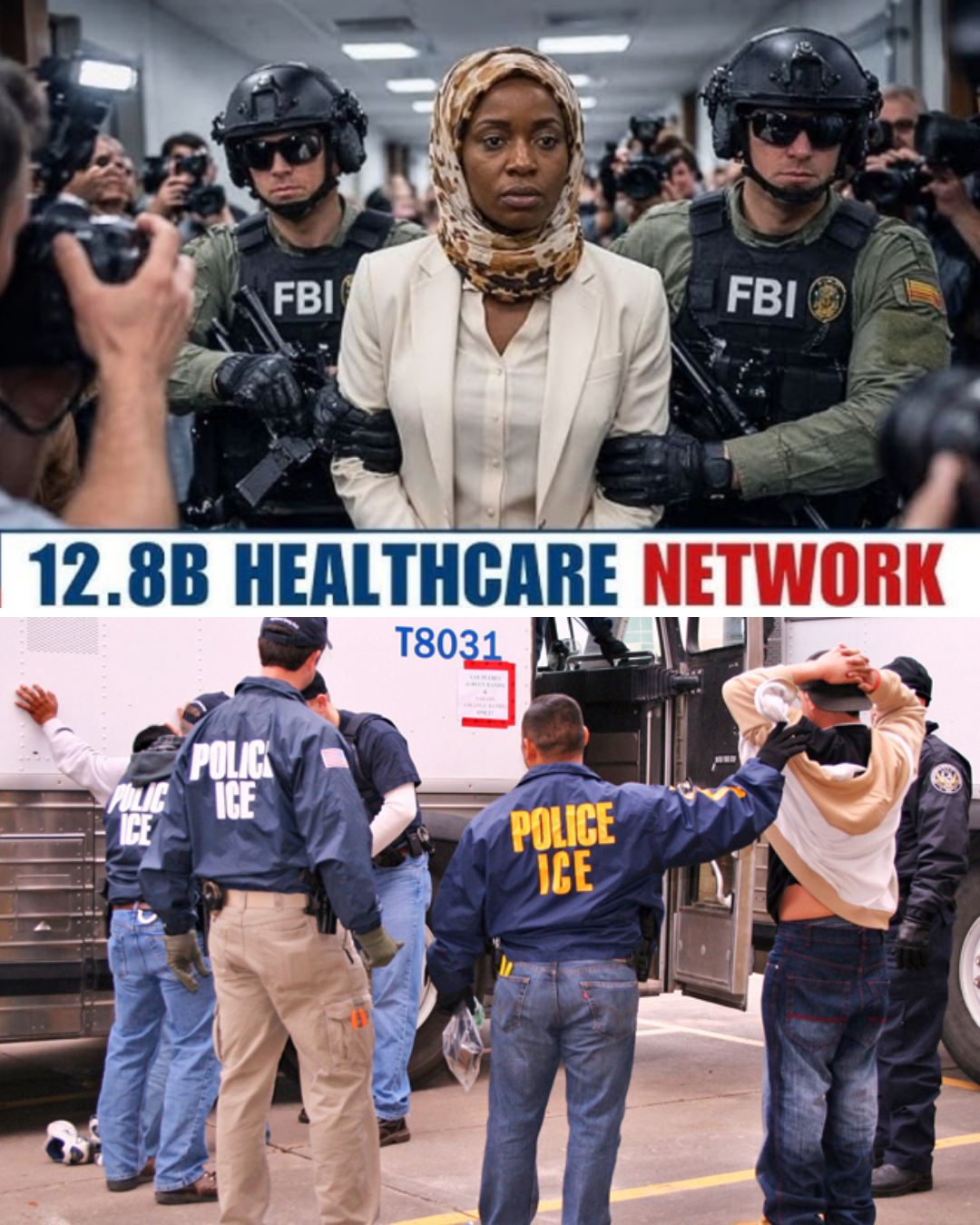
CLEVELAND — A dramatic online story claiming federal agents uncovered a $2.8 billion Medicaid fraud network in Ohio during a pre-dawn raid is circulating widely, but the account remains difficult to corroborate through official records that typically accompany a case of that size.
The article, published on the “Family Stories” website under the headline “Pre-Dawn Takedown: FBI & ICE Uncover $2.8 Billion Medicaid Fraud in Ohio,” describes an investigation that began with irregular billing patterns in Cleveland-area Medicaid claims—“overnight spikes,” clinics billing for procedures patients said never occurred, and provider addresses that allegedly led to vacant storefronts or private homes. It then depicts a coordinated operation in which FBI and ICE teams executed multiple search warrants at 4:18 a.m. on January 15, seizing laptops, hard drives, and financial documents said to outline an intricate scheme involving “ghost clinics,” shell corporations, and offshore money movement.
According to the story’s narrative, “phantom” medical providers submitted claims for services never rendered, routed reimbursements through intermediary accounts, and dispersed the proceeds through layers of corporate registrations across multiple states. The piece further alleges coded shipping records—described as “humanitarian rice”—were used to mask illicit transfers, and it suggests investigators found documents pointing to cartel-linked financial pathways.
The article also introduces a politically combustible subplot: it claims a U.S. senator’s name appeared in seized materials connected to entities under scrutiny, though it stops short of alleging a charged crime by any elected official. In the story’s telling, that detail intensified speculation in Washington and prompted calls for transparency, while investigators purportedly kept key filings sealed.
Yet despite the specificity of its timestamps and plot points, the report does not include the kinds of verifiable identifiers that typically accompany major federal actions—such as a named U.S. Attorney’s Office press release tied to the operation, a case number, a list of defendants, or excerpts from an indictment. Without those anchors, readers are left to weigh the story’s sweeping claims against what is publicly documented about Medicaid fraud enforcement in Ohio.
Publicly available law-enforcement updates show that Medicaid fraud cases in Ohio are real and recurring, but they are generally described in far smaller dollar amounts than the billions cited in the viral narrative. In a February 2026 announcement, for example, the Ohio Attorney General’s office detailed Medicaid fraud charges involving multiple providers, including one case in Cleveland where investigators said roughly $108,983 was improperly paid. Similar state announcements in 2025 also describe “phantom” billing schemes, but with losses in the tens of thousands of dollars, not billions.
On the federal side, FBI Cleveland’s published press-release listing reflects ongoing prosecutions for serious crimes in the region, including a January 2026 health-care fraud sentencing involving about $14 million—a significant figure, but still orders of magnitude below $2.8 billion.
That disparity does not prove the “Family Stories” account is impossible—large, multi-jurisdiction frauds do occur—but it raises a basic verification problem. A case alleging $2.8 billion in Medicaid losses would likely trigger extensive public filings, major agency announcements, and broad coverage by mainstream outlets, particularly if a senator’s name was tangentially involved. The web footprint surfaced alongside the “Family Stories” narrative largely consists of social media reposts repeating the same framing, rather than independent reporting or official documentation confirming the described raid.
As written, the article reads like a thriller-styled reconstruction: a hidden empire inside a public-benefits system, built on stolen identities, falsified patient records, and automated billing scripts engineered to mimic legitimate patterns. It closes on an unresolved note, asserting that the alleged architect of the scheme remains at large and that sealed indictments could precede additional arrests.
For Ohio’s Medicaid program and the public officials tasked with protecting it, the broader takeaway is not in dispute: fraud exploits gaps in oversight and erodes trust in benefits designed for vulnerable people. But the specific claim of a $2.8 billion Cleveland-based takedown, as described, should be treated as unverified unless and until it is supported by public court records or official statements from the agencies named in the story.