“Operation Iron Highway”: The Viral Claim of 9,400 Arrests and a $2.8 Billion Cartel Network — What Is Actually Known
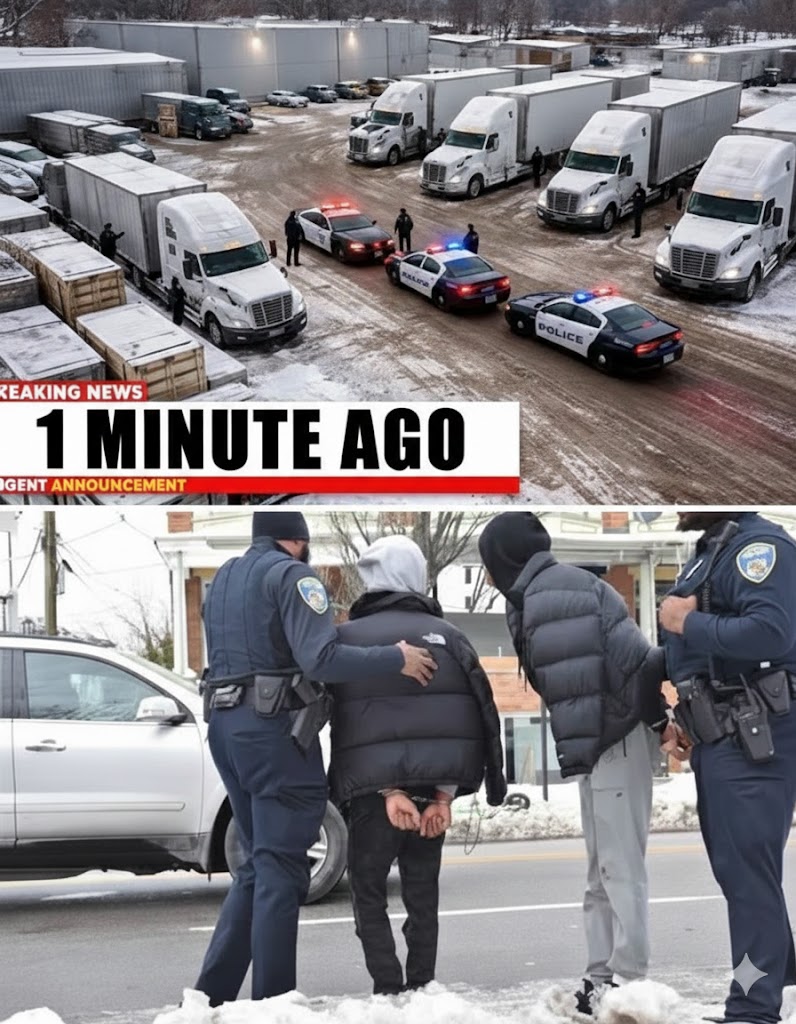
9,400 Arrests After 1 Truck Stop Bust Uncovered a $2,800,000,000 Cartel System In a jaw-dropping twist, a routine truck stop inspection in Texas has unraveled a staggering $2.8 billion cartel distribution system, leading to nearly 9,400 arrests in what’s being hailed as Operation Iron Highway. What started as a simple check quickly escalated into one of the largest federal crackdowns on drug trafficking in U.S. history, exposing the shocking depth of cartel infiltration across 47 truck stops in 18 states. As authorities celebrate this monumental victory, one can’t help but wonder: how many more hidden networks are lurking in plain sight, waiting to be discovered? In a world where crime seems to pay handsomely, the real question is—will this crackdown actually make our highways safer, or is it just another fleeting headline in the ongoing saga of America’s war on drugs? After all, in the game of cat and mouse, it seems the mice are always one step ahead.
A dramatic story circulating online claims that a routine truck stop inspection in Texas triggered a massive federal operation known as “Operation Iron Highway,” leading to nearly 9,400 arrests and the exposure of a $2.8 billion nationwide cartel distribution system stretching across 47 truck stops in 18 states.
It is a powerful and attention-grabbing narrative.
But so far, there is no public confirmation from U.S. federal authorities that such an operation — under that name and at that scale — has taken place.
As of now, neither the U.S. Department of Justice, the Drug Enforcement Administration, Homeland Security Investigations, nor the FBI has issued a press release confirming:
-
an operation called Operation Iron Highway,
-
a coordinated enforcement action involving 9,400 arrests, or
-
the dismantling of a $2.8 billion trafficking system centered on truck stops.
This is a critical point. Large multi-state operations involving thousands of arrests would normally be announced through official briefings, court filings, and public indictments. They would also be widely covered by major national and regional news organizations.
At present, those records do not appear to exist.
That does not mean that truck stops and freight corridors are not legitimate areas of concern.
In reality, U.S. authorities have repeatedly confirmed that long-haul trucking routes and rest areas can be exploited by organized criminal groups to move prohibited goods and launder proceeds. Over the past decade, federal and state agencies have conducted numerous targeted operations at logistics hubs, border crossings, and highway inspection points.