Tensions Beneath the Surface: Reports Suggest Early Strains Between Meghan and Kate
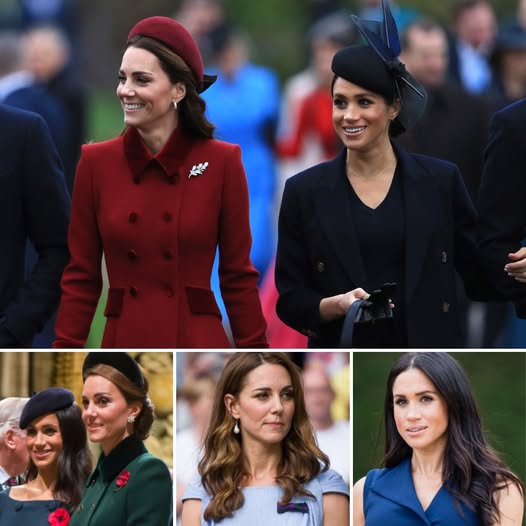
Fresh discussions about the early dynamics within the British royal family have resurfaced following claims that Meghan once viewed her role — and that of Kate — through sharply different lenses. According to accounts circulating in recent commentary, perceptions of identity, purpose, and hierarchy may have contributed to quiet tensions long before they became public conversation.
Sources referenced in recent reports suggest that Meghan saw herself as a humanitarian voice and public speaker with an established global platform prior to joining the royal family. Before her marriage to Prince Harry, Meghan had built a career in television and advocacy work, shaping an image as a socially engaged public figure.
By contrast, Catherine, Princess of Wales — widely known as Kate — entered royal life years earlier after marrying Prince William. Over time, Kate’s role evolved steadily within the structure of the monarchy, focusing on long-term charitable initiatives centered on early childhood development, mental health, and family welfare.
Commentators claim that Meghan believed she brought significant professional and public-facing experience into the institution. Some accounts allege she viewed herself as having “more to offer” in terms of public speaking and international engagement. These perceptions, according to analysts, may have clashed with the formal hierarchy that governs royal protocol.
The British monarchy operates on a clearly defined structure, where seniority is determined by line of succession and established tradition rather than prior career achievements. As the future king and queen consort, William and Catherine hold higher formal standing within the institution than Harry and Meghan. For individuals entering the system from outside, adapting to these long-standing rules can require significant adjustment.
Royal historians note that tension between modernization and tradition has been a recurring theme within the monarchy for generations. Each new member brings personal ambition, identity, and vision, yet must operate within a framework shaped by centuries of precedent.
Observers suggest that any perceived rivalry may not have stemmed from personal animosity alone, but from contrasting expectations about visibility, influence, and independence. Meghan’s background in media and activism contrasted with Catherine’s gradual integration into royal duties after years of preparation. Their paths into public life were markedly different, as were their approaches to it.
It is important to note that many of the reported sentiments remain interpretations from biographers and commentators rather than confirmed personal statements. Public narratives surrounding royal relationships are often shaped by unnamed sources and retrospective analysis.
Still, the idea that “seeds of rivalry” were planted early reflects a broader conversation about identity within a structured institution. Balancing individuality with hierarchy can be complex, particularly under intense global scrutiny.