Southwest Weather Shock: Rare Winter Storm Slams New Mexico and Eastern Arizona, Highways Shut Down
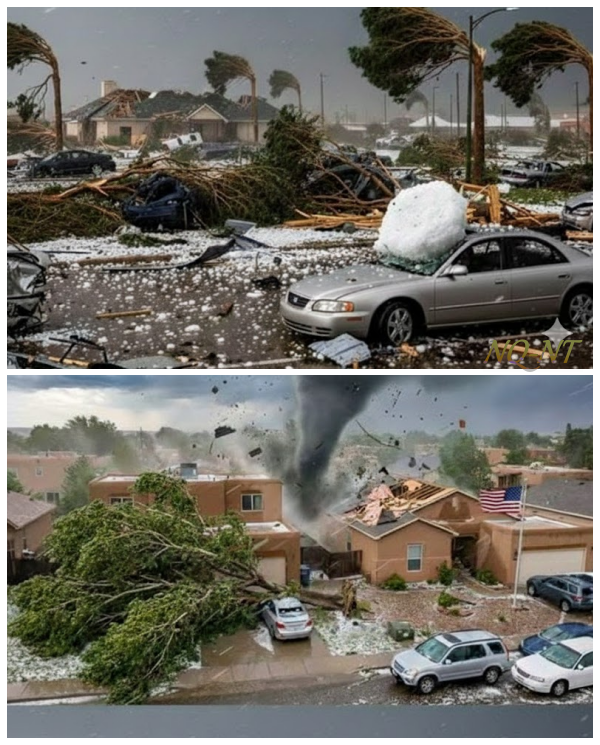
A powerful and highly unstable winter storm swept across parts of the American Southwest, bringing an intense burst of hail, lightning, and icy road conditions that caught many residents off guard. Meteorologists described the system as unusually convective for this time of year, with conditions more commonly associated with severe spring storms rather than a winter pattern.
In Albuquerque, residents reported sudden hail and graupel accumulating on roads within minutes. The fast-moving cells transformed ordinary rainfall into icy pellets that coated pavement and reduced traction almost instantly. Authorities confirmed temporary closures along sections of Interstate 40 west of the city after conditions became hazardous for drivers.
The National Weather Service issued severe thunderstorm warnings for Bernalillo County and parts of Santa Fe County as intense convective bursts strengthened rapidly. Weather officials noted that the storm structure allowed for strong updrafts, supporting quarter-size hail in some locations.
Drivers across central New Mexico and eastern Arizona encountered near-zero visibility at times, as heavy precipitation combined with gusty winds. Reports from law enforcement indicated multiple slowdowns and emergency responses due to slick pavement and sudden lane blockages caused by accumulating ice pellets.
Meteorologists emphasized that while winter storms are not uncommon in the region, this event stood out because of its instability. Instead of steady snowfall, the atmosphere produced thunderstorm-like activity embedded within the broader winter system. Lightning strikes were recorded alongside bursts of hail, a combination that surprised many residents.
The rapid intensification of the storm cells left little time for preparation. Weather experts explained that temperature differences between upper-level cold air and relatively milder surface air created the perfect environment for strong vertical motion. As a result, rain quickly transitioned into hail and graupel, creating what some described as “icy chaos” on local roadways.
Emergency management officials urged motorists to delay travel where possible and to monitor official advisories. Crews worked to clear affected highway sections and assess conditions as precipitation bands continued to move through the area.
Forecasters indicated that while the most intense convective bursts may subside overnight, lingering precipitation and freezing temperatures could continue to pose risks into the early morning hours. Residents were advised to stay alert for updated warnings and to use caution when venturing out.
This storm serves as a reminder that winter systems in the Southwest can still pack an unexpected punch. With rapidly changing conditions and embedded thunderstorm activity, what began as a routine weather event quickly escalated into a significant travel disruption across parts of New Mexico and Arizona.