🚨🛰️ Silence in the Stars? Separating Sci-Fi Drama from Scientific Reality
- TranThuy
- February 24, 2026
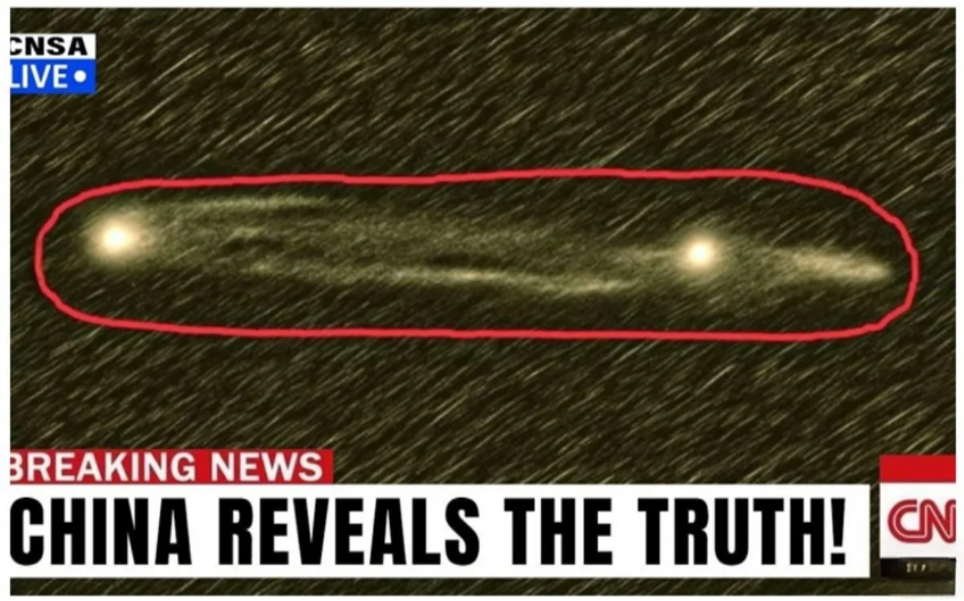
The internet is buzzing with dramatic claims that China has released stunning new images of the interstellar object 3I/ATLAS while Western observatories have somehow “gone silent.” The narrative feels tailor-made for a science fiction thriller—shadowy agencies, hidden discoveries, and a mysterious object drifting through the darkness of space. Online speculation paints a picture of secrecy and rivalry, suggesting that critical information is being withheld from the public. In the age of viral headlines, it does not take much for imagination to outrun evidence.
In reality, space observation is far less theatrical and far more collaborative. Modern astronomy relies on a global network of observatories, satellites, and research institutions that routinely share data across borders. Agencies such as NASA, along with counterparts in Asia and Europe, publish findings through scientific journals, press briefings, and open databases. Discoveries are typically scrutinized by international teams before conclusions are announced. Rather than cinematic standoffs, the norm is careful cooperation grounded in peer review and transparency.
Data gaps, which sometimes spark suspicion, often have ordinary explanations. Telescopes cannot observe every object at all times; orbital positions shift, Earth rotates, and weather conditions interfere. Scheduling conflicts may delay follow-up observations, and instruments occasionally require recalibration or maintenance. Even the most advanced observatories must work within physical and logistical limits. A pause in public updates does not necessarily signal secrecy—it may simply reflect the practical realities of astronomical research.
Interstellar objects themselves add another layer of complexity. They move quickly relative to Earth, sometimes appearing faint or di storted in telescope images. Capturing clear, high-resolution data requires precise timing and favorable viewing angles. Different countries may release images at different moments depending on when their instruments had optimal visibility. What looks like a dramatic information imbalance online may simply be the result of geography and timing.
Mystery, of course, fuels imagination. The cosmos is vast and filled with phenomena that challenge our understanding. When something unusual appears—especially an interstellar visitor like 3I/ATLAS—it naturally draws global attention. Social media thrives on dramatic framing, and stories of cover-ups or hidden truths spread rapidly because they are exciting. Yet excitement does not equal evidence, and speculation should never replace careful analysis.
Before leaping to whispers of concealment, it is worth remembering that the universe is complex enough on its own. Scientists dedicate years to interpreting faint signals and distant light, often double-checking results before speaking publicly. Sometimes silence is not secrecy—it is patience. In the quiet intervals between updates, researchers are refining data, testing hypotheses, and ensuring accuracy. Far from a thriller plot, the real story is one of steady curiosity, global collaboration, and humanity’s shared effort to understand what the stars are trying to say. 🌠🌍