
Civil Rights Inquiry Intensifies Over 2024 St. Logan ICE Interception
- ThanhHuyen
- February 24, 2026
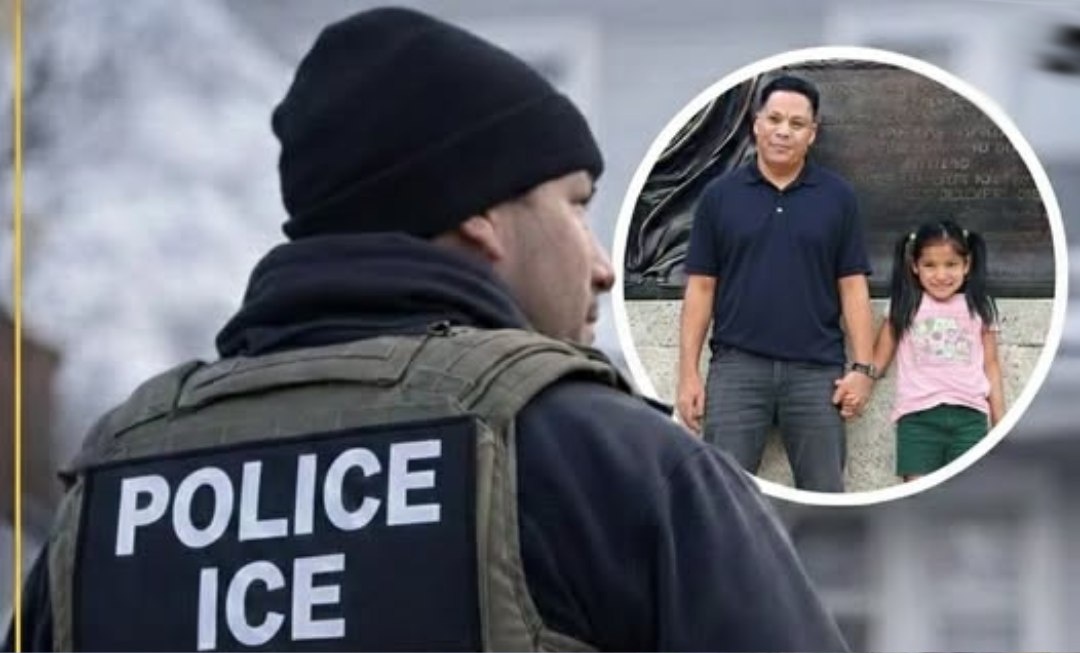
A civil rights investigation is gaining momentum following the resurfacing of a previously unseen photograph connected to the 2024 St. Logan interception involving federal immigration authorities. The image, described by investigators as a “final happy photograph,” shows a New Jersey father walking hand in hand with his six-year-old daughter shortly before his detainment by Immigration and Customs Enforcement (ICE) officers.
The photograph, now under forensic review, has become a focal point in the broader inquiry into whether the enforcement action was proportionate and legally justified. Analysts are examining the image’s metadata alongside arrest footage to determine whether surveillance or pre-planned tactical positioning preceded what officials initially described as a routine administrative stop.
Civil rights attorneys argue that the contrast between the peaceful family moment and the heavily equipped officers who later detained the father raises troubling questions. Video from the scene shows masked agents wearing reinforced ballistic vests and employing coordinated flanking maneuvers typically associated with high-risk operations.
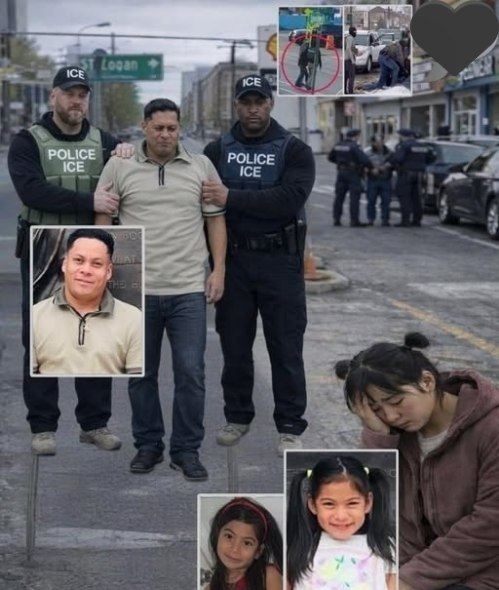
“This does not resemble a spontaneous field stop,” said one legal observer familiar with the inquiry. “The positioning, the equipment, the spacing between agents — it reflects deliberate operational planning.”
Sources close to the investigation claim that the tactical posture deployed during the St. Logan incident does not align with the profile of a non-violent individual. The father, whose name has not been publicly released pending legal proceedings, had no documented history of violent conduct at the time of the arrest, according to advocacy groups reviewing the case.
Footage reportedly shows agents intercepting him in a public area while his daughter stood nearby. Critics argue that the presence of a child should have prompted de-escalation rather than a display of force.
“The visual evidence reveals what we see as a deeply disturbing pattern,” one civil rights advocate stated. “A six-year-old child became a secondary variable in a tactical operation designed to project authority.”
The father’s spouse described the moment as “surreal and overwhelming.”
“He was just walking with our daughter,” she said. “There was no warning that anything like this would happen. One second she was smiling, and the next everything changed.”
Investigators are now analyzing digital timestamps and geolocation data embedded within the recovered photograph and surrounding recordings. Some experts suggest the possibility that surveillance efforts may have been underway prior to the physical interception.
If confirmed, such findings could shift the narrative from an on-the-spot administrative action to a coordinated enforcement strategy.
“When you look at spatial dynamics — how the agents approached, the angles they covered — it suggests anticipation rather than reaction,” said a former federal enforcement analyst who reviewed publicly available footage. “That distinction matters legally.”
ICE has maintained that its officers acted within established protocols and declined to comment on specifics, citing ongoing proceedings.
Advocates have emphasized the psychological implications of the arrest on the child involved. According to family representatives, the young girl has experienced anxiety and confusion since the incident.
“She keeps asking when her father is coming home,” her mother said. “It’s difficult to explain something that even we struggle to understand.”
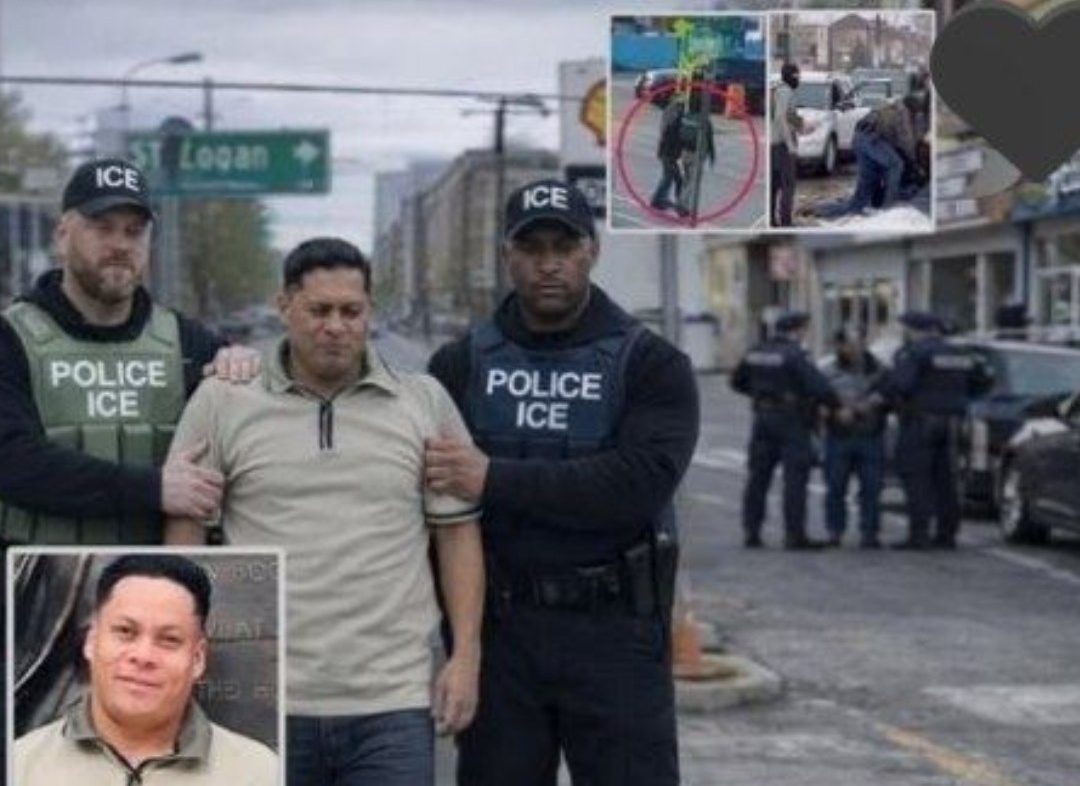
Child welfare experts note that high-intensity enforcement actions conducted in front of minors can carry lasting emotional consequences, particularly when executed without visible attempts at reassurance or explanation.
“The presence of combat-style gear and masked faces amplifies fear responses in children,” said a pediatric trauma specialist not directly involved in the case. “Operational efficiency must be balanced with humanitarian considerations.”
The St. Logan incident has reignited national debate over the scope and execution of immigration enforcement operations. Critics argue that increasingly tactical approaches risk blurring the line between civil administration and paramilitary-style intervention.
The juxtaposition of the recovered family photograph against footage of the arrest has fueled public reaction online, where advocates describe the image as symbolic of sudden family separation.
Legal observers say the case may hinge on whether the level of force used can be objectively justified based on credible threat assessments.
“If this is deemed routine,” one civil rights attorney noted, “then the threshold for what constitutes proportional enforcement has shifted significantly.”
As the timeline of the 2024 St. Logan interception continues to be reconstructed, investigators are expected to release further findings regarding surveillance protocols, escalation decisions, and compliance with agency guidelines.
For the family at the center of the case, however, the focus remains deeply personal.
“We just want transparency,” the mother said. “We want to know why it happened the way it did, and we want our daughter to feel safe again.”
The inquiry remains active, with civil rights groups calling for full disclosure of operational planning documents and body-camera footage. Whether the recovered photograph ultimately reshapes the legal and public understanding of the incident remains to be seen, but for many observers, it has already transformed the narrative into a broader examination of modern enforcement practices and their human cost.