BEHIND THE BABY MONKEY’S HUG: SCIENCE, PAIN, AND THE NEED TO BE HELD
BEHIND THE BABY MONKEY’S HUG: SCIENCE, PAIN, AND THE NEED TO BE HELD
It’s just a stuffed toy — yet it’s the only thing keeping him whole…
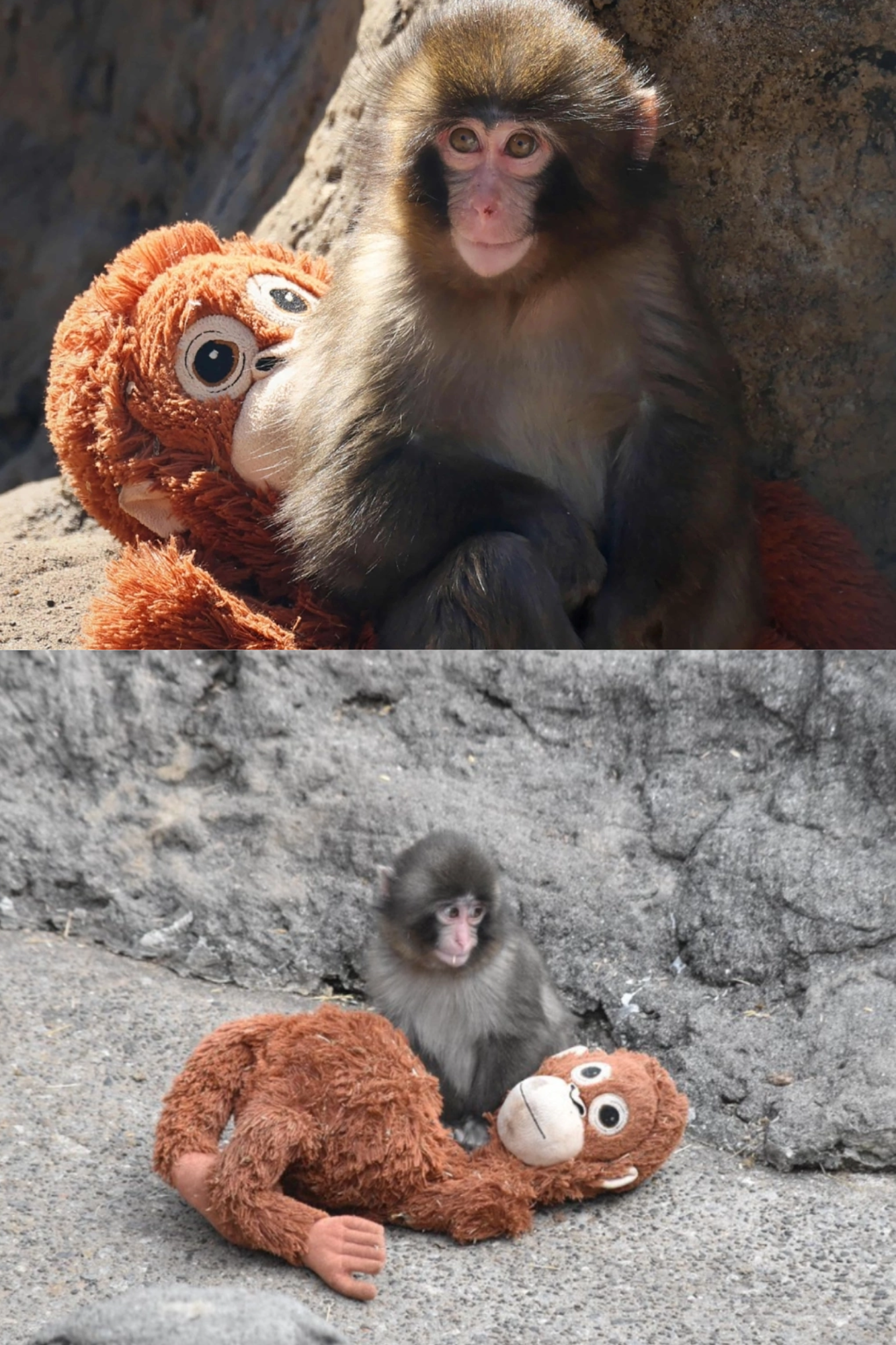
In early 2026, the image of a baby monkey named Punch at Ichikawa Zoo in Japan quietly broke the internet. Clutching an orange stuffed animal from IKEA, the little macaque looked comforted — almost safe . What the world didn’t see was the reason behind that grip: Punch was rejected by his mother at birth. No warmth. No heartbeat.  No place to belong. Left alone, he reached for the only substitute available — soft contact
  . That single image echoed one of psychology’s most haunting lessons, introduced decades ago by Harry Harlow, who proved that love is not built on nourishment alone, but on closeness. Punch doesn’t hug the toy because it’s cute. He hugs it because it feels like a mother who never came back. In a world that feels too big and too cold, that piece of fabric becomes an anchor — something that tells him he is not completely alone. And maybe that’s the quiet truth for all of us: when everything else is stripped away, what keeps a soul alive is not survival… but being held
No place to belong. Left alone, he reached for the only substitute available — soft contact . That single image echoed one of psychology’s most haunting lessons, introduced decades ago by Harry Harlow, who proved that love is not built on nourishment alone, but on closeness. Punch doesn’t hug the toy because it’s cute. He hugs it because it feels like a mother who never came back. In a world that feels too big and too cold, that piece of fabric becomes an anchor — something that tells him he is not completely alone. And maybe that’s the quiet truth for all of us: when everything else is stripped away, what keeps a soul alive is not survival… but being held