From Coffee Crates to a Federal Reckoning
- TranThuy
- February 24, 2026

On what seemed like an ordinary morning at the Port of New Orleans, cargo cranes moved rhythmically against the skyline and workers carried out their routines without suspicion. U.S. Coast Guard officers were conducting a standard inspection along the docks, expecting nothing more than minor paperwork discrepancies or routine customs issues. Instead, tucked inside shipments labeled as coffee, they uncovered 180 kilograms of cocaine. In a single, stunning moment, the aroma of roasted beans gave way to the sharp reality of a massive drug operation. What began as a routine inspection instantly became the first domino in a chain reaction that would shake institutions far beyond the harbor.
The shocking discovery triggered a sweeping 22-month federal investigation known as Operation River Justice. Agents from the Federal Bureau of Investigation and the Drug Enforcement Administration joined forces to trace the origins of the concealed narcotics. What they uncovered was far more complex than a single shipment gone wrong. Shell corporations masked ownership records, offshore bank accounts hid illicit profits, and cryptocurrency wallets transferred funds across borders with near anonymity. Investigators alleged that behind layers of paperwork and digital encryption stood a $14 billion cocaine pipeline operating with chilling precision.
As the case unfolded, it became clear that the operation was not limited to smugglers and traffickers alone. Financial records, encrypted messages, and cooperating witnesses pointed toward a network that exploited legitimate trade routes to disguise illegal activity. Containers moved through ports appearing harmless, while falsified documents ensured that shipments avoided scrutiny. The sophistication of the scheme demonstrated how organized crime can weave itself into the fabric of global commerce, blurring the line between lawful enterprise and criminal conspiracy. Each piece of evidence brought agents closer to understanding the scale of deception at play.

At the center of the growing storm stood Federal Magistrate Jean-Michel Beauvais, a respected judicial figure now facing grave accusations. Investigators claimed that he shielded key operatives, dismissed critical cases, and denied warrants that might have exposed the network earlier. In exchange, he allegedly received illicit payments concealed within complex financial transactions. Digital ledgers and sworn testimony suggested that corruption had penetrated deep into the justice system itself. The possibility that a guardian of the law had enabled criminal enterprise sent shockwaves through the public and threatened to erode trust in the judiciary.
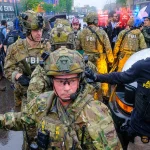
Coordinated raids soon followed across 22 locations, executed with precision and secrecy. Federal agents stormed offices, residences, and warehouses, seizing assets ranging from luxury vehicles to encrypted servers. Arrests were carried out in dramatic fashion, marking one of the largest crackdowns in recent memory. Yet even as headlines celebrated the takedown, uneasy questions lingered. How many individuals had quietly benefited from the operation? Could fragments of the network still be functioning in hidden corners of the financial world, waiting to rebuild?
From a single coffee shipment to the exposure of a sprawling criminal empire, the case stands as a powerful reminder of how corruption can disguise itself in the most ordinary settings. A quiet dockside morning evolved into a federal reckoning that rippled through law enforcement, the courts, and international trade. Though Operation River Justice dismantled much of the network, its legacy extends beyond arrests and asset seizures. It underscores a timeless truth: even when deception hides in plain sight, persistence and integrity can uncover it — and once revealed, the impact can surge through the system like a tidal wave.