Echoes in the Texas Sun
- TranThuy
- February 24, 2026
It began quietly — almost too quietly — inside a small bank in Mission. The morning air was calm, and customers moved in and out without sensing anything unusual. Then came the call: a kidnapping claim involving a local businessman. His voice trembled as he spoke of whispered extortion demands that seemed to shift by the minute. At first, authorities believed it might be a misunderstanding or a cruel prank. Yet as details changed and instructions grew more urgent, confusion slowly gave way to suspicion. By the time local officers arrived, what appeared to be a desperate situation had already transformed into something far more calculated.
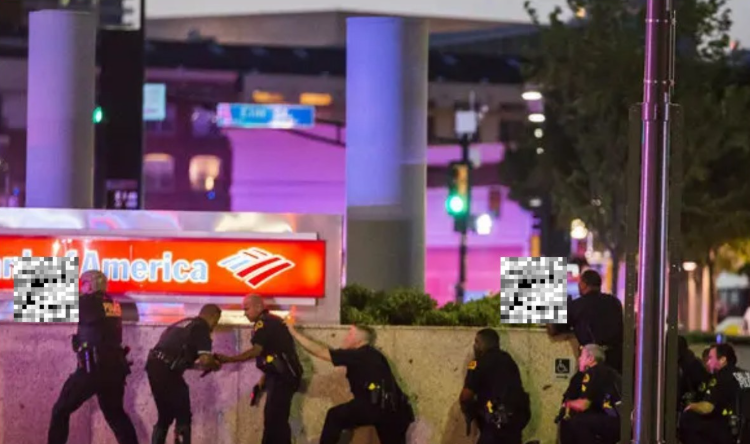
Patrol cars rolled into the parking lot with lights flashing but sirens muted, attempting to avoid escalating tensions. Officers assessed the scene quickly, unaware that every movement may have been anticipated. Witnesses would later say the first sharp sounds they heard resembled car backfires echoing off the pavement. Then came the screams. Then the unmistakable crack of gunfire splitting the afternoon air. In a matter of seconds, the illusion of routine police response shattered. The officers realized they had stepped directly into an ambush — one allegedly designed to unfold in broad daylight, where few would expect such precision.
Panic rippled outward. Customers inside the bank dropped to the floor. Employees scrambled for cover behind counters and locked doors. Outside, bystanders froze in disbelief, unsure whether to run or hide. Amid the chaos, two haunting questions began to surface. Why did the drop location change at the last possible moment? And who locked the bank doors — and how did that single decision alter the course of events? Small details, once dismissed as procedural, now appeared to hold enormous significance. Each second felt stretched, suspended between fear and survival.
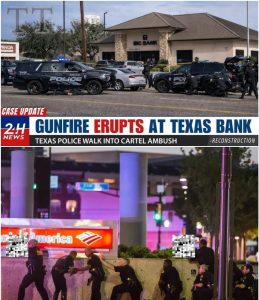
According to reconstructed timelines — including accounts reportedly reviewed by federal investigators — the shifting instructions may have been deliberate, guiding officers into a precise and vulnerable position. The extortion demands were not random; they formed a pattern that, in hindsight, suggested careful orchestration. When the smoke finally cleared and sirens wailed through the streets of Mission, stunned civilians stood motionless under the heavy Texas sky. The scene was no longer one of confusion but of grim realization. And then came a chilling discovery: a clue indicating that the attack might not have been an isolated act, but part of something broader and more organized.
Under the harsh Texas sun, courage met chaos. Officers ran toward danger despite the uncertainty that awaited them. Some shielded civilians, others attempted to secure the perimeter, acting on instinct and training alone. Inside nearby buildings, families huddled together, whispering prayers and hoping the violence would end as suddenly as it had begun. The community — once defined by its quiet routines — now faced the painful reality that safety can be shattered in an instant. An ordinary afternoon had become a memory etched in fear and resilience.
Some stories fade as headlines move on. Others linger, carried in conversations and unanswered questions long after the sirens fall silent. In Mission, the echoes of that day remain — not only in official reports or investigative files, but in the hearts of those who witnessed it. Whether the ambush was the act of a lone architect or part of something larger, its impact continues to ripple through the community. And as time passes, one truth endures: even in the brightest sunlight, shadows can form where least expected.