A Farewell Revisited: The Resurfaced Footage of Tupac Shakur’s Funeral
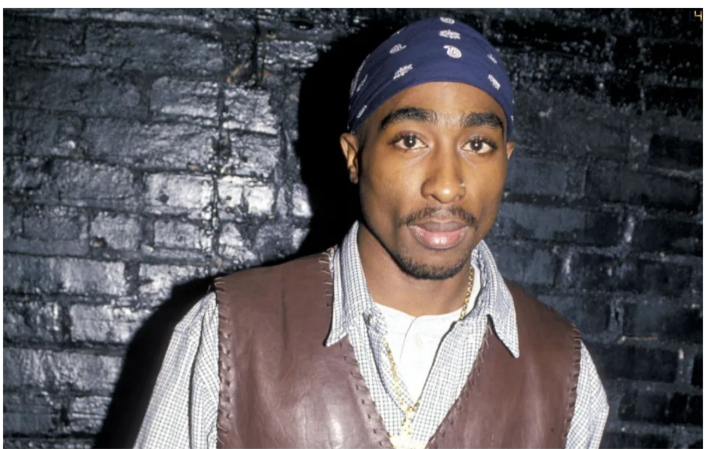
Newly surfaced footage from the funeral of Tupac Shakur has stirred powerful emotions across the world. For decades, fans have carried his music in their hearts — the raw poetry, the fire, the vulnerability woven into every verse. Now, these haunting images feel like a door gently opening to a moment long sealed in memory. For many, it is not simply a video; it is a return to a day when the music fell silent and grief spoke louder than words.
The footage, said to reveal previously unseen details from the private ceremony, has left viewers in reflective silence. Candlelight flickers softly against solemn faces, and the atmosphere appears almost sacred — as though time itself slowed to honor a life cut short. Family, friends, and members of the hip-hop community stand united in mourning, their expressions carrying a weight that decades cannot erase. Even through a screen, the sorrow feels immediate and deeply human.
For some observers, the video has prompted renewed questions about Tupac’s final days and the events surrounding his tragic death in 1996. Over the years, speculation and investigation have kept his story in public conversation. The resurfaced footage does not provide definitive answers, yet it rekindles curiosity. It reminds viewers that behind every headline and theory stood a young artist whose life ended far too soon. Mystery may linger, but so does the emotional truth of loss.

Others see the footage not as a source of speculation, but as a testament to legacy. Tupac was more than controversy or cultural debate; he was a voice for the unheard. Through albums like All Eyez on Me and Me Against the World, he gave language to struggle, injustice, ambition, and hope. His lyrics captured contradictions — toughness and tenderness, anger and compassion — that made him profoundly relatable. Watching the farewell now underscores the depth of his influence and the magnitude of his absence.
There is something uniquely powerful about witnessing grief preserved on film. It humanizes icons who often seem larger than life. In those quiet frames — bowed heads, tearful embraces, flickering candles — Tupac becomes not just a legend, but a son, a friend, a young man mourned by those who loved him. The footage bridges generations, allowing younger audiences to feel the weight of that moment as if it were unfolding today.
As the world watches and reflects, one truth remains unshaken: legends never truly leave us. Through every lyric streamed, every mural painted, and every rediscovered frame of film, Tupac Shakur’s spirit continues to resonate. The resurfaced images do not reopen wounds so much as they honor memory — reminding us that while life may be fleeting, impact can be eternal.