SHOCKING TRUTH EXPOSED: Chicago’s “Darkest Dawn” — 4.3 TONS Seized, 98 Arrests… and a Cartel Empire Hidden in Plain Sight
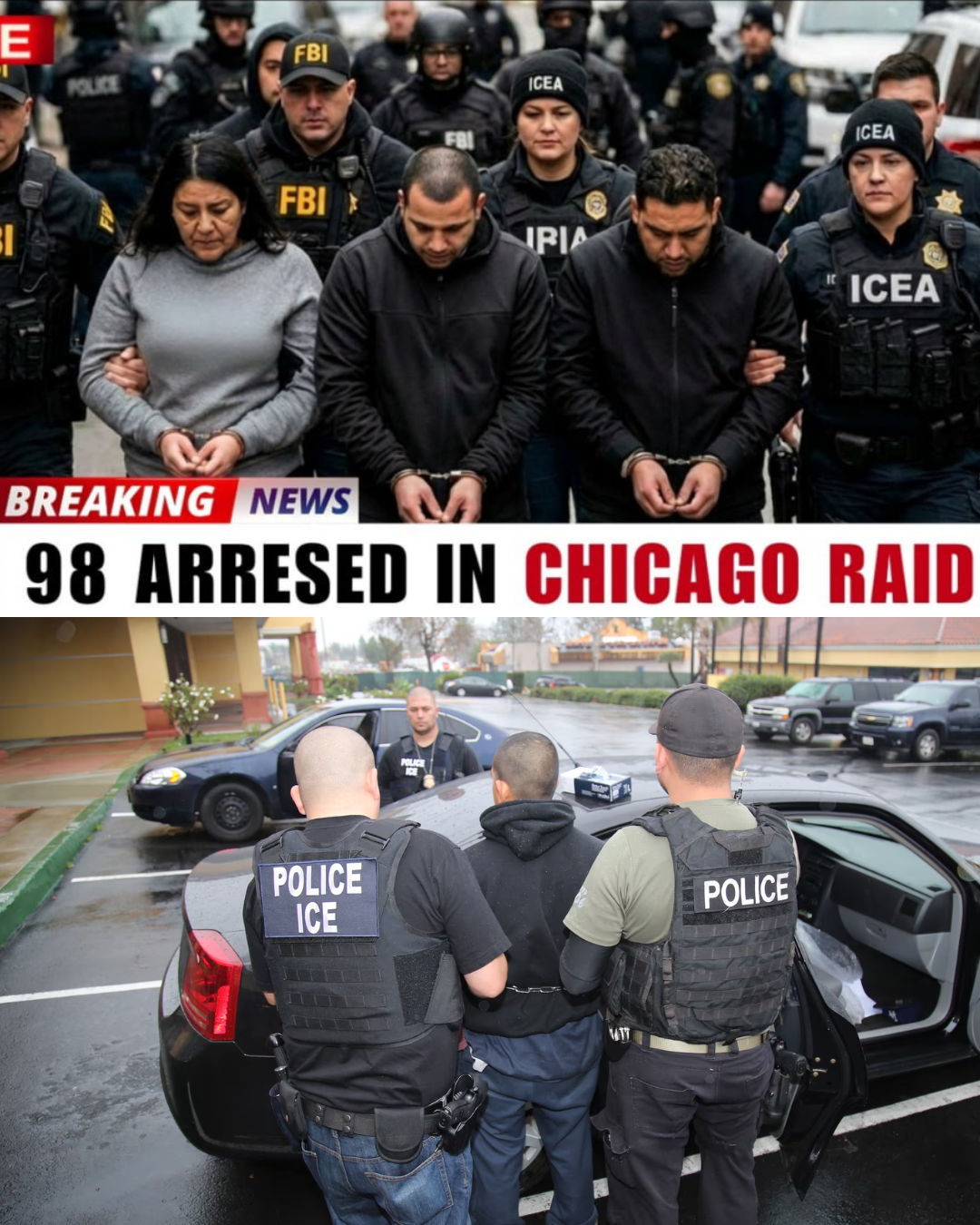
CHICAGO — An online article titled “Chicago’s Darkest Dawn” depicts a sweeping, pre-dawn federal crackdown that allegedly netted 98 arrests, seized 4.3 tons of narcotics—including more than 700 pounds of fentanyl—and froze over $42 million in cash and assets across 14 locations in and around the city. The narrative describes a multi-agency operation involving the FBI, DEA, ICE, DHS, ATF and U.S. Marshals, unfolding in silence at 4:17 a.m. amid winter fog drifting off Lake Michigan.
In the account, the raid’s first major breach occurs at a brick building on South Halsted Street, where agents reportedly find forged passports, stacks of cash, and—behind a false wall—a pharmaceutical-grade fentanyl pill lab. The story claims DEA chemists later assessed that the site could produce more than two million pills a month, with 1.7 million pills seized there alone.
Elsewhere, the article describes additional targets: a meth “superlab” beneath an auto body shop in Cicero, a human-trafficking transit hub in Brighton Park where 23 people were allegedly rescued, and a warehouse near the sanitary ship canal disguised as a frozen-food facility. At that warehouse, the story says agents encountered gunfire in a four-minute exchange that left three suspects dead, several wounded, and one federal agent injured. Inside, it alleges, were enormous stockpiles—cocaine, heroin, methamphetamine and fentanyl—along with a hidden, climate-controlled server room containing encrypted files.
The narrative then pivots from drugs to what it frames as institutional infiltration. According to the article, cyber analysts ultimately accessed documents describing “Project Iron Prairie,” portrayed as a seven-year strategy linked to the Sinaloa cartel that blended shell companies, offshore entities and fake nonprofits to launder proceeds and convert them into legitimate investments and campaign contributions. The story claims the decrypted records pointed to payoffs reaching into local government and law enforcement, naming city officials, judges and supervisors—culminating in an allegation that a senior liaison in the Illinois governor’s office played a facilitating role.
Three days later, the article says, a second phase—“Operation Prairie Fire”—expanded the crackdown across surrounding jurisdictions, uncovering an underground tunnel connected to a fentanyl production site in Joliet, arrests of financial intermediaries in suburban areas, and exposure of a trucking company allegedly moving narcotics hidden in legitimate freight. It describes additional seizures—2.1 more tons—and another wave of arrests.
One of the story’s most consequential claims is corruption inside enforcement agencies: it alleges 23 compromised personnel across multiple departments, including Chicago Police, Cook County Sheriff’s Office, Illinois State Police and suburban agencies. It also describes informants allegedly exposed and later found dead abroad—details presented as evidence of a parallel power structure built through bribes, intimidation and advance warnings about raids.
Yet the article itself includes a key disclaimer: it states that the story is a dramatization inspired by real issues, and that names and specific events have been fictionalized. That caveat is significant, because the piece is written in the style of a breaking-news exposé—complete with precise timestamps, named “projects,” and sweeping totals—while simultaneously signaling it is not a verified account tied to court records or official releases.
Read as narrative, the article’s message is less about a single bust than about a broader warning: that high-volume trafficking and the fentanyl crisis can thrive where oversight is thin, infrastructure is exploitable and trust in institutions is vulnerable. But as presented, its most dramatic claims should be understood in the context the publisher provides—an illustrated, thriller-like reconstruction rather than a documented report of a specific, publicly confirmed federal operation.