Operation Iron Highway: The Roadside Stop That Shook a Nation
- TranThuy
- February 25, 2026
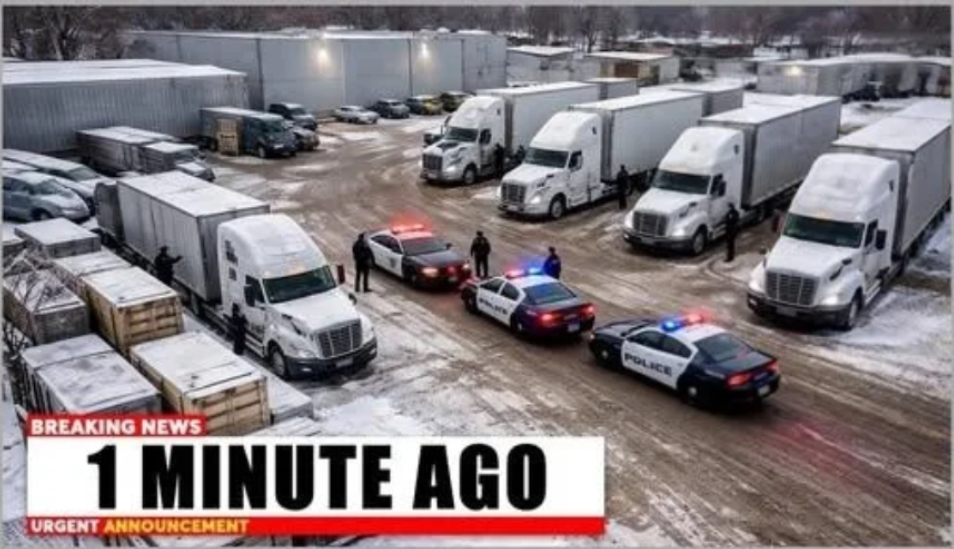
What began as a routine truck inspection along a highway in Texas quickly escalated into a nationwide investigation that few could have anticipated. A single roadside stop, initially conducted as part of standard safety enforcement, exposed what federal authorities later described as a staggering $2.8 billion cartel distribution network. What appeared ordinary at first glance soon revealed layers of coordination stretching far beyond state lines. Within hours, local findings were relayed to federal agencies, triggering a chain reaction that would unfold across the country.
The operation, later named Operation Iron Highway, ultimately identified activity connected to 47 truck stops across 18 states. According to investigators, these locations allegedly functioned as segmented relay points within a sophisticated trafficking system. Narcotics were reportedly transferred in small, seemingly routine shipments that blended seamlessly into the vast flow of interstate commerce. By fragmenting deliveries and rotating drivers, authorities claim traffickers avoided patterns that might have otherwise drawn suspicion.
Under the coordination of the Federal Bureau of Investigation and the Drug Enforcement Administration, nearly 9,400 arrests were made over the course of the crackdown. Officials described it as one of the largest coordinated actions targeting domestic trafficking logistics in United States history. Search warrants were executed simultaneously in multiple jurisdictions, leading to the seizure of narcotics, weapons, financial records, and millions of dollars in assets. The scale of enforcement demonstrated how deeply investigators believed the network had embedded itself within everyday infrastructure.
Authorities allege that traffickers exploited America’s extensive interstate highway system, transforming ordinary trucking routes into carefully calculated corridors of movement. Legitimate trucking businesses, freight hubs, and service stations were reportedly used — sometimes unknowingly — as components of the larger system. By relying on the sheer volume of commercial transport in the United States, the network allegedly concealed illicit cargo within the rhythm of daily logistics. This blending of lawful and unlawful operations made detection extraordinarily difficult for years.
The discovery raised troubling questions about oversight and infrastructure vulnerability. How did such a massive web of crime operate without widespread detection? Were regulatory gaps exploited, or were certain participants deliberately complicit? Experts suggest that the case highlights the challenge of monitoring decentralized transportation networks that span thousands of miles. The investigation also prompted renewed discussions about balancing efficient commerce with stronger inspection protocols.
Operation Iron Highway has already reshaped federal enforcement strategy. Agencies are reportedly investing in enhanced data analysis, interagency coordination, and predictive tracking systems to identify irregular shipping patterns earlier. While officials consider the crackdown a historic milestone, they caution that dismantling one network does not eliminate the broader threat. The roadside inspection in Texas serves as a powerful reminder: even the most routine moment can uncover hidden structures of immense scale — and when exposed, they can send shockwaves across an entire nation.